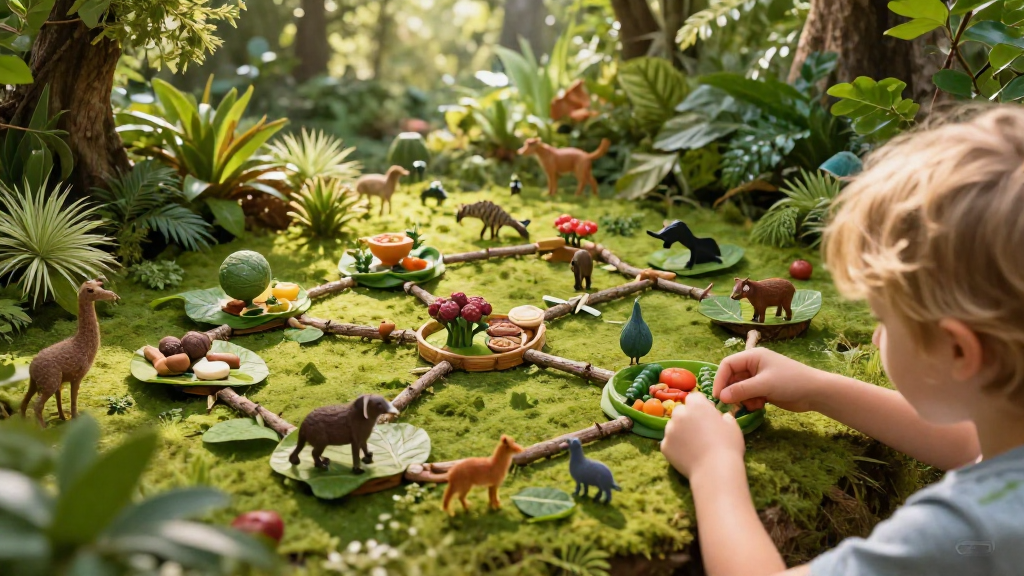
Creating a food web science project can be a fun and educational experience.
Understanding how different organisms interact within an environment can enhance your knowledge of ecology and biology.
But how do you begin crafting a successful food web for your next science project?
What Is a Food Web?
A food web is a complex illustration that shows the interconnected feeding relationships among organisms in an ecosystem.
This diagram goes beyond a simple food chain, showcasing how various organisms, from producers to top predators, are linked.
Key Components of a Food Web
- Producers: These are organisms, like plants and phytoplankton, that can produce their own food through photosynthesis.
- Consumers:
– Primary Consumers: Herbivores that eat producers (e.g., rabbits, deer).
– Secondary Consumers: Carnivores that eat herbivores (e.g., snakes, small birds).
– Tertiary Consumers: Top predators that consume other carnivores (e.g., hawks, lions). - Decomposers: Organisms like fungi and bacteria that break down dead matter, returning nutrients to the soil.
Understanding these categories is crucial for effectively constructing a food web science project.
Why Is a Food Web Important?
A food web is vital for several reasons:
- It illustrates energy flow in an ecosystem.
- It shows biodiversity and biological interactions.
- It aids in predicting outcomes when species are removed or introduced.
By visualizing these elements in your food web science project, you can demonstrate the balance and complexity of ecosystems.
How Do You Choose an Ecosystem for Your Project?
Selecting the right ecosystem is a foundational step in your food web science project.
Below are some suggestions:
-
Terrestrial Ecosystems:
– Forests
– Grasslands
– Deserts -
Aquatic Ecosystems:
– Freshwater (ponds, lakes)
– Marine (oceans, coral reefs) -
Urban Ecosystems:
– Gardens
– Parks
Choose one that fascinates you and offers a diversity of organisms to represent in your project.
How Can You Gather Information?
Research is crucial for constructing an accurate food web.
Here’s how to gather useful information for your food web science project:
- Books: Explore library resources on ecosystems and food webs.
- Online Databases: Websites like National Geographic, WWF, or government ecology sites provide valuable insights.
- Documentaries: Watching educational documentaries about the chosen ecosystem can help you visualize connections.
- Interviews: Consider talking to teachers or experts in ecology for guidance.
Take notes on various species and their roles within the food web to gather enough data for your project.
What Materials Do You Need to Build the Food Web?
When constructing your food web, having the right materials is essential.
Here’s a list of items you may consider using:
- Poster board or large paper: For creating your food web diagram.
- Markers and colored pencils: To differentiate between various types of organisms.
- String or yarn: To visually connect different species in the web.
- Printed images or drawings: To represent the organisms visually.
- Scissors and glue: For assembling the parts of your project.
These materials will help you present your food web in an engaging way.
How Do You Organize Your Food Web?
Organizing your food web starts with a clear layout.
Follow these steps for presentation:
-
Start with Producers:
– Place them at the bottom of your diagram.
– Draw arrows pointing to the consumers that utilize these producers. -
Add Primary Consumers:
– Position these above the producers.
– Connect them to the producers they consume. -
Include Secondary and Tertiary Consumers:
– Add these levels above the primary consumers.
– Make sure that arrows indicate which consumers eat which organisms. -
Incorporate Decomposers:
– Position these around the edges of the web.
– Connect them to the organisms they help break down.
Using color coding or symbols can enhance understanding and facilitate your explanation during the project presentation.
How Can You Make Your Food Web Visually Appealing?
An eye-catching food web will draw attention and make your project memorable.
Here are tips to improve its appearance:
- Use Color: Different colors for producers, consumers, and decomposers can make it visually appealing.
- Shape Variety: Use circles for producers, triangles for primary consumers, and squares for secondary consumers to create visual variety.
- Creative Design: Instead of straight lines, use curved lines or arrows to connect species.
- Add Information Boxes: Include facts or pictures of organisms next to their place in the web to enhance learning.
These strategies will help your food web science project stand out!
How Do You Present Your Food Web?
The final step is to present your food web effectively.
Here’s how:
- Explain Each Level: Describe the role of producers, consumers, and decomposers.
- Discuss Interconnections: Explain how removing one species can affect the others in the web.
- Engage the Audience: Ask your classmates questions about the food web to encourage interaction.
Nail your presentation by practicing several times before the big day—your confidence will shine through!
Conclusion: What Will You Learn from Your Food Web Science Project?
In conclusion, building a food web for your science project is an excellent opportunity to explore complex ecological relationships.
By understanding producers, consumers, and decomposers, gathering information, and creatively presenting your web, you will enhance your knowledge of ecosystems.
Participating in this hands-on learning experience can foster a deeper appreciation for biodiversity and the importance of each organism’s role in maintaining ecological balance.
Embark on this exciting journey, create your food web science project, and enjoy the discovery of nature’s interconnected web of life!
Key Takeaways:
- A food web illustrates relationships between producers, consumers, and decomposers.
- Selecting a diverse ecosystem is crucial for your project.
- Gathering accurate data and using appropriate materials can enhance your project’s quality.
- A well-organized and visually appealing food web will engage your audience and solidify your understanding.
With these tips and ideas, you’re well on your way to conducting an impressive food web science project!