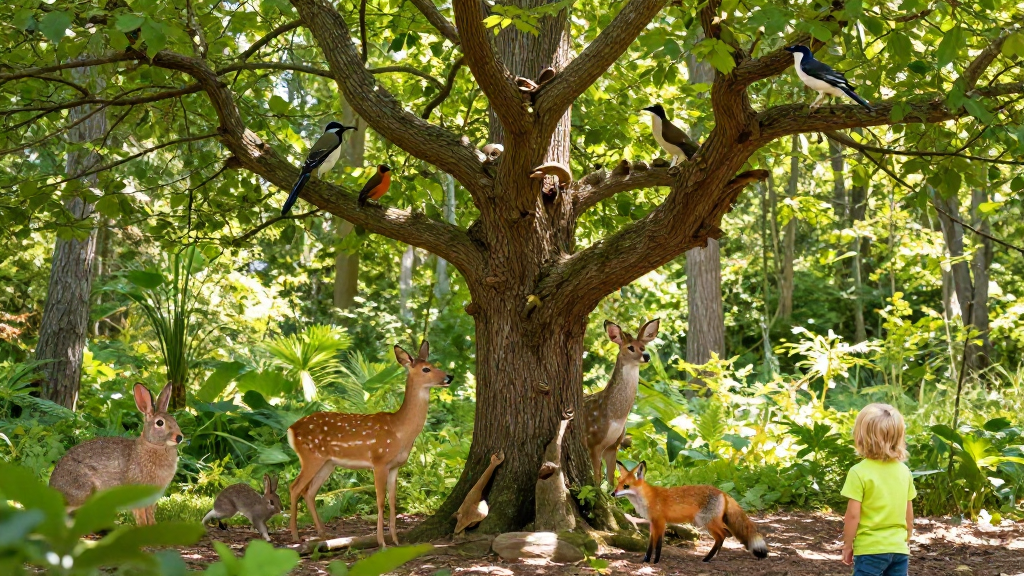
Understanding the concept of food web and trophic levels is crucial for grasping how energy flows through ecosystems.
In this article, we will explore what trophic levels are, how they fit into food webs, and why they are essential for maintaining ecological balance.
What Are Trophic Levels?
Trophic levels are the different positions that organisms occupy in a food web.
They are primarily categorized based on how organisms obtain energy and nutrients.
Each level represents a specific feeding relationship and role in the ecosystem.
The basic idea is that energy moves from one trophic level to the next, influencing the dynamics of the entire food web.
What Are the Main Trophic Levels?
-
Producers (Autotrophs):
– These are organisms that create their own food through photosynthesis or chemosynthesis.
– Examples include plants, algae, and certain bacteria. -
Primary Consumers (Herbivores):
– These are organisms that consume producers.
– They are crucial for energy transfer, as they eat plant material and convert it into energy for the next level.
– Common examples include rabbits, deer, and caterpillars. -
Secondary Consumers (Carnivores/Omnivores):
– These organisms eat primary consumers.
– They may be carnivorous (eating meat) or omnivorous (eating both plants and animals).
– Examples include foxes, snakes, and many bird species. -
Tertiary Consumers:
– Top predators in the food web, they consume secondary consumers.
– Tertiary consumers help regulate the populations of other animals.
– Examples include eagles, large cats, and sharks. -
Decomposers:
– Although not always included in numerical trophic levels, decomposers play a vital role in food webs.
– They break down dead organisms and waste products, returning nutrients to the soil.
– Examples include fungi, bacteria, and some insects.
How Do Food Webs and Trophic Levels Relate?
A food web is a complex network of interconnected food chains within an ecosystem.
While food chains illustrate a linear transfer of energy, food webs show a more intricate system consisting of various organisms and their interactions.
Trophic levels are essential to understanding these relationships.
For example:
- A wolf may hunt a deer (secondary consumer) while also eating smaller rodents (primary consumers).
- In this scenario, the wolf occupies multiple trophic levels, emphasizing the web’s complexity.
Why Are Trophic Levels Important?
- Ecosystem Stability: Understanding trophic levels helps us comprehend how ecosystems maintain stability.
-
If one level is affected (like a drop in primary consumers), it reverberates through the entire food web.
-
Energy Flow: Energy diminishes as it moves between trophic levels.
- Typically, only about 10% of energy from one trophic level is passed to the next.
-
This concept emphasizes the importance of primary producers, as they start the energy flow.
-
Biodiversity: Different species occupy various trophic levels, contributing to biodiversity.
- High biodiversity often leads to more stable ecosystems because highly diversified communities can withstand environmental changes.
How Do Trophic Levels Impact Food Web Dynamics?
In a healthy ecosystem, trophic levels create a balance.
Any alteration, such as the loss of keystone species (species that have a disproportionately large impact on their environment), can disrupt this balance.
- Overpredation:
-
For example, if a predator is removed, the population of primary consumers may explode, leading to overgrazing and subsequent degradation of plant life.
-
Pollution and Trophic Levels:
-
Toxins can accumulate as they move up trophic levels, affecting top predators severely, as they consume multiple prey organisms and accumulate more toxins.
-
Invasive Species:
- These species may occupy trophic levels where they out-compete native organisms, leading to declines in biodiversity.
What Are Some Examples of Food Webs and Trophic Levels?
Different ecosystems contain unique food webs and corresponding trophic levels. Here are two examples:
-
Terrestrial Ecosystem:
– Producers: Grass, shrubs, trees
– Primary Consumers: Grasshoppers, rabbits, deer
– Secondary Consumers: Foxes, snakes, owls
– Tertiary Consumers: Eagles, bears -
Aquatic Ecosystem:
– Producers: Phytoplankton, seaweed
– Primary Consumers: Zooplankton, small fish
– Secondary Consumers: Larger fish, crustaceans, seals
– Tertiary Consumers: Sharks, dolphins
How Do Human Activities Affect Trophic Levels?
Humans significantly impact trophic levels and food webs.
Here are several activities that can disrupt these systems:
- Overfishing: This practice can deplete fish populations, upsetting the balance of aquatic food webs.
- Deforestation: Clearing forests disturbs the habitat for various species, affecting producers and their consumers.
- Pollution: Chemicals and waste can accumulate in organisms and lead to health issues that affect entire trophic levels.
How Can We Protect Trophic Levels and Food Webs?
To ensure the integrity of trophic levels and thus the ecological balance in food webs, we can take several actions:
- Conservation Efforts: Protect habitats to maintain the natural balance of ecosystems.
- Sustainable Practices: Apply sustainable agriculture and fishing practices to prevent overexploitation.
- Education and Awareness: Informing the public about the roles of various organisms in the ecosystem can lead to better conservation strategies.
- Research and Monitoring: Conduct studies to understand the impacts of human activities on ecosystems and adjust policies accordingly.
Conclusion: The Interconnectedness of Food Webs and Trophic Levels
In summary, the concepts of food web and trophic levels are vital for understanding how ecosystems function.
By recognizing the positions that different organisms occupy in the food web and their relationships with one another, we can appreciate the delicate balance of nature.
Protecting these systems is not just about conserving individual species but also about maintaining the complex interactions that make up our planet’s ecosystems.
By promoting biodiversity, sustainable practices, and awareness, we can help ensure future generations experience the rich tapestry of life on Earth.