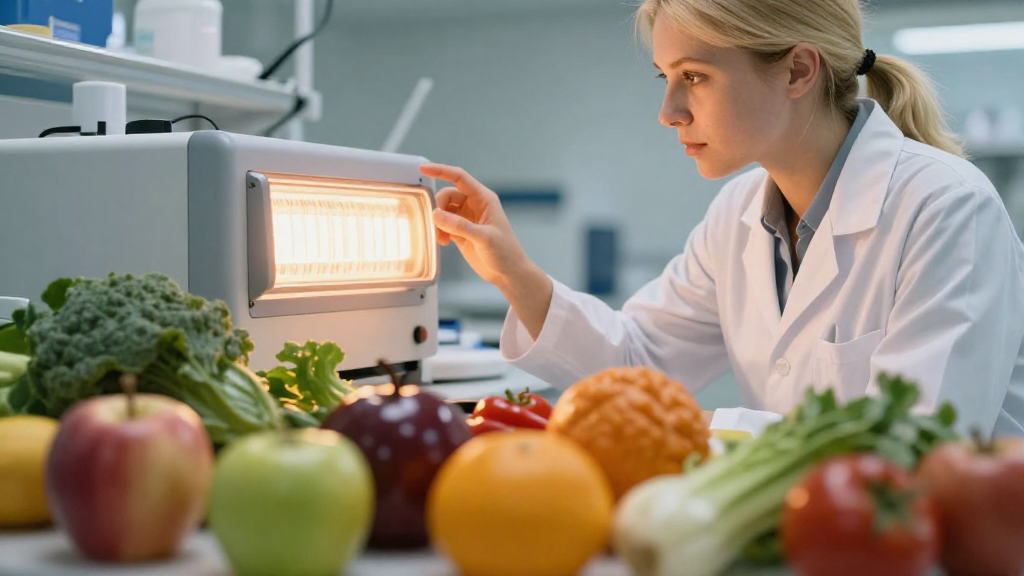
The food irradiation process is an innovative method used to enhance food safety and extend shelf life.
This article delves into the intricacies of the food irradiation process, exploring its benefits, FDA regulations, and potential drawbacks.
What Exactly Is the Food Irradiation Process?
The food irradiation process involves exposing food products to ionizing radiation.
This is done to eliminate pathogens, pesticides, and spoilage microorganisms without significantly altering the food’s nutritional qualities.
The most common sources of radiation used in this process are:
- Gamma rays
- X-rays
- Electron beams
The radiation penetrates the food and disrupts the DNA of bacteria, parasites, and other pathogens, rendering them unable to reproduce.
This makes food safer for consumption and significantly reduces the risk of foodborne illnesses.
How Does Food Irradiation Work?
In the food irradiation process, food products are typically exposed to controlled doses of radiation in specialized facilities.
Here’s a detailed breakdown of how it works:
-
Preparation:
– Foods are cleaned, packaged, and often frozen before irradiation.
– This enhances the efficiency of the process. -
Exposure:
– The food is placed in a designated irradiation chamber.
– Depending on the method (gamma rays, X-rays, or electron beams), food is exposed to predetermined doses. -
Post-Irradiation Handling:
– Once the exposure is complete, food can be distributed and stored under normal conditions.
– Most irradiated foods have a longer shelf life due to reduced microbial load.
What Are the Benefits of the Food Irradiation Process?
The food irradiation process comes with numerous benefits, making it an attractive option for food safety and preservation.
These benefits include:
- Elimination of Pathogens:
-
It effectively kills harmful bacteria such as Salmonella, E. coli, and Listeria.
-
Extended Shelf Life:
-
Irradiated foods last significantly longer than their non-irradiated counterparts.
-
Insect Control:
-
The process can eliminate insects and larvae that are often found in dried fruits, grains, and other stored foods.
-
Preservation of Nutritional Value:
-
When properly applied, thermo-physical properties remain largely intact compared to traditional preservation methods like canning or pasteurization.
-
Decreased Food Waste:
- By prolonging shelf life, irradiated foods reduce the amount of food that gets discarded due to spoilage.
Is Food Irradiation Safe?
The safety of the food irradiation process has been extensively studied and is endorsed by numerous health organizations.
These include:
- The World Health Organization (WHO)
- The Food and Drug Administration (FDA)
- The Centers for Disease Control and Prevention (CDC)
Key Points About Safety:
– No Residual Radiation: After undergoing the process, irradiated food does not retain any radiation, making it safe for consumption.
– Nutritional Quality: Research indicates that the nutritional content of irradiated food is equivalent to that of non-irradiated food, with slight variations based on the type and intensity of irradiation.
How Is Food Irradiation Regulated?
In the United States, the food irradiation process is strictly regulated by the FDA.
Here are essential regulations regarding food irradiation:
- ** approved Methods**:
-
Various methods are permitted, with specific dose limits for different types of foods.
-
Labeling Requirements:
- Foods subjected to irradiation must carry specific labeling informing consumers about the process.
-
This includes the “Irradiated” label or symbol known as the Radura.
-
Monitoring and Research:
- The FDA conducts ongoing research to ensure the safety, effectiveness, and quality of irradiated foods.
What Are the Concerns Surrounding Food Irradiation?
Despite the benefits of the food irradiation process, there are some concerns and criticisms.
These include:
- Consumer Acceptance:
-
Many consumers are still hesitant or misinformed about the safety of irradiated foods.
-
Nutrient Degradation Debate:
-
Some studies argue that certain vitamins and nutrients may be negatively affected by the irradiation process, although most evidence supports minimal nutritional loss.
-
Organic Certification:
-
Irradiation is not accepted in organic farming, limiting its use in organic products.
-
Cost:
- The installation and maintenance of irradiation facilities can be expensive, affecting product pricing.
How Is Food Irradiation Used Globally?
The food irradiation process is implemented globally, with varying regulations and acceptance levels.
Here’s a glimpse into its usage around the world:
- USA:
-
Commonly used on meat, poultry, fruits, and vegetables to ensure safety and longer shelf life.
-
Canada:
-
Used for specific foods but more limited than in the U.S.
-
European Union:
-
More restrictive compared to North America but allows certain irradiated foods, like dried fruits.
-
Asia:
- Countries like Japan and India utilize it for specific food items, focusing on safety and preservation.
Conclusion
The food irradiation process is a powerful technology that can significantly enhance food safety, reduce food waste, and extend the shelf life of various products.
With its backing from reputable health organizations and strict regulatory oversight, it provides a promising solution for addressing food safety concerns in an ever-evolving food industry.
As consumer awareness grows and more research continues to support its safety and efficacy, the food irradiation process may become increasingly common in both domestic and international markets.
For those looking to understand more about the food choices they make, being knowledgeable about the food irradiation process helps in making informed decisions.