Choosing the right fermentation vessel can make brewing simpler, cleaner, and more consistent. If you want durability, better sanitation, and a setup that can handle repeated use, stainless steel is a strong choice.
This roundup focuses on the best options for home brewers, wine makers, and kombucha fans who want dependable performance without unnecessary complexity.
Best 10 Stainless Steel Fermentation Vessel Picks for 2026
Large-Capacity Brewing Pick
VEVOR 16 Gal Stainless Steel Conical Fermentor

- 16-gallon capacity for larger batches
- Food-grade 304 stainless steel construction
- Conical base with yeast and beer valves
Best For: Large-batch home brewers who want stainless steel and easy sediment removal
Starter Batch Glass Pick
Qianfenie 1 Gallon Fermentation Jar Set

- Two 1-gallon glass fermentation jars
- Includes 3 airlocks and spare parts
- Wide mouth with scale marks for easy monitoring
Best For: Small-batch fermenters who want clear jars and included airlock accessories
Pressure-Control Option
VEVOR 8 Gal Stainless Steel Pressure Fermenter
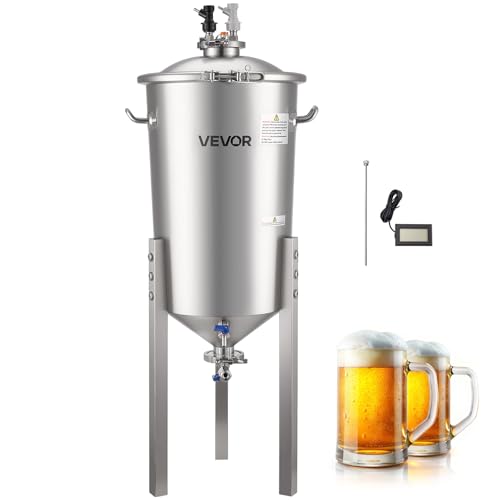
- Pressure design helps manage CO₂ overflow
- Built-in thermometer shows real-time temperature
- 304 stainless steel conical tank with 8-gallon capacity
Best For: Brewers who want pressure fermentation and temperature monitoring
Clear Small-Batch Pick
1 Gallon Glass Fermentation Jars with Airlock

- 1-gallon clear glass jar set
- Wide mouth with airtight airlock lid
- Dishwasher-safe and reusable
Best For: Small-batch fermenters who want visibility and simple cleanup
Heavy-Duty Sealed Choice
35L 304 Stainless Steel Fermenter Tank with Faucet
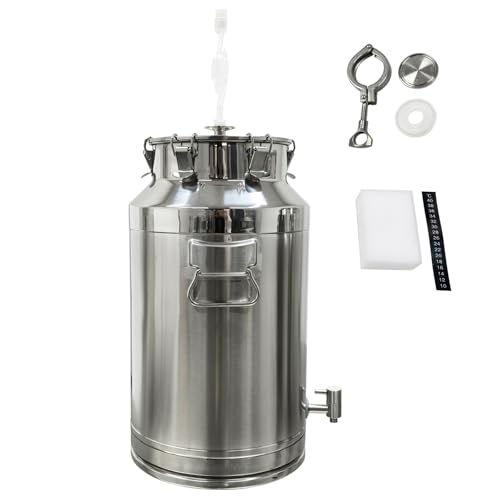
- 35L thickened 304 stainless steel construction
- Lock fastener, silicone ring, and vent pipe options
- Built-in faucet and raised base for easier handling
Best For: Large-batch fermentation, storage, and transport
Compact Glass Dual-Pack
2.5L Water-Seal Fermentation Jars, 2 Pack

- Two 2.5L jars for small home batches
- Water-seal lids block air, dust, and contaminants
- Includes brush and silicone clamps
Best For: Small-batch vegetable fermentation at home
Simple Big-Batch Pick
14 Gallon Stainless Steel Fermenter for 10 Gallon Batches
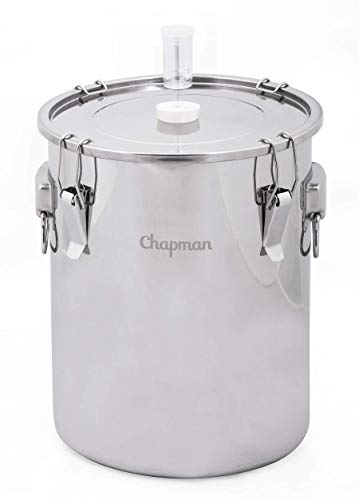
- 14-gallon capacity with head space for 10-gallon batches
- Durable stainless steel and easy to clean
- Can also be used as a kettle
Best For: Home and craft brewers making 10-gallon batches
Heavy-Duty Stainless Fermenter
60L 316 Stainless Steel Barrel

- 60L capacity for larger batches
- 304/316 food-grade stainless steel
- Includes valve, plug, and silicone ring
Best For: Large-batch fermenting, storage, and aging
Glass Fermenter & Storage Jar
5 Gallon Wide-Mouth Square Jar
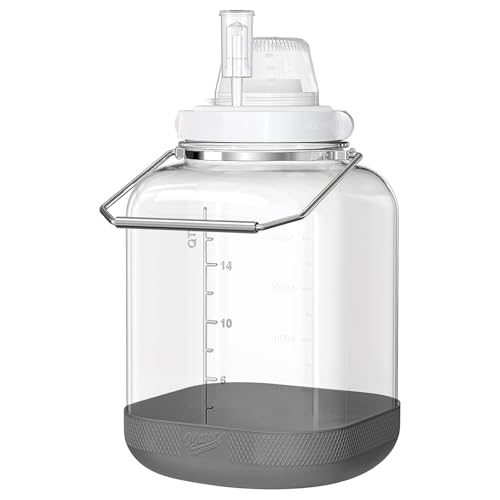
- 5-gallon capacity with airtight seal
- Wide mouth and quart/liter markings
- Stainless steel handles for easier lifting
Best For: Fermenting and bulk dry-goods storage
Large-Capacity Brewing Pick – VEVOR 16 Gal Stainless Steel Conical Fermentor
If you want a stainless steel fermentation vessel with room for bigger batches, this 16-gallon VEVOR tank is built around capacity, durability, and easy draining. The 304 stainless steel body, conical base, and sealing lid make it a practical pick for home brewers who want a cleaner fermentation workflow.
Best For: Brewers making larger batches of beer, wine, or fruit wine who want a sturdy conical tank.
Pros:
- 16-gallon capacity suits larger home-brewing batches.
- All major contact parts use food-grade 304 stainless steel.
- Conical bottom and dedicated valves help remove yeast sludge and bottle beer.
- Silicone sealing ring and clasped lid are designed to keep the vessel tightly sealed.
Cons:
- Large footprint may be more than small-batch users need.
- At 14.33 lb, it is still a sizable piece of equipment to lift and move.
- Best suited to brewing tasks rather than general food storage.
Overall, this fermentor stands out for users who prioritize batch size and a more controlled stainless setup. The thermometer, breathable exhaust option, and conical drainage design make it a strong fit for organized home fermentation.
Starter Batch Glass Pick – Qianfenie 1 Gallon Fermentation Jar Set
This is not a stainless steel fermentation vessel, but it is a practical small-batch alternative if you want clear visibility and simple handling. The 1-gallon glass jars, airtight screw lids, and included airlocks make it easy to monitor fermentation for kombucha, mead, pickles, and similar projects.
Best For: Small-batch fermenters who want an easy-to-see glass setup with airlocks.
Pros:
- Wide-mouth jars make filling, cleaning, and hand washing easier.
- Includes 3 airlocks plus spare gaskets and grommets.
- Clear glass with scale marks lets you watch fermentation progress.
- Thick, reusable glass construction is dishwasher safe.
Cons:
- Glass is more fragile than stainless steel.
- Only 1-gallon capacity, so it is better for small batches.
- Needs care with sudden temperature changes to avoid cracking.
For users focused on observation and small-batch flexibility, this kit offers a well-equipped glass option. It is best when you want visibility and convenience more than the durability of a metal fermenter.
Pressure-Control Option – VEVOR 8 Gal Stainless Steel Pressure Fermenter
If you are comparing a stainless steel fermentation vessel for more controlled brewing, this 8-gallon VEVOR pressure fermenter adds monitoring and pressure management features. The 304 stainless steel body, conical shape, and built-in temperature display are aimed at consistent secondary fermentation.
Best For: Brewers who want pressure fermentation and real-time temperature feedback in stainless steel.
Pros:
- Pressure design helps avoid CO₂ overflow during fermentation.
- Built-in electronic thermometer shows liquid temperature in real time.
- Food-grade 304 stainless steel construction supports long-term use.
- 8-gallon capacity works for beer, wine, and fruit wine.
Cons:
- Pressure fermentation adds complexity beyond basic fermenters.
- Yeast bottle is not included.
- May be more feature-heavy than casual beginners need.
This is a strong choice if you want more control over secondary fermentation and prefer stainless steel over glass. The adjustable legs and clear dual markings add convenience for practical brewing setups.
Clear Small-Batch Pick – 1 Gallon Glass Fermentation Jars with Airlock
This 1-gallon glass set is a straightforward option when you want a small fermentation vessel with easy visibility and a wide mouth. It is well suited to kombucha, pickles, sourdough starter, and other small-batch projects where being able to watch the process matters.
Best For: Home fermenters who want a simple, see-through jar with an airtight lid and airlock.
Pros:
- Wide-mouth design makes filling and cleaning easier.
- Included airlock lid is designed to release gas while staying airtight.
- Reusable, food-grade glass is dishwasher safe.
- Clear jar lets you observe fermentation at a glance.
Cons:
- Glass is less durable than a stainless steel fermentation vessel.
- Best suited to smaller batches only.
- Plastic lid construction may not appeal to users wanting all-metal gear.
For small projects, this set keeps the process simple and easy to monitor. It is a practical glass-based alternative, though users who want maximum durability will still lean toward stainless steel.
Heavy-Duty Sealed Choice – 35L 304 Stainless Steel Fermenter Tank with Faucet
If you want a stainless steel fermentation vessel with a larger 35L footprint, this 304 stainless steel tank is built for brewing, storage, and transport. The thickened body, sealing hardware, and faucet make it a practical pick for handling liquids while keeping the contents protected.
Best For: Brewers or home users who want a sealed, versatile stainless steel vessel for fermentation and storage.
Pros:
- Thickened 304 stainless steel offers rust, corrosion, acid, and alkali resistance.
- Fully sealed lock fastener plus silicone sealing ring help reduce air leakage and overflow.
- Includes both a sealing mechanism and a one-way vent pipe for different fermentation needs.
- Faucet and raised base improve liquid handling and stability.
Cons:
- At 35L, it may be larger than needed for smaller batches.
- Designed for multiple uses, so it may feel more specialized than a simple bucket-style fermenter.
This is a strong option if sealing performance and durability matter more than compact size. The added faucet and dual sealing approach make it especially practical for users who want one vessel to do more than just ferment.
Compact Glass Dual-Pack – 2.5L Water-Seal Fermentation Jars, 2 Pack
For smaller projects, this stainless steel fermentation vessel alternative focuses on visibility and simple water-seal fermentation in two compact glass jars. The set is designed for home batches where easy monitoring, clean storage, and straightforward maintenance matter.
Best For: Small households making kimchi, pickles, sauerkraut, or other fermented vegetables.
Pros:
- Two 2.5L jars make it easy to ferment different recipes at the same time.
- Glass body lets you monitor fermentation clearly and resists odor retention.
- Water-seal lids help block outside air, dust, and contaminants.
- Includes a brush and silicone clamps for easier cleaning and handling.
Cons:
- Smaller 2.5L capacity is better for small household batches than bulk prep.
- The water seal needs regular maintenance, including topping up the lid water weekly.
This set is a good fit if you want an easy-to-see fermentation setup with included accessories. It is less about heavy-duty storage and more about convenient home fermenting in manageable portions.
Simple Big-Batch Pick – 14 Gallon Stainless Steel Fermenter for 10 Gallon Batches
This stainless steel fermentation vessel is aimed at brewers who want a straightforward, ready-to-use option for larger batches. With 14 gallons of total capacity and head space sized for 10-gallon batches, it works as both a fermenter and a kettle.
Best For: Home and craft brewers needing a durable vessel for 10-gallon fermentation batches.
Pros:
- 14-gallon total capacity leaves plenty of head space for 10-gallon batches.
- Stainless steel build is durable and easy to clean.
- Doubles as a kettle for added utility.
- Ready to use out of the box.
Cons:
- No sealing or accessory features are highlighted in the supplied details.
- Larger size may be more vessel than casual or very small-batch users need.
If you want a no-frills fermenter with enough room for standard homebrew batches, this is the most direct option here. It keeps the focus on capacity, durability, and simplicity rather than extra hardware.
Heavy-Duty Stainless Fermenter – 60L 316 Stainless Steel Barrel
If you want a stainless steel fermentation vessel for large-batch brewing, storage, aging, or even distillation, this 60L barrel is built around durability and flexibility. It uses 304/316 food-grade stainless steel, includes fermentation accessories like a temperature patch, silicone plug, one-way valve, and silicone ring, and is designed for home or restaurant use.
Best For: Large-capacity fermenting, storage, aging, and multi-purpose liquid handling in homes or restaurants.
Pros:
- 60L capacity suits bigger fermentation or storage jobs.
- 304/316 food-grade stainless steel is corrosion-resistant and durable.
- Thicker 1mm wall and 1.2mm bottom improve sturdiness versus ordinary barrels.
- Includes useful fermentation parts such as a one-way valve and silicone ring.
Cons:
- Does not include a tap.
- Best suited to users who want a larger, heavier-duty vessel.
- May be more equipment than needed for small-batch projects.
This is a practical choice if you need a stainless steel vessel that can do more than basic fermentation. Its multi-use design makes it a strong fit for anyone who wants one container for fermenting, storing, or aging.
Glass Fermenter & Storage Jar – 5 Gallon Wide-Mouth Square Jar
This is a useful stainless steel fermentation vessel alternative if you want a glass container with steel handling hardware and an airtight seal. The 5-gallon square jar is built for fermenting, pickling, and bulk storage, with a wide mouth, quart/liter markings, and stainless steel handles for easier lifting.
Best For: Home fermenters who also want a big airtight storage jar for dry goods.
Pros:
- 5-gallon capacity works for large batches and bulk storage.
- Airtight seal helps support fermentation and freshness.
- Wide 6.4-inch mouth makes filling and cleaning easier.
- Stainless steel handles improve carrying and handling.
Cons:
- Made of glass, not stainless steel.
- Heavier than smaller home fermenting vessels.
- Square-jar format may take more storage space than a round container.
This model makes sense if you want a single container that can shift between fermentation and pantry storage. The wide opening, clear markings, and airtight design make it easy to use, but the glass build means it is less rugged than a full steel vessel.
Dual-Batch Brewing Set – 2-Pack 3 Gallon Glass Carboys
For small-batch brewing, this stainless steel fermentation vessel setup is more of a glass carboy kit with stainless hardware, but it still fits the needs of home fermenters who want a sealed, easy-to-monitor system. You get two 3-gallon borosilicate glass vessels, stainless steel airlock lids with silicone rings, and stainless steel wine lifters for handling.
Best For: Brewers who want two separate 3-gallon fermenters for beer, wine, cider, or pickles.
Pros:
- Includes two complete 3-gallon fermenters for separate batches.
- Stainless steel airlock lids with silicone rings support a tight seal.
- Clear borosilicate glass makes it easy to monitor fermentation progress.
- Stainless steel wine lifters add convenience when moving the vessels.
Cons:
- Glass construction is not as durable as a true stainless vessel.
- 3-gallon size is better for small-to-medium batches.
- More focused on brewing than on general storage or distillation.
This set is a solid pick if you want visibility, a sealed fermenting environment, and the ability to run two recipes at once. It is especially practical for brewers who value monitoring through clear glass more than the toughness of all-metal construction.
How We Picked the Best Stainless Steel Fermentation Vessel
We focused on vessels that balance durability, usable capacity, sealing performance, and practical features like faucets, conical bases, or pressure-capable designs. For a Stainless Steel Fermentation Vessel, material quality and ease of cleaning matter just as much as size, so we prioritized models that support long-term, low-maintenance use.
Quick Comparison
Start by matching the vessel to your batch size and process. Smaller jars and carboys are better for experimental or specialty ferments, while larger stainless tanks suit beer, wine, and bigger-volume brewing. If you want more control over fermentation, look for pressure-rated or conical designs; if simplicity matters most, a standard sealed tank may be enough.
Key Buying Factors for a Stainless Steel Fermentation Vessel
Capacity and Headspace
Choose a vessel with enough room for active fermentation and foam expansion. A larger nominal size can be useful, but the actual working volume is what matters.
Steel Grade and Build Quality
Not all stainless steel is the same. Food-grade construction, thicker walls, welded seams, and corrosion resistance help improve longevity and reduce flavor contamination risk.
Seal and Airlock System
A reliable lid, gasket, or airlock setup is essential for controlling oxygen exposure. This is especially important for beer, wine, and other fermentations that benefit from stable anaerobic conditions.
Cleaning and Access
Wide-mouth openings, removable fittings, and smooth interiors make cleaning much easier. A Stainless Steel Fermentation Vessel should be easy to sanitize between batches.
Extra Features
Faucets, handles, sight marks, conical bottoms, and pressure capability can add convenience, but only if they fit your workflow. Choose features you will actually use.
Who Should Buy Which Stainless Steel Fermentation Vessel?
If you brew frequently and want a low-maintenance upgrade, stainless steel is the best long-term choice. Home brewers making beer or mead may prefer conical or pressure-rated models for better yeast management and more control. Wine makers and larger-batch fermenters should look for higher-capacity tanks with dependable sealing and easy transfer options. If you mainly ferment vegetables, kombucha, or small test batches, lighter-duty jars or carboys may be more practical than a full-size tank.
In short, pick the vessel that matches your batch size, cleanup preferences, and fermentation style—not just the biggest or most feature-packed option.