If you make sausage regularly, the right machine can save time, reduce fatigue, and improve consistency from batch to batch. A good sausage linking machine helps create uniform links with less guesswork and less mess.
Below, we focus on practical options for home users, small shops, and higher-volume operations, with an eye toward speed, durability, and ease of use.
Best 10 Sausage Linking Machine Picks for 2026
Automatic Commercial Tying
Commercial Electric Sausage Tying Machine

- 200W motor for fast dual-mode tying
- Foot pedal keeps both hands free
- 304 stainless steel for durability and cleaning
Best For: Commercial kitchens and serious home sausage makers
Manual Vertical Stuffer
ROVSUN 11LBS/5L Sausage Stuffer
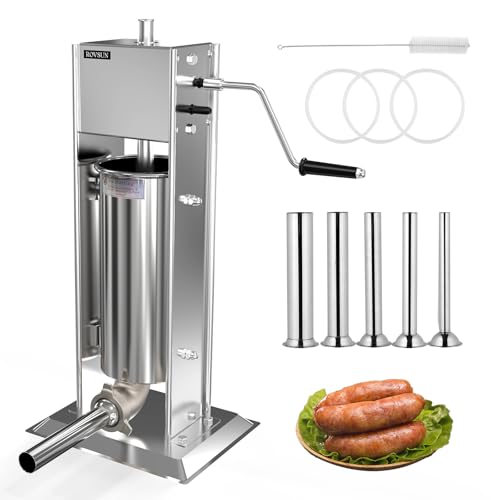
- All-stainless steel construction
- Two speeds for better filling control
- Includes 5 stuffing tubes for different sizes
Best For: Filling sausage casings before linking
Compact Electric Wrapping
Continuous Sausage Linking Machine

- 80W motor reduces repetitive hand wrapping
- Foot pedal allows hands-free control
- Length scale and stopper improve portion consistency
Best For: Small-batch sausage makers who want easier wrapping
Manual Desktop Linking

- Fits sausages up to 42 mm diameter
- Ties at about 50 knots per minute
- 304 food-grade stainless steel build
Best For: Compact manual linking in home or small-shop setups
Electric Batch Filler
LEM BigBite 10 lb Motorized Sausage Stuffer

- Motorized stuffing with foot-switch control
- Speed knob and air release valve
- Includes four tubes plus crank handle
Best For: Home sausage makers who want easy electric stuffing
Automatic Knotting Pick
Electric Sausage Knotting Machine

- Automatic winding and knotting modes
- Foot switch for easier operation
- 304 stainless steel and adjustable sizing
Best For: Commercial users who want faster sausage tying
Manual Space Saver
Commercial Grade Sausage Linker

- Manual desktop design saves space
- Adjustable tightness for casings under 45 mm
- Claims at least 50 knots per minute
Best For: Compact tying in home kitchens or butcher shops
Fastest Automation Pick
Electric Sausage Knotting Machine with 2 Modes

- Two switch modes for tying and winding
- Fits sausages up to 50mm diameter
- 304 stainless steel with adjustable tightness
Best For: Busy kitchens and small food operations needing automatic tying
Best Manual Pick
0-45mm Manual Stainless Sausage Tying Machine
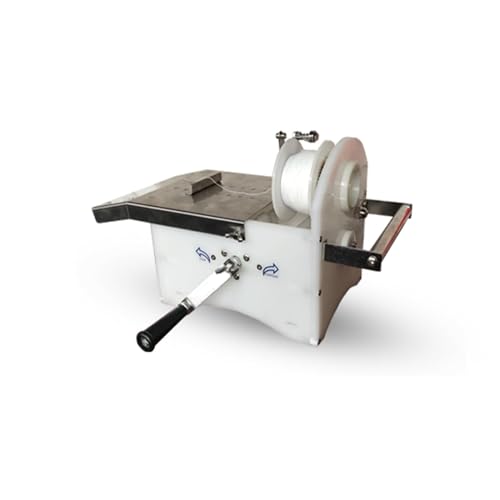
- Manual hand-rolling design with precision gear
- Fits sausages under 45mm diameter
- 304 stainless steel and easy to clean
Best For: Users who want a compact manual tying solution
Commercial Automation Pick
Electric Sausage Tying Machine for 10-50mm Links

- Tie and winding modes for automated work
- Adjustable tightness and sausage length
- 304 stainless steel for durability and cleaning
Best For: Commercial users needing flexible automated tying
Automatic Commercial Tying – Commercial Electric Sausage Tying Machine
If you need a sausage linking machine built for speed and consistency, this electric model is aimed at high-output tying and wrapping. Its 200W motor, foot pedal control, and adjustable binding settings make it a practical choice for shops or serious home makers who want to standardize link length without slowing production.
Best For: Butcher shops, food factories, restaurants, and home cooks who want a fast, stable electric tying solution.
Pros:
- 200W motor supports high-speed dual-mode binding and winding
- Hands-free foot pedal helps maintain a smooth workflow
- 304 stainless steel build is rust-proof, corrosion-resistant, and easy to sanitize
- Adjustable console and rear tension nut allow more precise link control
Cons:
- More of a specialized commercial tool than a basic home gadget
- Requires workspace for its desktop-sized footprint
Overall, this is the most production-focused option in the group, with the kind of power and control that makes repeatable sausage tying easier. If your priority is output and consistency, it stands out as a serious upgrade.
Manual Vertical Stuffer – ROVSUN 11LBS/5L Sausage Stuffer
If your sausage linking machine search also includes stuffing and prep, this manual vertical stuffer is a strong workhorse. It does not tie links itself, but it helps you fill casings efficiently with two speeds, five tube sizes, and an all-stainless build that suits both home batches and commercial use.
Best For: Users who want a sturdy manual sausage stuffer for filling casings before linking.
Pros:
- All stainless steel frame, cylinder, base plate, and tubes
- Two-speed operation gives better control for different filling tasks
- Five stuffing tubes cover multiple casing sizes
- Removable cylinder and included brush make cleaning easier
Cons:
- Manual operation takes more effort than electric equipment
- It is a stuffer, not a tying or linking machine
This is a practical pick if you want dependable casing filling before moving on to tying by hand or with another tool. Its size, tube variety, and stainless construction make it versatile for regular sausage-making workflows.
Compact Electric Wrapping – Continuous Sausage Linking Machine
For buyers looking for a sausage linking machine that reduces repetitive wrapping work, this compact electric model focuses on hands-free portion tying. Its 80W motor, foot pedal control, and adjustable wrapping turns make it a useful fit for smaller production runs where consistency matters more than brute force.
Best For: Home sausage makers and small-batch commercial users who want easier, more consistent wrapping.
Pros:
- 80W motor helps reduce manual effort during repeated wrapping
- Foot pedal control keeps both hands available for positioning
- Scale markings and sliding stopper help set sausage length
- Forward and reverse rotation simplifies thread setup and repositioning
Cons:
- Smaller 43 mm opening limits it to compatible pre-filled casings
- Better suited to small-batch work than heavy commercial throughput
This model offers a practical middle ground for kitchens that want electric assistance without going full industrial. If you make sausages in controlled batches and value neat, repeatable wrapping, it is a sensible option.
Manual Desktop Linking – Manual Sausage Linker Machine
If you want a straightforward sausage linking machine for a desktop setup, this manual linker focuses on speed, adjustability, and simple operation. It handles sausage diameters up to 42 mm and is built from 304 food-grade stainless steel, making it a practical pick for regular tying tasks at home or in small shops.
Best For: Home cooks, butcher shops, and small commercial users who want a lightweight manual linking tool.
Pros:
- Handles sausages up to 42 mm in diameter
- 304 food-grade stainless steel construction is durable and easy to clean
- Average tying speed of at least 50 knots per minute
- Desktop design is stable, space-saving, and easy to operate
Cons:
- Manual operation still requires user input and effort
- Size limit may not suit larger casings
This is a strong no-frills choice if you want a compact tying machine that stays stable on the work surface. The speed and adjustability make it appealing for users who value efficiency without moving to a fully electric unit.
Electric Batch Filler – LEM BigBite 10 lb Motorized Sausage Stuffer
If you want a sausage linking machine that also handles the stuffing stage, this motorized LEM unit is built for easy, controlled filling. The foot switch, speed control knob, and air release valve help one person manage pork, beef, poultry, or wild game with less mess and fewer air pockets.
Best For: Home users who want electric stuffing, simple cleanup, and precise flow control.
Pros:
- Foot switch supports true one-person operation.
- Speed control and air release valve help improve fill consistency.
- Removable cylinder makes refilling and cleaning easier.
- Includes four stuffing tubes and a crank handle for backup use.
Cons:
- Primarily a stuffer, not a dedicated tying or linking machine.
- Likely more machine than needed for very small batches.
Overall, this is a strong choice if your workflow starts with stuffing and you want electric convenience with manual backup options. Its adjustable control and heavy-duty design make it practical for a wide range of sausage styles.
Automatic Knotting Pick – Electric Sausage Knotting Machine
This sausage linking machine is designed for tying and knotting sausages faster than doing the job by hand. With automatic winding, knotting mode, and a foot switch, it aims to improve efficiency for sausage and ham production while keeping the process straightforward.
Best For: Restaurants and small commercial operations that need automated sausage tying.
Pros:
- Automatic winding and knotting modes add convenience.
- Foot switch supports easier hands-free operation.
- 304 stainless steel construction is durable and easy to clean.
- Adjustable for sausage diameters from 10 to 42 mm.
Cons:
- Requires 220V power.
- Maximum diameter limit may not suit larger casings.
For buyers focused on speed and repeatable tying, this machine is purpose-built for commercial-style workflow. The adjustable sizing and two switching modes make it flexible enough for different sausage types and bundle requirements.
Manual Space Saver – Commercial Grade Sausage Linker
For shoppers looking for a sausage linking machine that keeps things simple, this manual desktop linker focuses on fast tying without taking up much space. Its gear-driven design, adjustable tightness dial, and stable desktop form are geared toward efficient linking for breakfast links, chorizo, and cured sausages.
Best For: Home cooks and butcher shops that want a compact manual linker.
Pros:
- Desktop design is space-saving and stable.
- Fast tying speed, with an average of at least 50 knots per minute.
- Adjustable tightness works with casings under 45 mm.
- 304 stainless steel build is durable and easy to clean.
Cons:
- Manual operation may not suit high-volume automation needs.
- Limited to sausage diameters under 45 mm.
This is a practical pick if you want a simple, durable tying tool instead of an electric unit. It balances speed, adjustability, and compact size well for smaller spaces and regular linking tasks.
Fastest Automation Pick – Electric Sausage Knotting Machine with 2 Modes
If you want a sausage linking machine built for speed, this electric model is made for high-volume tying with simple foot-switch operation. It supports a 50mm aperture, two switch modes, and adjustable tie length and tightness, making it a practical pick for busy food prep settings.
Best For: Food factories, restaurants, butcher shops, and home users who want automated tying.
Pros:
- Two switch modes for wire tying and wire winding.
- Supports sausages up to 50mm/1.96 inches in diameter.
- Adjustable tie length and rear nut for tightness control.
- 304 stainless steel construction for durability and easier cleaning.
Cons:
- Electric desktop design may be more machine than casual home users need.
- Requires floor-foot switch operation for automatic tying.
This model stands out if your priority is fast, repeatable tying with less manual effort. Its stainless build and adjustable settings make it a strong fit for production-focused sausage prep.
Best Manual Pick – 0-45mm Manual Stainless Sausage Tying Machine
This sausage linking machine is a manual option for users who want straightforward control without electric power. It handles sausages under 45mm, uses a precision gear for smooth rolling, and is designed to save effort while keeping the setup compact and stable on a table.
Best For: Home kitchens, butcher shops, restaurants, and small commercial users who prefer manual operation.
Pros:
- Handles sausage diameters under 45mm with adjustable tightness and length.
- Food-grade 304 stainless steel build is rust-proof and easy to clean.
- Precision gear design helps it roll smoothly and save strength.
- Claims efficiency of up to 50 knots per minute.
Cons:
- Manual operation is less automated than electric models.
- Maximum sausage size is limited to under 45mm.
This is a good fit if you want a durable, easy-to-use tying machine with hands-on control. It balances speed, stability, and simplicity for smaller-scale sausage work.
Commercial Automation Pick – Electric Sausage Tying Machine for 10-50mm Links
For buyers comparing a sausage linking machine for restaurant or shop use, this electric model focuses on efficiency and adjustable output. It includes tie and winding modes, supports sausages up to 50mm, and lets you adjust both the binding tightness and the sausage length.
Best For: Restaurants, commercial kitchens, and home users who want an automated stainless steel tying machine.
Pros:
- Automatic tie and winding modes help improve production efficiency.
- Adjustable tightness and adjustable sausage length for different needs.
- 304 food-grade stainless steel construction is durable and easy to clean.
- Supports a wide range of sausages, including red sausages, bratwurst, and ham sausages.
Cons:
- Electric design may be more than needed for very occasional use.
- Maximum sausage diameter is limited to 50mm.
This model is a solid option if you want automation plus flexibility for different sausage styles. Its combination of adjustable settings and commercial-focused design makes it useful for consistent batch work.
How We Picked the Best Sausage Linking Machine
We focused on the features that matter most in real sausage-making workflows: build quality, consistency of links, ease of cleaning, speed, and whether the machine fits home, butcher-shop, or commercial use. For a Sausage Linking Machine, the best choice is not always the most powerful one; it is the model that matches your production volume and workflow.
Quick Comparison
In general, manual models are better for lower-volume users who want control, lower cost, and simpler maintenance. Electric and motorized options are better for frequent production, tighter labor budgets, and repeatable output. Stainless steel construction is especially useful if you care about sanitation and long-term durability.
Key Buying Factors for a Sausage Linking Machine
Capacity and Throughput
Check how many pounds you process per session and whether the machine can keep pace without slowing your operation. Commercial users should prioritize throughput and uptime, while home users may prefer a smaller footprint.
Automation Level
Manual machines offer more hands-on control, but electric versions can greatly reduce strain and speed up production. If you link sausage often, an automated model may justify the higher price through labor savings.
Build Materials
304 stainless steel is a strong sign of durability and easier cleanup. It also tends to hold up better in wet, food-contact environments than cheaper alternatives.
Adjustability and Link Size
Look for adjustable wrapping turns, diameter compatibility, and settings that match the casings and sausage styles you make most often. Versatility matters if you switch between recipes or casing sizes.
Footprint and Maintenance
Small kitchens and butcher shops may need compact designs that are easy to store and sanitize. Removable parts, straightforward controls, and accessible surfaces can make maintenance much easier.
Who Should Buy Which Sausage Linking Machine?
If you make sausage occasionally, a manual Sausage Linking Machine is often the best value because it is simple, affordable, and easy to maintain. If you produce larger batches at home or in a shop, an electric or motorized model is usually the smarter choice for speed and consistency. Commercial kitchens and food factories should look for heavy-duty builds, larger apertures, and automation features that support continuous use.
For most buyers, the best fit comes down to volume and workflow. Choose manual for control and low cost, electric for efficiency, and commercial-grade equipment when output and durability are the top priorities.