If you want café-quality espresso without moving into a full commercial setup, a prosumer espresso machine is the sweet spot. These machines bridge the gap between entry-level home models and serious café hardware.
Below, we focus on the best options for home baristas who care about shot consistency, steam performance, and long-term value.
Best 10 Prosumer Espresso Machine Picks for 2026
Barista Starter Pick

- Built-in grinder simplifies the espresso workflow
- 54mm portafilter and included tools help you start fast
- 67 oz tank and 1/2 lb hopper reduce refills
Best For: Home baristas who want an integrated grinder and manual control
Commercial Feel Choice

- 58mm commercial portafilter and steam wand
- Steel housing with made-in-Italy build
- Semi-automatic setup supports hands-on espresso making
Best For: Espresso enthusiasts who want commercial-style components
Compact Value Pick

- Compact stainless steel body suits smaller kitchens
- 20-bar pump and pressure gauge aid espresso dialing-in
- Steam wand makes cappuccinos and lattes
Best For: Buyers who want a small machine with pressure feedback and steaming
Dual Boiler Upgrade

- Dual boiler design separates brewing and steaming
- PID, shot timer, and adjustable OPV add precision
- 58mm portafilter and included accessories support workflow
Best For: Serious home baristas who want dual-boiler precision
All-in-One Home Barista Pick
Breville Barista Pro Espresso Machine
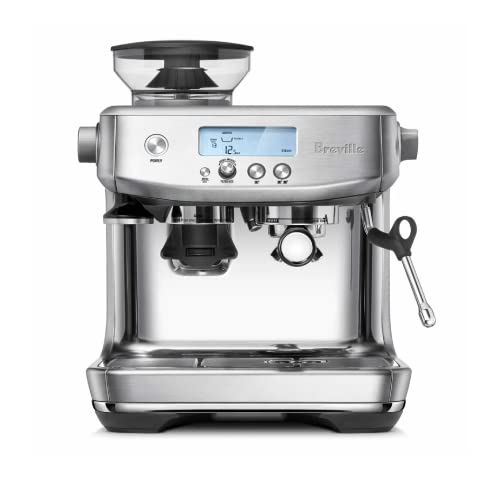
- Built-in grinder and adjustable grind control
- LCD interface with 1- or 2-cup volumetric shots
- Includes milk jug, trimming tool, and cleaning kit
Best For: Home users who want an integrated grinder and guided workflow
Classic Single-Boiler Workhorse
Rancilio Silvia Espresso Machine

- Proven platform with over 20 years in production
- Steel case and commercial-style components
- 3-way solenoid helps with backflushing
Best For: Espresso drinkers who want a compact, durable machine
Guided Precision Pick

- On-screen guidance with built-in drink recipes
- Shot feedback and pressure profiling improve dialing in
- Assisted milk steaming and under-2-minute heat-up
Best For: Beginners and enthusiasts who want guided precision
Classic Italian Workhorse
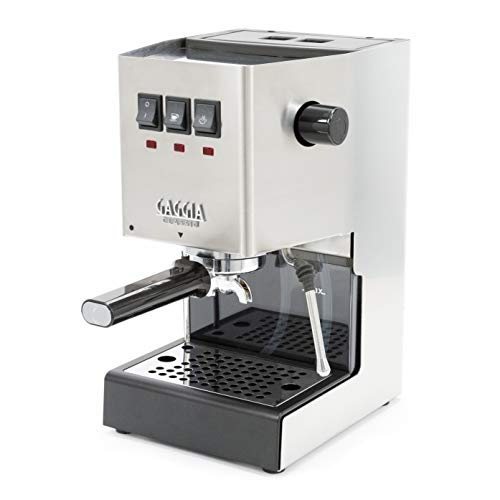
- 9-bar semi-automatic espresso machine
- Commercial 58mm portafilter and steam wand
- Made in Italy with steel housing
Best For: Hands-on home baristas who want a durable, serviceable espresso machine
Precision Dual-Boiler Pick

- Dual boiler with simultaneous brew and steam
- Brew and steam PIDs with degree-level control
- Soft preinfusion and shot timer features
Best For: Daily baristas who want precise control and premium shot consistency
Compact Beginner-Friendly Option
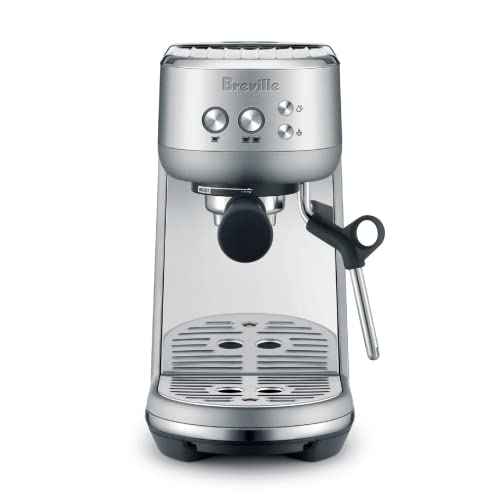
- Compact semi-automatic espresso machine
- Automatic microfoam steam wand for milk texturing
- Fast, beginner-friendly setup for home or office
Best For: Beginners and small kitchens needing café-style espresso with simple milk steaming
Barista Starter Pick – Breville Barista Express
If you want a prosumer espresso machine that keeps the workflow simple while still giving you room to dial things in, the Breville Barista Express is a strong all-in-one choice. Its built-in grinder, manual controls, and included dosing tools make it easy to move from whole beans to espresso shots, lattes, and cappuccinos without adding extra gear.
Best For: Home baristas who want an integrated grinder and a straightforward way to make café-style espresso drinks.
Pros:
- Built-in grinder with adjustable grind amount and manual override
- Includes a 54mm stainless steel portafilter, tamper, milk jug, and dose trimming tool
- Large 67 oz water tank and 1/2 lb bean hopper for fewer refills
- Manual operation suits users who want hands-on control
Cons:
- Single boiler-style workflow is less specialized than dual-boiler machines
- 58mm commercial portafilter size is not used here; this model uses a 54mm setup
- 1-year limited warranty is shorter than some higher-end options
For shoppers comparing prosumer espresso machine options, this model stands out for convenience and value-oriented control. It is a practical fit if you want an appliance that handles grinding and brewing in one footprint.
Commercial Feel Choice – Gaggia Classic Pro
The Gaggia Classic Pro is a classic prosumer espresso machine for buyers who want a more traditional, serviceable setup. With a solid steel housing, 58mm commercial portafilter, three-way solenoid valve, and steam wand, it is built to feel closer to a serious café machine than an entry-level appliance.
Best For: Espresso enthusiasts who want commercial-style components and a simple semi-automatic machine.
Pros:
- 58mm commercial portafilter and commercial steam wand
- 3-way solenoid valve supports cleaner puck handling
- Solid steel housing and made-in-Italy build
- Works with beans and ESE pods for added flexibility
Cons:
- 1.3-liter capacity is smaller than some larger home machines
- Semi-automatic design means more user involvement for each shot
- No built-in grinder included
This is a strong pick if you value commercial-style hardware over automation. It suits users who want to learn espresso technique and upgrade into a more capable platform without jumping to a full commercial machine.
Compact Value Pick – CASABREWS CM5418
If you are looking for a compact prosumer espresso machine that fits smaller kitchens, the CASABREWS CM5418 is designed to keep things practical. It offers a 20-bar pump, built-in pressure gauge, and steam wand, so you can make espresso drinks at home or in the office without needing a large footprint.
Best For: Buyers who want a small, affordable-feeling machine with pressure feedback and milk steaming.
Pros:
- Compact stainless steel design fits tight spaces
- 20-bar pump and 1350W boiler for semi-automatic espresso brewing
- Built-in pressure gauge helps guide adjustments
- Steam wand supports cappuccino, latte, and microfoam drinks
Cons:
- 34 oz water tank is smaller than many larger machines
- Requires a cooldown period after frothing milk before brewing again
- Best results depend on dialing in grind size and tamping pressure
This model makes sense if counter space is limited but you still want the core features of a serious espresso setup. It is best viewed as a compact entry into the prosumer espresso machine category rather than a heavy-duty all-day workhorse.
Dual Boiler Upgrade – Diletta Alto Black
Diletta Alto Espresso Machine | Dual Boiler | PID | Shot Timer | Adjustable OPV | (Black)
Check Price On AmazonThe Diletta Alto is the most advanced prosumer espresso machine in this group, built for users who want tighter control over temperature and workflow. Its dual boiler design, PID controls, shot timer, and adjustable OPV give you the kind of precision that matters when you are pulling espresso and steaming milk back to back.
Best For: Serious home baristas who want dual-boiler performance and precise temperature control.
Pros:
- Dual boiler setup separates brew and steam functions
- PID temperature control with front-mounted adjustments
- Shot timer built into the PID screen
- Adjustable OPV and 58mm portafilter support fine-tuning
Cons:
- 40-pound machine is heavy and takes more space
- 22-minute brew warm-up is longer than compact models
- Higher-complexity design may be more than casual users need
If you want a machine that leans hard into control and performance, this is the most capable option here. It is especially appealing for anyone who values stability, steaming speed, and the ability to tailor shot pressure and temperature.
All-in-One Home Barista Pick – Breville Barista Pro Espresso Machine
If you’re shopping for a prosumer espresso machine that streamlines the home setup, the Breville Barista Pro packs grinding, dosing, and espresso brewing into one stainless steel machine. It’s a practical choice for making espresso, lattes, and cappuccinos with an intuitive LCD interface and volumetric shot control.
Best For: Home users who want an integrated grinder and a more guided espresso workflow.
Pros:
- Built-in grinder with adjustable grind control for whole-bean espresso
- Intuitive LCD interface and 1- or 2-cup volumetric control
- Includes milk jug, Razor trimming tool, cleaning kit, and water filter
- Large 67 oz water tank and 1/2 lb bean hopper for everyday use
Cons:
- Manual operation may still require some dialing in for best results
- At 19.5 pounds, it’s not the lightest machine to move around
Overall, the Barista Pro is a strong middle ground between convenience and control, especially if you want an all-in-one machine without building a separate grinder setup.
Classic Single-Boiler Workhorse – Rancilio Silvia Espresso Machine
The Rancilio Silvia is a classic prosumer espresso machine for buyers who value a proven platform and commercial-style construction. With a single brass boiler, semi-automatic operation, and compact stainless steel case, it focuses on straightforward espresso making with durable components.
Best For: Espresso drinkers who want a compact, durable machine with a long track record.
Pros:
- Long-running platform with over 20 years in production
- Sturdy steel case and professional-grade components
- 3-way solenoid supports backflushing and helps prevent portafilter splatter
- Compact footprint suits smaller spaces
Cons:
- Single boiler design serves both brew and steam temperatures
- Uses ground coffee only, with no built-in grinder
- Smaller 0.3 liter capacity limits how much water it holds at once
In short, the Silvia is a no-nonsense machine for users who want a sturdy espresso platform and are comfortable working with a more hands-on workflow.
Guided Precision Pick – Fellow Espresso Series 1
The Fellow Espresso Series 1 is aimed at buyers who want a more guided prosumer espresso machine with room to grow. It combines pressure profiling, precise temperature control, and on-screen feedback to help you pull shots more consistently and make milk drinks with less guesswork.
Best For: Beginners who want help learning espresso, and experienced users who still want precision controls.
Pros:
- On-screen guidance with built-in presets and drink recipes
- Shot feedback suggests grind adjustments when shots run too fast or too slow
- Pressure profiling and temperature control add more brewing flexibility
- Assisted milk steaming helps stop at the target milk temperature
Cons:
- Designed around ground coffee only, not whole-bean grinding
- Large footprint may take up significant counter space
For shoppers who want a modern espresso machine that teaches as it goes, the Series 1 stands out with strong automation support while still offering meaningful control.
Classic Italian Workhorse – Gaggia Classic Evo Pro
If you want a prosumer espresso machine that keeps things traditional, the Gaggia Classic Evo Pro is built around commercial-style parts and a straightforward semi-automatic workflow. Its 9-bar extraction, brass and stainless construction, and 58mm commercial portafilter make it a strong fit for home baristas who want a hands-on machine without overcomplicating the process.
Best For: Home espresso drinkers who want a durable, serviceable machine with commercial components and manual control.
Pros:
- Made in Italy with a solid steel housing for a sturdy, long-lasting feel.
- Commercial 58mm portafilter, three-way solenoid valve, and steam wand support classic espresso workflow.
- 9-bar extraction and included baskets make it suitable for brewing espresso, ESE pods, frothing milk, and latte art.
- Self-serviceable design is appealing if you value maintenance access and longevity.
Cons:
- Semi-automatic operation means more hands-on dialing in than an automated machine.
- 20-pound footprint and 14.2-inch height may feel bulky on smaller counters.
- No dual-boiler or PID features are listed, so temperature control is more basic than higher-end prosumer machines.
Overall, this is a classic prosumer espresso machine for buyers who want commercial-inspired hardware and a more traditional brewing experience. It prioritizes build quality and manual espresso fundamentals over convenience extras.
Precision Dual-Boiler Pick – Rancilio Silvia Pro X
The Rancilio Silvia Pro X is a serious prosumer espresso machine for buyers who care about shot control and repeatable results. With dual boilers, dedicated brew and steam PIDs, and adjustable soft preinfusion, it gives you the kind of temperature management and workflow flexibility that more advanced home baristas look for.
Best For: Daily espresso users who want fine temperature control, simultaneous brewing and steaming, and a premium semi-automatic setup.
Pros:
- Dual-boiler design supports simultaneous brewing and steaming.
- Dedicated brew and steam PIDs allow temperature adjustment to the degree.
- Soft preinfusion can improve shot quality and consistency.
- Front-facing PID screen doubles as a shot timer, and auto-on adds everyday convenience.
Cons:
- More advanced features usually mean a steeper learning curve than simpler machines.
- The 1-liter capacity and larger chassis will take up meaningful counter space.
- It is described for the daily barista, so it may be more machine than casual drinkers need.
If you want a prosumer espresso machine with real control over temperature and extraction, this model stands out. It balances commercial-inspired performance with practical features that support consistent daily use.
Compact Beginner-Friendly Option – Breville Bambino
The Breville Bambino is a compact prosumer espresso machine that aims to deliver café-style drinks without taking over your counter. It uses a semi-automatic workflow, a reusable filter, and an automatic microfoam steam wand, making it a practical entry point for home or office espresso with latte-art potential.
Best For: Beginners and small-space buyers who want fast, café-style espresso and automatic milk texturing.
Pros:
- Compact 6.3-inch width makes it easy to fit on tight counters.
- Automatic microfoam milk texturing helps create latte-art-friendly milk foam.
- 1560-watt heating and semi-automatic operation support quick, everyday use.
- Brushed stainless steel build gives it a clean, modern look.
Cons:
- No dual-boiler or advanced temperature-control features are listed.
- Ground-coffee-only input keeps it focused on manual espresso prep.
- Smaller 47-fluid-ounce capacity may require more frequent refilling.
As a prosumer espresso machine, the Bambino makes the most sense if you want simplicity, speed, and compact size over deep control. It is a strong fit for users who are just getting into espresso or need a capable machine for a smaller kitchen or office.
How We Picked the Best Prosumer Espresso Machine
We prioritized machines that give home users more control over espresso quality, including stable temperature management, strong steaming, quality portafilters, and durable build materials. We also looked at ease of use, warm-up time, upgrade potential, and whether the machine matches its price with real-world performance. For a Prosumer Espresso Machine, the best choice is not always the most feature-rich one; it is the one that fits your workflow and drink preferences.
Quick Comparison
In general, the list breaks into three groups: beginner-friendly machines that simplify espresso-making, semi-automatic workhorses that reward skill, and higher-end systems with dual boilers, PID control, or pressure profiling. If you mostly make milk drinks, steaming speed and consistency matter more. If you are chasing shot precision, temperature stability and controllability should weigh more heavily.
Key Buying Factors for Prosumer Espresso Machine
Temperature Stability
Look for PID control, fast recovery, or a dual-boiler design if you want repeatable shots and smoother workflow. Better temperature stability usually means better flavor consistency.
Steam Power
If cappuccinos and lattes are part of your routine, prioritize steam performance. Single-boiler machines can be excellent, but dual-boiler models are typically easier when pulling shots and steaming at the same time.
Workflow and Control
Consider how much control you want over dose, pressure, and extraction. Some buyers want a simpler path to good espresso, while others prefer a machine that supports dialing in every variable.
Build Quality and Serviceability
Durability matters in this category. Stainless steel construction, replaceable parts, and a strong user community can make a big difference over time, especially if you expect to keep the machine for years.
Counter Space and Warm-Up Time
A Prosumer Espresso Machine can be substantial, so check footprint and height clearance before buying. Faster heat-up is also valuable for busy mornings, while larger machines may justify themselves with better stability and steaming capacity.
Who Should Buy Which Prosumer Espresso Machine?
If you want the easiest path to better espresso, choose a more approachable machine that still offers solid temperature and steam performance. If you are an enthusiast who enjoys dialing in shots, a machine with PID control, pressure adjustment, or dual boilers will be more satisfying. If you mainly make milk drinks, prioritize steam strength and workflow. If your goal is to grow into the hobby over time, a more capable Prosumer Espresso Machine with room to improve is usually the smarter long-term buy.
In short, match the machine to your routine, not just the spec sheet. The right pick should make great espresso feel repeatable, not complicated.