Choosing among manual meat slicers is easier when you match the cutter to the foods you prepare most. Frozen beef rolls, fresh meat, jerky, and deli-style slices each demand different blade designs, thickness settings, and levels of stability.
This roundup compares 10 options ranging from compact stainless-steel cutters to adjustable slicers and one electric deli-style alternative. Use the guide below to narrow the list by cutting performance, cleanup, capacity, and overall value.
Best 10 Manual Meat Slicers Picks for 2026
Best Frozen-Meat Value
Befen Adjustable Manual Slicer

- Slices properly frozen meat from 0.2–20 mm
- Thickened stainless steel construction
- Includes spare blade and meat-prep accessories
Best For: Home cooks preparing thin frozen-meat slices
Best Fresh-Meat Option

- Designed for fresh beef, pork, chicken, lamb, and salmon
- Cuts multiple slices in one stroke
- Switches between 2 mm and 4 mm thickness
Best For: Fresh-meat batch preparation and hot pot cooking
Best Simple Frozen-Meat Upgrade
Stainless Steel Hot Pot Slicer
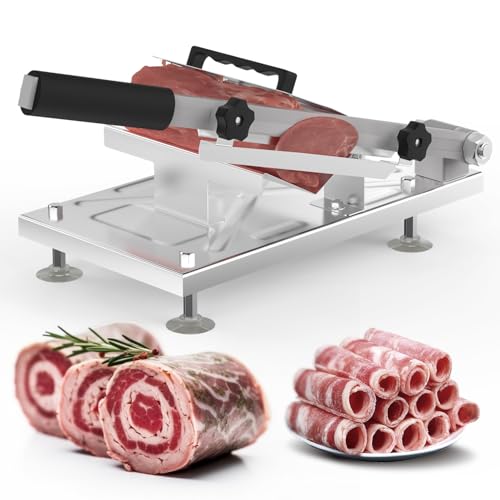
- Adjusts from 0.2–20 mm
- Thickened stainless steel board
- Includes spare blade and 10 food bags
Best For: Home hot-pot and BBQ preparation
Best Semi-Automatic Alternative

- 200W motor for powered slicing
- Includes serrated and non-serrated blades
- Adjusts from 0–15 mm
Best For: Home cooks wanting less manual slicing effort
Heavy-Duty Pick
Stainless Steel Frozen Meat Slicer

- Thick 1.6mm stainless steel construction
- 7.8-inch blade for wider frozen-meat slices
- Suitable for hot pot, barbecue, and pizza prep
Best For: Home cooks slicing frozen meat and firm ingredients
Versatile Countertop Pick
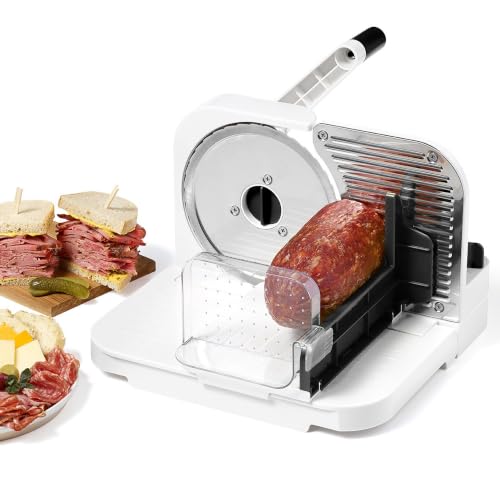
- Adjustable from deli-thin to 1-inch slices
- 6.5-inch blade cuts meat, cheese, and bread
- Suction base and detachable dishwasher-safe parts
Best For: Compact kitchens needing versatile adjustable slicing
Fresh-Meat Specialist

- Cuts 18 slices with 17 blades in one pass
- Includes 2mm and 4mm thickness settings
- Stabilizes on smooth surfaces with a suction cup
Best For: Fresh, boneless meat for barbecue and hot pot
Compact Frozen Prep
Adjustable Stainless Steel Slicer

- 0.3–8mm adjustable thickness
- Suction cups and meat press improve stability
- Designed for fully frozen foods
Best For: Home hot pot, BBQ, and sukiyaki preparation
Jerky & Biltong Specialist

- Curved dual-blade cutting system
- Detachable magnetic slice-catching tray
- Stable grooved wooden base with anti-slip feet
Best For: Biltong, jerky, salami, and firm ingredients
Wide-Range Home Slicing

- 0.5–25mm adjustable thickness
- Reinforced stainless steel frame
- Includes two blades and meat-prep accessories
Best For: Versatile home slicing for frozen meat and meal prep
Best Frozen-Meat Value – Befen Adjustable Manual Slicer
If you regularly prepare hot pot, sukiyaki, stir-fry, BBQ, sandwiches, or jerky, this manual meat slicer is designed to turn properly frozen beef, lamb, chicken, ham, and fish into thin, adjustable slices. Its stainless steel construction and included accessories make it a practical home option, though it requires careful preparation and hand washing.
Best For: Home cooks who want adjustable thin slices from properly frozen meat and want to reduce reliance on pre-sliced supermarket portions.
Pros:
- Adjustable slice thickness from 0.2 mm to 20 mm.
- Thickened 1.5 mm stainless steel board is designed for durability and easier cleaning.
- Includes a spare blade, meat holder, 10 meat bags, suction cups, hex key, and instructions.
- Works with several frozen meats and fish for hot pot, BBQ, sandwiches, and other dishes.
Cons:
- Requires meat to be properly frozen for clean cuts.
- Hand-wash-only care adds cleanup time.
- The recommended thin-slicing technique may require some practice.
This is a useful choice when thin frozen-meat preparation is your main priority. The broad thickness range and generous accessory package add versatility, while the manual design keeps the process straightforward.
Best Fresh-Meat Option – ONCE FOR ALL 17-in-1 Slicer
Unlike frozen-meat-focused manual meat slicers, the ONCE FOR ALL model is designed for fresh chicken, pork, beef, lamb, and salmon. Its removable blade sets can produce 2 mm or 4 mm slices, while the multi-blade layout can cut a block into multiple slices in one stroke.
Best For: Cooks who prefer slicing fresh meat for hot pot, BBQ, stir-fry, jerky, or varied cuts such as strips, cubes, and minced-style pieces.
Pros:
- Designed to handle fresh meat rather than requiring freezing.
- Up to 17 blades can create 18 slices in one stroke.
- Offers two selectable thicknesses: 2 mm and 4 mm.
- Removable components, cleaning brushes, a blade sheath, and a suction-cup base support easier handling and cleanup.
Cons:
- Thickness options are limited to 2 mm or 4 mm.
- The multi-blade setup may be more involved than a simple single-blade slicer.
- Dishwasher-safe components should still be handled carefully because the blades are sharp.
Choose this model if fresh-meat slicing and batch preparation matter more than a wide thickness range. Its removable blade system and secure base are especially useful for repeat preparation.
Best Simple Frozen-Meat Upgrade – Stainless Steel Hot Pot Slicer
This manual meat slicer is built for home cooks who want to prepare frozen beef, mutton, pork, ham, or fish for hot pot, shabu shabu, BBQ, sandwiches, and jerky. It combines a 7.9-inch blade with adjustable thickness from 0.2 mm to 20 mm, making it suitable for both very thin slices and thicker cuts.
Best For: Home hot-pot and BBQ cooks seeking a sturdy manual slicer with a broad thickness range and a complete starter accessory set.
Pros:
- Adjusts from 0.2 mm to 20 mm for different recipes.
- Uses a thickened 1.5 mm stainless steel board for added pressure resistance.
- Includes a spare blade, meat holder, 10 food bags, two suction cups, Allen wrench, and manual.
- Handles several frozen meats and fish when properly prepared.
Cons:
- Requires properly frozen meat for the cleanest results.
- Hand-wash-only care may take more time.
- The relatively large body may need dedicated storage space.
This model is a strong fit for cooks focused on frozen slices and recipe flexibility. Its wide adjustment range and included spare blade make it practical for recurring home use, provided you follow the preparation instructions.
Best Semi-Automatic Alternative – VEVOR 200W Electric Slicer
Although this is not a fully manual meat slicer, the VEVOR offers a semi-automatic alternative for shoppers who want less hand effort. Its 200W motor, dual 7.5-inch blades, and 0–15 mm thickness adjustment accommodate frozen meat, deli foods, steak, ham, baguettes, and selected vegetables.
Best For: Home kitchens that want powered slicing with adjustable thickness, removable food-contact parts, and support for both serrated and non-serrated blades.
Pros:
- 200W motor operates at 70–100 RPM for powered slicing.
- Includes serrated and non-serrated stainless steel blades.
- Adjusts slice thickness from 0 to 15 mm.
- Removable blade, food pusher, and slide-bar extender simplify cleaning and handling.
Cons:
- It is semi-automatic rather than a fully manual slicer.
- At 8.4 pounds, it is heavier than the compact manual options listed here.
- Product care instructions specify hand washing.
If reducing manual effort is more important than choosing a strictly hand-operated machine, the VEVOR is the most capable alternative in this group. Its powered operation and two blade styles expand its range, but it takes more counter and storage space.
Heavy-Duty Pick – Stainless Steel Frozen Meat Slicer
For shoppers seeking manual meat slicers for frozen ingredients, this stainless steel model is designed for beef, mutton, ham, bacon, and cheese. Its thickened construction and extended blade make it a practical option for hot pot, barbecue, pizza, and other home cooking.
Best For: Home cooks slicing frozen meat and other firm ingredients for hot pot or barbecue.
Pros:
- Uses a 1.6mm-thick stainless steel plate for added durability.
- Extended 7.8-inch blade can handle wider and longer slices.
- Interchangeable blades and a manual design offer practical flexibility.
Cons:
- Requires careful handling because the blade is very sharp.
- Hand wash only.
- Designed for slicing rather than fully automated preparation.
This is a sturdy, purpose-built choice for frozen-meat preparation, especially if you regularly make hot pot or barbecue at home. Read the instructions and safety precautions carefully before use.
Versatile Countertop Pick – Starfrit Deli Slicer
The Starfrit Deli Slicer is one of the more versatile manual meat slicers for kitchens that also prepare cheese and bread. Its adjustable thickness control, suction base, and guided carriage support consistent slicing while keeping the design compact for storage.
Best For: Home kitchens that want adjustable slices of meat, cheese, and bread.
Pros:
- Adjusts from deli-thin slices up to 1 inch thick.
- 6.5-inch stainless steel serrated blade handles meat, cheese, and bread.
- Food pusher, sliding carriage, thumb guard, and suction base support safer, steadier use.
- Detachable dishwasher-safe components and a nestable design simplify cleanup and storage.
Cons:
- Its 6.5-inch blade is smaller than the blade on some larger slicers.
- Made with both plastic and stainless steel components.
Choose this model when adjustable thickness and everyday versatility matter more than heavy-duty frozen-meat work. The compact foldable design is especially useful where counter and cabinet space are limited.
Fresh-Meat Specialist – 17-Blade Manual Meat Slicer
This manual meat slicer is specifically designed for fresh, boneless meat rather than frozen, cooked, or bone-in cuts. Its 17-blade assembly produces 18 slices at once, with interchangeable 2mm and 4mm settings for chicken, pork, beef, lamb, and salmon.
Best For: Home cooks preparing evenly sliced fresh, boneless meat for barbecue or hot pot.
Pros:
- Produces 18 slices in one pass using 17 blades.
- Offers 2mm and 4mm thickness options.
- Detachable blade assembly, container, and base make cleaning and storage more convenient.
- Large suction cup helps stabilize the slicer on smooth surfaces.
Cons:
- Not suitable for frozen, cooked, or bone-in meat.
- Blades are extremely sharp and require careful cleaning with a brush.
- The base is not recommended for dishwasher use because high heat may deform it.
This is a focused option for fresh-meat preparation, offering fast batch slicing and two thickness settings. Its limitations are important: use it only with fresh, boneless meat and follow the cleaning and handling guidance closely.
Compact Frozen Prep – Adjustable Stainless Steel Slicer
This compact option among manual meat slicers is designed specifically for fully frozen food blocks. Its 0.3–8mm adjustment range suits thin slices for hot pot, BBQ, and sukiyaki, while suction cups and a meat press help keep the unit steady during use.
Best For: Home cooks slicing fully frozen beef, mutton, ham, and similar meats for hot pot or BBQ.
Pros:
- Adjustable slicing thickness from 0.3 to 8mm.
- Stainless steel construction with a sharp alloy steel blade.
- Four suction cups and a non-slip meat press support stable, even cuts.
- Detachable design and foldable storage help with cleanup and storage.
Cons:
- Intended for fully frozen foods only; it should not be used for fresh meat, bones, soft cheese, or hard shells.
- Hand wash only.
- Requires synchronous adjustment and tightening of the knobs and inner nuts.
This is a practical, space-conscious choice for occasional home slicing, provided you are willing to freeze the food for at least 24 hours and follow the setup instructions carefully.
Jerky & Biltong Specialist – Dual-Blade Manual Slicer
Among manual meat slicers, this heavy-duty model stands out for biltong, jerky, deli meat, and other firm ingredients. Its curved dual-blade system is designed for clean cuts, while the enclosed structure, grooved wooden base, and anti-slip feet support controlled countertop use.
Best For: Preparing biltong, beef jerky, salami, herbs, and firm vegetables with a compact manual cutter.
Pros:
- Curved moving and fixed blades are designed to produce smooth, even cuts.
- Food-grade stainless steel blades and frame resist rust and corrosion.
- Detachable magnetic tray catches slices and can be removed for rinsing.
- Wooden handle and anti-slip base support comfortable, stable operation.
Cons:
- No adjustable slice-thickness range is specified in the supplied details.
- Its 14-inch length may require more storage space than smaller slicers.
- Care instructions list both dishwasher-safe and hand-wash options, so users should confirm the preferred cleaning method.
This is a specialized pick rather than an all-purpose thickness-adjustable slicer. Choose it when clean handling of jerky, biltong, and firm foods matters more than adjustable settings.
Wide-Range Home Slicing – Heavy-Duty Frozen Meat Cutter
This manual meat slicer offers one of the widest stated adjustment ranges in the group, from 0.5 to 25mm. Its reinforced stainless steel frame, 420-grade blade, detachable blade, and included accessories make it suited to home preparation of frozen meat, bacon, vegetables, and other listed foods.
Best For: Home cooks who want adjustable slices for BBQ, sandwiches, stir-fries, salads, and homemade jerky.
Pros:
- Adjusts from 0.5 to 25mm for thin or thicker slices.
- Reinforced stainless steel construction and a 420-grade blade are designed for frozen meats.
- Includes two blades, a meat holder, ten meat bags, an Allen wrench, and a sharpening stone.
- Detachable blade and balanced spring-supported frame simplify slicing and cleanup.
Cons:
- Meat should be frozen at -10°C or below for at least 24 hours before slicing.
- It should not be used for bones or other hard objects.
- Hand wash only, and its 5.7-pound weight makes it less portable than compact models.
With its broad thickness range and substantial accessory package, this is a versatile choice for frequent home use. Its larger footprint and frozen-food requirement are the main trade-offs.
How We Picked the Best Manual Meat Slicers
We focused on the features that matter during real home use: compatibility with frozen or fresh meat, thickness adjustment, blade construction, frame stability, cleaning demands, and storage footprint. We also considered whether each design suits specific tasks such as hot pot, shabu shabu, barbecue, deli slicing, or biltong and jerky preparation.
Because the selection includes both fully manual cutters and an electric deli slicer, the comparison below separates hand-powered simplicity from motorized convenience. Product specifications and included accessories can vary, so confirm the current listing before purchasing.
Quick Comparison
| Best For | Look For | Most Important Advantage |
|---|---|---|
| Frozen hot pot meat | Rigid stainless-steel frame and adjustable thickness | Consistent thin rolls from partially frozen cuts |
| Fresh meat | Sharp blade and secure food guides | Cleaner slices with less tearing |
| Jerky or biltong | Repeatable 2–4 mm settings | Uniform drying and cooking results |
| Deli-style slicing | Large blade and broad thickness range | More versatility for cooked foods and cheese |
| Small kitchens | Compact body and simple manual operation | Easy storage and lower maintenance |
Key Buying Factors for Manual Meat Slicers
Meat Compatibility
Many compact models are designed for firm, partially frozen beef, pork, or mutton rolls. Fresh-meat models may use different guides or cutting geometry. Check the listing carefully if you want one slicer to handle both conditions.
Thickness Control
Adjustable settings are valuable for hot pot, sandwiches, barbecue, and jerky. A 2 or 4 mm choice is useful for repeatable thin cuts, while a wider range offers greater flexibility. Remember that slice consistency also depends on meat temperature and cutting speed.
Construction and Stability
Stainless steel is helpful for durability and cleanup, but weight, suction feet, clamps, and a stable base matter just as much. A lightweight cutter can shift while processing dense meat, increasing effort and reducing uniformity.
Cleaning and Safety
Prioritize removable parts, accessible food-contact surfaces, and a guarded blade. Use the provided pusher or handle rather than your fingers, and follow the manufacturer’s instructions for washing, drying, and sanitizing components.
Capacity and Storage
Measure your counter and storage space before buying. Compact manual cutters are convenient for occasional batches, while larger deli-style units are better suited to frequent slicing but require more room and cleanup.
Who Should Buy Which Manual Meat Slicers?
Choose a compact stainless-steel manual slicer if you mainly prepare hot pot or shabu shabu at home and want a low-maintenance tool. Select an adjustable 2–4 mm model when jerky, biltong, or consistently thin slices are priorities. A larger deli slicer makes more sense for frequent batches, cooked meats, cheese, and broader thickness control.
If you slice substantial quantities or prefer faster, lower-effort operation, consider the electric option in this roundup. For occasional use, however, Manual Meat Slicers typically offer simpler storage, fewer mechanical parts, and easier control over small portions.