Mineral-rich tap water can leave stubborn spots on paint, glass, and trim before you finish drying. The right reverse osmosis system for car detailing helps reduce dissolved solids so rinse water evaporates more cleanly.
We selected 10 RO, DI, and hybrid-style systems suited to different detailing workloads, from occasional driveway washes to frequent professional use. The guide below focuses on capacity, portability, connection options, resin maintenance, and total operating cost.
Best 10 Reverse Osmosis System for Car Detailing Picks for 2026
High-Purity Home Setup

- Six-stage RO/DI filtration
- 100 GPD capacity with 4-gallon tank
- Leak detection and upgradeable fittings
Best For: Household RO/DI filtration with occasional cleaning use
Ready-to-Rinse Pick

- Hose-ready dual DI unit
- Includes cartridges and connection hardware
- Rated for 1,800–2,000 TDS removal
Best For: Simple spot-free rinsing of vehicles and windows
Portable Professional System

- Combines RO and DI filtration
- Built for cars, glass, and outdoor surfaces
- Removes minerals that cause spotting
Best For: Multi-surface exterior cleaning and professional detailing
High-Capacity Cart System
iSpring WGB22BD Spotless Water System

- Up to 1,200 gallons of DI capacity
- Rolling cart for easier mobility
- Quick-connect setup for vehicle rinsing
Best For: Frequent home or mobile vehicle detailing
Best Value Spotless Rinse
Waterdrop CWE Deionized Water System
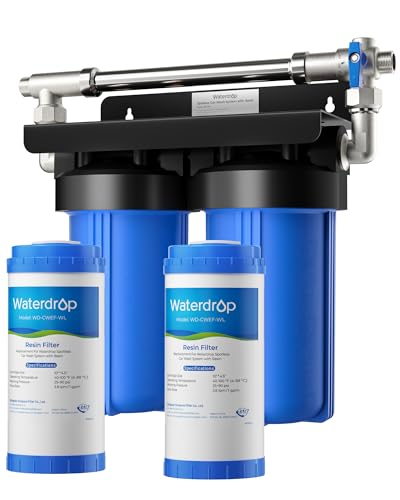
- Pre-mixed resin reduces mineral-related water spots
- Bypass valve switches between tap and purified water
- Low-cost replacement filter design
Best For: Budget-conscious car owners seeking a simple final-rinse system
Best Refillable Tank
AKM Pre-Filled DI Water System

- Pre-filled with 9.5 liters of mixed-bed resin
- Reusable tank needs resin replacement only
- Includes garden-hose connectors and TDS meter
Best For: Detailers wanting a refillable, hose-connected DI system
Best Capacity and Mobility
VEVOR Portable DI Water Deionizer

- Two 4-liter resin beds rated up to 330 gallons
- TDS meter helps track water quality
- Wheeled trolley improves portability
Best For: Frequent detailing with higher rinse volume and easy movement
Best High-Capacity Pick

- 15L refillable DI resin tank
- Bypass valve conserves resin
- Mobility cart included
Best For: Frequent car washing and larger detailing setups
Best Compact Option

- Lightweight 5L DI system
- TDS meter included
- Bypass mode extends resin life
Best For: Portable, occasional car washing and small detailing areas
Best Refillable Mid-Size Pick
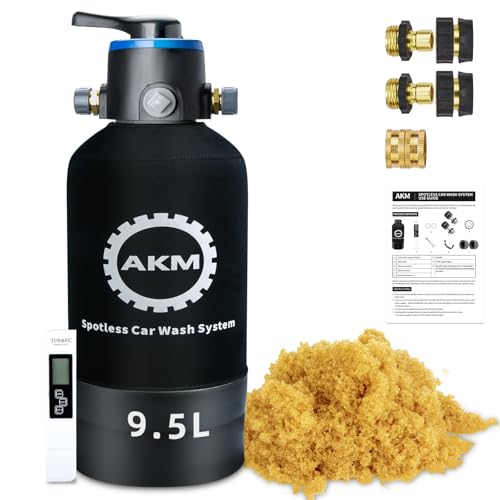
- 9.5L pre-filled, expandable to 10L
- TDS meter and connectors included
- Refillable tank design
Best For: Regular vehicle washing with moderate capacity needs
High-Purity Home Setup – Express Water RODI10D
The Express Water RODI10D is a high-capacity, six-stage reverse osmosis and deionization system that can work for users seeking a reverse osmosis system for car detailing, though its under-sink design is primarily intended for household water filtration. Its 100 GPD rating and deionization stage can provide highly filtered water for cleaning applications.
Best For: Buyers who want a versatile under-sink RO/DI system for household use and occasional detailing-related cleaning.
Pros:
- Six-stage filtration reduces up to 99.99% of listed contaminants.
- Includes a deionization stage for higher-purity water.
- Offers a 4-gallon storage tank, leak detector, and quick-connect fittings.
- Supports future upgrades such as UV or alkaline filtration.
Cons:
- Under-sink installation is less convenient for mobile car detailing.
- The system weighs 29 pounds and requires space for a tank.
- The supplied specifications emphasize household filtration rather than vehicle-specific accessories.
The RODI10D is a flexible choice when you want one system for home water filtration and cleaning tasks. For dedicated vehicle rinsing, its fixed under-sink format may be less practical than a hose-ready or cart-based unit.
Ready-to-Rinse Pick – Clearly MaD Spot Free Rinse
The Clearly MaD Spot Free Rinse is a hose-ready deionized unit designed specifically for spot-free vehicle rinsing. For shoppers comparing a reverse osmosis system for car detailing, this compact DI setup offers a straightforward alternative focused on removing dissolved solids before water dries on the finish.
Best For: Car owners and detailers who want a ready-to-use, hose-connected system for spot-free final rinses.
Pros:
- Designed for cars, trucks, motorcycles, RVs, bicycles, and windows.
- Includes dual DI housing, two cartridges, adapters, regulator, wrench, and mounting bracket.
- Cartridges are rated to remove approximately 1,800–2,000 TDS before replacement.
- Its compact package weighs about 10 pounds.
Cons:
- It is a deionization system rather than a reverse osmosis system.
- Cartridge life depends on the incoming water’s TDS level.
- The supplied information does not specify a rolling cart or large-capacity tank.
This is one of the most purpose-built options in the group for spot-free rinsing. Its included fittings and focused design make it practical for users who prioritize simple vehicle washing over broader household filtration.
Portable Professional System – Oceanic Water Systems WWROS
The Oceanic Water Systems WWROS combines reverse osmosis and deionization for portable spot-free cleaning. It is a strong candidate for shoppers seeking a reverse osmosis system for car detailing because it is explicitly positioned for cars, RVs, boats, motorcycles, solar panels, and windows.
Best For: Detailers and exterior-cleaning users who need a portable RO/DI system for multiple types of glass, vehicle, and outdoor work.
Pros:
- Removes mineral ions associated with hard-water spotting and scale.
- Suitable for car washing as well as RVs, boats, motorcycles, solar panels, and windows.
- Designed for point-of-use operation with a straightforward water hookup.
- Requires minimal maintenance, including monthly use to help prevent membrane drying.
Cons:
- At 44 pounds and 48 inches tall, it is less compact than smaller DI units.
- The supplied notes do not list included wheels, a storage tank, or a stated gallon capacity.
- Users must flush air from the line before cleaning and maintain the membrane periodically.
The WWROS offers broad cleaning versatility and both RO and DI filtration in one system. Its tall, heavier format is best suited to a dedicated cleaning setup rather than quick, highly portable rinsing.
High-Capacity Cart System – iSpring WGB22BD Spotless Water System
The iSpring WGB22BD is a dedicated deionized car-wash system with a rolling cart and up to 1,200 gallons of stated capacity. While it is not a reverse osmosis system, it is a practical comparison for anyone evaluating a reverse osmosis system for car detailing and wanting spot-free rinsing with mobility and substantial filter life.
Best For: Home detailers and mobile users who want a movable, high-capacity DI system for vehicles and coated finishes.
Pros:
- 100% DI water is intended to prevent mineral spots when water dries during washing.
- Up to 1,200 gallons of capacity, described as approximately 240 car rinses.
- Includes a heavy-duty metal rolling cart for easier movement.
- Uses standard 3/4-inch GHT quick connectors and tool-free installation.
Cons:
- DI-only filtration does not provide reverse osmosis membrane filtration.
- The 43.2-pound system may still be cumbersome to transport or store.
- Actual cartridge life can vary with water conditions and usage.
The WGB22BD stands out for detailing convenience: its cart, quick connectors, and large stated capacity reduce setup friction. It is especially appealing for repeated rinsing of cars, RVs, motorcycles, and vehicles with ceramic coatings, wraps, or wax.
Best Value Spotless Rinse – Waterdrop CWE Deionized Water System
If you want a practical reverse osmosis system for car detailing, the Waterdrop CWE is a compact, non-electric deionizing option for the final rinse. Its pre-mixed resin helps reduce mineral content that can leave spots, while the bypass valve lets you use tap water for the earlier wash stages.
Best For: Car owners who want a simple, freestanding spot-free rinse system with low-cost replacement filters.
Pros:
- Pre-mixed premium resin helps reduce calcium, magnesium, and other mineral particles.
- Bypass switch supports convenient switching between tap water and purified water.
- Includes a freestanding or hanging installation option and operates without electricity.
- Replacement filters are designed to cost less than $25, according to the supplied product notes.
Cons:
- It reduces water spots but does not reduce TDS to zero.
- The stated capacity is based on 200 ppm feed water, so actual resin life varies with water quality.
- The system uses 3/4-inch MNPT inlet and outlet threads, so adapters may be needed.
The Waterdrop CWE is best used only for the final rinse, with the product guidance recommending roughly 8–10 minutes in spotless-rinse mode. It is a straightforward choice when portability, bypass control, and inexpensive filter replacement matter more than true reverse-osmosis filtration.
Best Refillable Tank – AKM Pre-Filled DI Water System
For shoppers comparing a reverse osmosis system for car detailing, the AKM system offers a reusable tank-based alternative that connects directly to a garden hose. It arrives filled with mixed-bed DI resin and is intended to produce deionized water for a spot-free vehicle rinse.
Best For: Detailers who prefer a refillable tank, garden-hose quick connections, and an included TDS meter for checking water quality.
Pros:
- Comes pre-filled with 9.5 liters of mixed-bed resin.
- Reusable tank design requires replacing the resin rather than the complete housing.
- Includes two garden-hose quick connectors, sealing tape, and a TDS meter.
- Can be used for cars, RVs, motorcycles, bikes, and boats.
Cons:
- At 22 pounds, it is heavier than some compact portable systems.
- The notes do not provide a specific rated gallon capacity or resin lifespan.
- Resin replacement requires emptying and refilling the tank manually.
The AKM is a useful fit for users who value reusability and want to monitor water quality rather than replace disposable cartridges. Its included connectors simplify setup, though the larger tank and manual resin-refill process make it better suited to a dedicated detailing area than occasional carrying.
Best Capacity and Mobility – VEVOR Portable DI Water Deionizer
The VEVOR system is a strong alternative to a reverse osmosis system for car detailing when you want a mobile final-rinse setup with measurable capacity. Its two 4-liter resin beds, TDS meter, bypass valve, and wheeled trolley support repeated spot-free rinses without manually drying the vehicle.
Best For: Frequent detailers who need higher stated capacity, real-time TDS checks, and easier movement around a driveway or shop.
Pros:
- Uses 2 x 4-liter mixed-bed resin for a stated capacity of up to 330 gallons at 200 ppm.
- Includes a TDS meter, with replacement recommended around 30 ppm.
- Bypass mode supports washing and soap rinsing before switching to filtered water.
- Trolley base, wheels, and dual handles improve mobility.
Cons:
- At 45.9 pounds, it is substantially heavier than smaller systems.
- The tall trolley footprint may require more storage space.
- Resin capacity depends on feed-water conditions and will vary in use.
With its wheeled frame and stated 330-gallon capacity, the VEVOR is designed for users who rinse vehicles often. The bypass workflow also keeps resin reserved for the final rinse, while the TDS meter provides a practical signal for when the resin needs attention.
Best High-Capacity Pick – 15L Spotless Water System
For frequent detailing, this reverse osmosis system for car detailing is better understood as a large-capacity deionized-water setup for the final rinse. Its 15L mixed-bed DI resin tank, bypass valve, and included mobility cart are designed to reduce mineral spots while making the unit easier to move around a driveway or garage.
Best For: Frequent car washers and users who want a refillable, high-capacity spot-free rinse system.
Pros:
- 15L resin capacity can produce up to approximately 1,500 gallons at 50 ppm TDS, according to the supplied specifications.
- Bypass mode helps conserve DI resin during the main wash, while filtration mode can be used for the final rinse.
- Includes a dedicated mobility cart and uses replaceable resin instead of requiring disposal of the entire system.
Cons:
- The approximately 40.1-pound unit is substantially heavier than smaller portable systems.
- Actual resin life varies with local water quality and mineral content.
This is the strongest choice of the three when capacity and long-term refillability matter most. The cart adds convenience, but the larger tank and heavier construction make it better suited to a semi-permanent washing setup than quick, lightweight jobs.
Best Compact Option – 5L Spotless Car Wash System
This compact reverse osmosis system for car detailing is a portable deionized-water solution for reducing mineral spots after washing. The 5L mixed-bed resin system includes a TDS meter and bypass valve, making it easier to monitor output and reserve filtered water for the final rinse.
Best For: Detailers and vehicle owners who want a lighter, more portable spot-free rinse system.
Pros:
- 5L DI resin capacity provides a smaller, lighter format at a listed weight of 15.27 pounds.
- Included TDS meter helps check water quality during use.
- Bypass and filtered modes support resin conservation during general washing.
Cons:
- Its 5L resin capacity is lower than the other listed systems.
- High-TDS water and fast flow may reduce filtration performance.
- The instructions recommend letting the system sit full of water briefly if the TDS reading does not reach zero.
This system offers the most approachable balance of portability and monitoring features. It is a practical fit for occasional washing or smaller work areas, though users with high-TDS tap water may need to pay closer attention to flow rate and TDS readings.
Best Refillable Mid-Size Pick – 10L Spotless Water System
For shoppers comparing a reverse osmosis system for car detailing with other spot-free rinse options, this AKM unit provides a reusable 9.5L pre-filled mixed-bed resin setup that can be filled to 10L. It connects to a garden hose, includes a TDS meter, and uses bypass mode to save DI water during the main wash.
Best For: Vehicle owners who want a refillable mid-capacity system with included water-quality testing.
Pros:
- Pre-filled 9.5L resin capacity can be filled to 10L after adding water.
- Includes a TDS meter, garden-hose quick connectors, and PTFE sealing tape.
- Reusable tank accepts replacement AKM mixed-bed DI resin when the original resin is exhausted.
Cons:
- It is heavier and larger than the compact 5L option.
- Resin replacement is required once the media is exhausted.
- As with other DI systems, water quality and usage conditions affect resin life.
This model is a sensible middle ground: it offers more resin capacity than the compact system without the 15L unit’s larger footprint and cart-focused design. The included TDS meter is particularly useful for checking when the system is delivering low-mineral rinse water.
How We Picked the Best Reverse Osmosis System for Car Detailing
We focused on systems designed to produce low-TDS or deionized rinse water for vehicles, windows, glass, and similar surfaces. Our comparison considers filtration approach, resin capacity, stated water output, portability, hose compatibility, included meters or bypass valves, and how easily consumables can be replaced.
Because product specifications and water conditions vary, treat advertised gallon counts as estimates rather than guarantees. Hard water, high feed-water TDS, low pressure, and frequent use can all shorten filter or resin life.
Quick Comparison
| System type | Best suited to | Main advantage | Trade-off |
|---|---|---|---|
| RO/DI system | Frequent or high-volume detailing | Multi-stage reduction of contaminants | Usually larger and slower |
| Portable DI unit | Driveway washing and final rinses | Simple hose connection and compact setup | Resin can be consumed quickly in hard water |
| Large-capacity DI system | Pros and high-use households | Longer intervals between resin changes | Higher upfront cost and storage needs |
Key Buying Factors for a Reverse Osmosis System for Car Detailing
RO, DI, or RO/DI?
Reverse osmosis removes a broad range of dissolved contaminants but generally needs adequate water pressure and produces wastewater. Deionization is often simpler for a final spot-free rinse, though resin capacity depends heavily on incoming TDS. Combined RO/DI systems can reduce the load on DI resin and make sense for repeated or high-volume work.
Resin Capacity and Operating Cost
Look beyond the purchase price. A pre-filled cartridge is convenient, while larger resin beds may provide more usable water before replacement. Check whether replacement resin or cartridges are readily available and whether the housing can be serviced without specialized tools.
Water Quality Monitoring
A built-in or compatible TDS meter helps confirm when water quality is declining. For consistent results, test your source water and the filtered output rather than relying only on a stated gallon rating.
Connections, Pressure, and Storage
Garden-hose quick connectors make setup easier, but verify thread compatibility and included adapters. Confirm your home’s water pressure requirements, hose length, unit dimensions, and whether the system can be stored upright. A bypass valve is useful when you want ordinary water for washing and purified water only for the final rinse.
Who Should Buy Which Reverse Osmosis System for Car Detailing?
Choose a Portable DI Unit If:
You mainly wash one or two vehicles at home and want the quickest path to a spot-free final rinse. These systems are generally compact, hose-ready, and easy to move.
Choose a Larger DI System If:
You have hard water, detail several vehicles regularly, or prefer fewer resin changes. Prioritize a larger resin charge, a TDS meter, and accessible replacement media.
Choose an RO/DI System If:
You need broader contaminant reduction, handle higher water volumes, or want to reduce DI resin consumption over time. Be prepared for a larger footprint, more setup, and possible wastewater management.