Limited counter and cabinet space does not mean you have to settle for basic water filtration. The best reverse osmosis systems for small kitchens can reduce many common impurities while fitting into compact layouts.
This roundup compares countertop and under-sink models across capacity, installation, storage, efficiency, and useful features so you can choose a system that matches your space and water needs.
Best 10 Reverse Osmosis Systems for Small Kitchens Picks for 2026
Reliable Classic
iSpring RCC7-BN 5-Stage RO System

- NSF/ANSI 58 certified filtration
- Non-electric, compact under-sink design
- Includes lead-free designer faucet
Best For: Traditional under-sink filtration without requiring an outlet
Small-Space Specialist
Waterdrop G6A6 Compact Alkaline RO
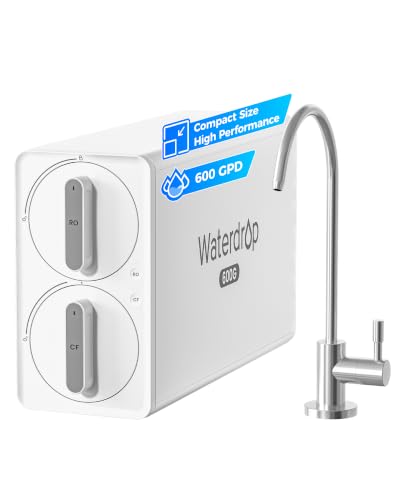
- Tankless design saves substantial cabinet space
- 600 GPD output with a 2:1 pure-to-drain ratio
- Adds minerals and includes filter reminders
Best For: Space-constrained kitchens with an under-sink power outlet
Water-Saving Value

- 1:1 drain ratio helps reduce water waste
- 100 GPD output with fast-flow fittings
- Includes faucet, tank, tubing, and fittings
Best For: Tank-based RO buyers prioritizing water efficiency
Smart High-Flow Pick

- 600 GPD tankless filtration with fast dispensing
- Smart faucet and app show TDS and filter life
- 3:1 pure-to-drain ratio and refrigerator compatibility
Best For: Connected kitchens needing fast, monitored water filtration
Best Plug-and-Play Pick

- Installation-free countertop design
- Five-stage filtration with Aquaporin Inside
- 12-month filter and included glass bottle
Best For: Renters and small kitchens needing a compact, portable RO unit
Best Under-Sink Value
Express Water RO5DX 5-Stage System

- No-electricity under-sink design
- Four-gallon storage tank with 0.8 GPM flow
- Includes extra filters and leak detector
Best For: DIY users with cabinet space who want higher-capacity dispensing
Best Glass-Carafe Option
Bluevua RO100ROPOT Countertop System

- 12-liter countertop reservoir with glass carafe
- Five-stage filtration with remineralization
- Filter monitor and 2:1 pure-to-drain ratio
Best For: Small households wanting higher countertop capacity and glass storage
Top-Tier Capacity

- 90 GPD, five-stage under-sink filtration
- Designed to reduce 99% of 1,000+ impurities
- Large filters and included lead-free faucet
Best For: High-capacity filtration in a small kitchen with available under-sink space
Countertop Simplicity
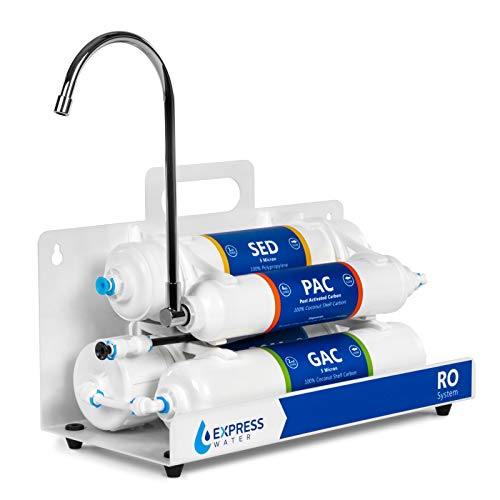
- Four-stage filtration in a compact countertop body
- Preassembled with quick-connect replacement filters
- Produces up to 12 gallons per day
Best For: Renters and compact kitchens needing easy, non-permanent installation
Space-Saving Speed

- Narrow tankless design for under-sink installation
- 600 GPD rating with rapid cup filling
- 2.3:1 pure-to-drain ratio and self-flushing
Best For: Power-equipped small kitchens prioritizing speed and cabinet space
Reliable Classic – iSpring RCC7-BN 5-Stage RO System
For shoppers comparing reverse osmosis systems for small kitchens, the iSpring RCC7-BN offers a traditional under-sink setup with a storage tank, five filtration stages, and a 75 GPD output. Its compact design fits under most kitchen sinks and operates without electricity.
Best For: Households wanting a proven, non-electric under-sink RO system with a designer faucet.
Pros:
- NSF/ANSI 58 certified and designed to reduce up to 99% of more than 1,000 listed contaminants.
- Compact under-sink design requires no power source.
- Includes a 100% lead-free brushed-nickel faucet, tank, filters, and tubing.
- Transparent first-stage housing makes filter inspection easy.
Cons:
- The included storage tank takes more cabinet space than a tankless system.
- Its 75 GPD rating is lower than the high-flow options in this roundup.
The RCC7-BN is a practical choice when dependable filtration and straightforward installation matter more than smart controls or maximum flow. A one-year warranty with registration and lifetime personalized support add reassurance.
Small-Space Specialist – Waterdrop G6A6 Compact Alkaline RO
The Waterdrop G6A6 is especially suited to reverse osmosis systems for small kitchens because its tankless design saves up to 81.8% more under-sink space than traditional systems. It combines 600 GPD flow with mineral infusion, quick filter changes, and fewer water connections.
Best For: Small kitchens that need maximum cabinet clearance, fast dispensing, and mineral-enriched water.
Pros:
- Ultra-compact tankless design measures 15.94 by 5.31 by 9.61 inches.
- 600 GPD capacity and a 2:1 pure-to-drain ratio support fast, more efficient operation.
- Mineral infusion adds calcium, magnesium, sodium, and potassium while targeting a pH around 7.5.
- Filter reminders and twist-and-pull replacement simplify maintenance.
Cons:
- Requires a continuously available electrical outlet under the sink.
- Mineral and performance claims are based on the supplied SGS testing and product specifications rather than NSF/ANSI 58 certification.
With its narrow footprint and high output, the G6A6 is a strong fit where cabinet space is the main constraint. Just confirm that your sink has a suitable power outlet before buying.
Water-Saving Value – APEC ROES-100 5-Stage RO
The APEC ROES-100 is a conventional five-stage system for shoppers seeking reverse osmosis systems for small kitchens with a focus on water efficiency. Its 1:1 drain ratio, 100 GPD capacity, and fast-flow 3/8-inch output balance everyday performance with a manageable under-sink footprint.
Best For: Budget-conscious households that want a tank-based RO system with a lower drain ratio and quick faucet flow.
Pros:
- 1:1 drain ratio is designed to save water compared with higher-waste RO systems.
- 100 GPD capacity and 3/8-inch fast-flow output help fill glasses and pots more quickly.
- Designed, engineered, and assembled in the USA, with NSF certification noted in the product details.
- Includes a lead-free designer faucet and leak-free quick-connect fittings.
Cons:
- The included tank makes it bulkier than the tankless models.
- Installation requires an electrical connection, according to the listed specifications.
The ROES-100 is a sensible middle ground for kitchens that can accommodate a tank but still want reduced drain water and a faster dispensing experience. Its included parts and installation guidance also support DIY setup.
Smart High-Flow Pick – VIOMI V6 PRO 600GPD RO
The VIOMI V6 PRO combines a tankless form with 600 GPD performance, making it a capable option among reverse osmosis systems for small kitchens. Its nine-stage filtration, smart faucet, app controls, and refrigerator compatibility add convenience, though installation requires power and drilled openings.
Best For: Tech-focused households wanting fast filtration, live TDS information, and a possible refrigerator or ice-maker connection.
Pros:
- Tankless 600 GPD system can fill an 8-ounce glass in about nine seconds.
- Meets listed NSF/ANSI 42, 53, 58, and 372 requirements and includes SGS testing.
- Smart LED faucet displays TDS and filter life, while the app provides usage insights.
- 3:1 pure-to-drain ratio improves efficiency, and pre-installed filters are rated for up to two years.
Cons:
- Requires a standard electrical outlet and two drilled holes for installation.
- Refrigerator or ice-maker tubing is not included.
- A garbage disposer requires its own dedicated outlet.
The V6 PRO stands out when speed and monitoring features are worth a more involved installation. Measure the cabinet, verify outlet access, and plan the faucet and drain holes before ordering.
Best Plug-and-Play Pick – PHILIPS Countertop RO Filter
For shoppers comparing reverse osmosis systems for small kitchens, the PHILIPS countertop model is a compact, installation-free option. Its five-stage filtration uses Aquaporin Inside technology, delivers about 9 ounces per minute, and includes a 16.9-ounce glass bottle.
Best For: Renters, dorms, offices, RVs, and small kitchens where countertop convenience matters more than high-volume dispensing.
Pros:
- Slim countertop footprint and plug-and-play setup
- Five-stage filtration reduces TDS and targets chlorine, lead, calcium, and other impurities
- Integrated filter lasts up to 12 months and the unit has a self-cleaning function
- NSF/ANSI/CAN 372 and NSF/ANSI 58 certified, with a two-year machine warranty
Cons:
- The 16.9-ounce capacity requires frequent refilling
- Its 9-ounce-per-minute flow is slower than a faucet
- It requires electricity and routine tank replacement and cleaning
This is a particularly practical choice when you cannot modify plumbing. The small reservoir limits batch size, but the compact dimensions, straightforward maintenance, and included bottle make it well suited to light daily drinking-water needs.
Best Under-Sink Value – Express Water RO5DX 5-Stage System
Among reverse osmosis systems for small kitchens, the Express Water RO5DX is the conventional under-sink choice for households that want a larger reserve than a countertop dispenser. It uses five stages, needs no electricity, and includes an extra filter set and leak detector.
Best For: Homeowners or confident DIY users who have under-sink space and want a 4-gallon tank with faucet-style dispensing.
Pros:
- Under-sink installation keeps the countertop clear
- No electricity is required
- Four-gallon storage capacity and up to 0.8 GPM flow rate
- Includes an extra filter set, leak detector, and deluxe chrome faucet
Cons:
- At 14 by 5 by 15 inches and 31 pounds, it needs meaningful cabinet space
- Installation requires tools and under-sink plumbing access
- The listed maximum supported TDS level is 300 ppm
The RO5DX makes better sense than a countertop model when cabinet capacity and basic DIY installation are available. Its tank provides more readily available water, while the lack of electrical components simplifies placement near a sink.
Best Glass-Carafe Option – Bluevua RO100ROPOT Countertop System
The Bluevua RO100ROPOT combines countertop convenience with a larger glass carafe, making it a strong contender among reverse osmosis systems for small kitchens. It requires no plumbing, uses five-stage filtration with remineralization, and displays filter life and water quality.
Best For: Small households that want portable countertop filtration, a borosilicate glass carafe, and less frequent filter monitoring.
Pros:
- No installation is required; simply plug it in and fill it
- Five-stage filtration includes a remineralization filter
- 12-liter capacity and a 2:1 pure-to-drain ratio
- Filter-life monitor, power-saving standby mode, and filters lasting up to 24 months
Cons:
- Its 10.9 by 15.4 by 14.3-inch footprint may be large for very tight counters
- The 0.26-liter-per-minute flow rate is relatively slow
- It requires countertop space and electrical power
Choose this model when a substantial reservoir and glass carafe are more important than the smallest possible footprint. Its remineralization stage, monitoring display, and water-saving design add convenience, though the larger body should be measured against available counter space.
Top-Tier Capacity – APEC Water RO-90
For households seeking reverse osmosis systems for small kitchens, the APEC Water RO-90 is a traditional under-sink option with a 90-gallon-per-day capacity. Its five-stage design, large filters, included tank, and DIY installation kit make it suited to kitchens that have room beneath the sink for a more substantial system.
Best For: Small kitchens that need high daily capacity and a conventional tank-style under-sink RO system.
Pros:
- Five-stage filtration is designed to reduce up to 99% of contaminants, including lead, fluoride, arsenic, chlorine, and other impurities.
- 90 GPD capacity provides substantially more production than the included countertop alternative.
- Large-capacity filters are designed to last twice as long as smaller all-in-one filters, potentially reducing change-outs.
- Includes a lead-free faucet, tubing, tank, fittings, and installation accessories.
Cons:
- The tank-style under-sink design may use more cabinet space than a tankless model.
- It requires suitable water pressure between 40 and 85 psi.
- Its 25-pound weight and multiple components may make installation more involved than a countertop system.
The RO-90 is a strong fit when capacity and established under-sink filtration matter more than minimizing cabinet hardware. Its WQA Gold Seal and NSF-certified filtration components add reassurance, while the included quick-connect fittings support a more straightforward installation.
Countertop Simplicity – Express Water Countertop RO
Among reverse osmosis systems for small kitchens, the Express Water Countertop RO stands out for avoiding under-sink installation. It arrives preassembled, connects through a threaded removable faucet aerator, and uses four filtration stages for on-demand drinking water without requiring a dedicated cabinet installation.
Best For: Renters, compact kitchens, and users who want a low-maintenance RO system without drilling or under-sink plumbing.
Pros:
- Compact countertop format measures 13.25 by 6.5 by 14 inches.
- Four-stage filtration includes sediment, granular carbon, RO membrane, and post-activated carbon filters.
- Quick-connect cartridges and a preassembled design support simple setup and maintenance.
- Removes up to 99.99% of major contaminants and includes a one-year limited warranty.
Cons:
- Production is limited to about 0.5 to 1 gallon per hour, or 12 gallons per day.
- It works only with faucets that have a threaded removable aerator and is not compatible with sprayer faucets.
- The stated pure-to-drain ratio is 1:3, so it uses more drain water than some newer designs.
This Express Water model is the easiest match for a small kitchen where portability and simple setup outweigh production speed. Check faucet compatibility before buying, since that connection requirement is the main installation limitation.
Space-Saving Speed – Philips 600 GPD Tankless RO
The Philips AUT9300 is one of the more space-efficient reverse osmosis systems for small kitchens, using a tankless under-sink design that measures about 4.3 inches wide. Its 600 GPD rating, automatic self-flushing, and 2.3:1 pure-to-drain ratio make it appealing when cabinet space, speed, and water efficiency are priorities.
Best For: Small kitchens with an under-sink power outlet that need fast, tankless water production and reduced cabinet footprint.
Pros:
- Tankless body is approximately 15.8 by 4.3 by 12.3 inches, conserving under-sink space.
- 600 GPD rating can fill an 8-ounce cup in approximately eight seconds under specified conditions.
- 2.3:1 pure-to-drain performance and approximately 70% water recovery are designed to use water more efficiently.
- Self-flushing operation and tool-free twist-and-replace filters simplify upkeep.
Cons:
- Requires an under-sink electrical outlet and a sink or countertop hole for the RO faucet.
- Drilling may be required, and adapters may be needed for connections other than 1/2-inch NPT.
- Actual flow and recovery vary with water pressure, temperature, and water quality.
The Philips system is particularly compelling when a small kitchen cannot spare room for a storage tank. Its electrical and faucet-installation requirements make it less plug-and-play than the countertop option, but the narrow tankless form and high rated output offer a useful combination for frequent water use.
How We Picked the Best Reverse Osmosis Systems for Small Kitchens
We compared these systems based on the issues that matter most in a compact kitchen: installation footprint, filter capacity, daily output, water storage, maintenance, operating efficiency, and ease of use. We also separated countertop designs from under-sink systems because the right format depends heavily on available cabinet and counter space.
Certification claims, included components, and stated performance should be checked against the manufacturer’s current specifications. Replacement filter availability and cost are equally important, since reverse osmosis systems require ongoing filter changes.
Quick Comparison
| System type | Best for | Main advantage | Space consideration |
|---|---|---|---|
| Countertop RO | Renters and installation-free setups | Simple setup and portability | Uses valuable counter space |
| Under-sink RO with tank | Higher-volume household use | Preserves counter space | Needs cabinet room and faucet installation |
| Tankless under-sink RO | Modern kitchens with limited cabinet space | Compact storage and fast flow | Requires plumbing and power |
Key Buying Factors for Reverse Osmosis Systems for Small Kitchens
Measure the Installation Area First
For under-sink models, measure cabinet width, depth, height, plumbing clearance, and the space around the drain connection. A tank may take more room than the filtration unit itself. Countertop models need enough surface area near a faucet and electrical outlet, if required.
Choose Capacity Based on Daily Demand
Systems rated from 50 to 90 gallons per day may suit many small households, while 600 GPD tankless models are better for frequent use or faster dispensing. Actual output varies with water pressure, temperature, and feed-water quality.
Consider Wastewater and Efficiency
Reverse osmosis produces filtered water and a wastewater stream. Low-drain-ratio designs can reduce waste, but performance depends on installation and operating conditions. Check the stated ratio rather than assuming every high-capacity system is equally efficient.
Check Filtration and Maintenance Needs
Five-stage systems commonly combine sediment, carbon, and RO membrane filtration, while alkaline or mineral stages add minerals after purification. Confirm replacement intervals, filter prices, and whether filters are easy to access before buying.
Think About Installation and Dispensing
Countertop systems are usually the simplest option, but they require refilling a reservoir and occupy visible space. Under-sink units offer a cleaner appearance but may need a dedicated faucet, drain saddle, shutoff connection, and electrical outlet.
Who Should Buy Which Reverse Osmosis Systems for Small Kitchens?
Choose a countertop system if you rent, cannot modify plumbing, or want the quickest setup. These are also practical for occasional use and smaller households.
Choose a tanked under-sink system if cabinet space is available and you want a conventional setup for regular drinking and cooking water without using counter space.
Choose a tankless high-capacity model if you have limited cabinet room, want faster dispensing, and are comfortable with a more involved installation and power connection.
Choose an alkaline or mineral model if you specifically prefer remineralized water after RO filtration. Treat this as a taste and preference feature, not a substitute for checking the system’s core filtration performance.