When safe drinking water is uncertain, the right reverse osmosis system can provide a practical backup for emergencies, travel, camping, and off-grid living. The best option depends on your water source, available power, required output, and how portable the system needs to be.
We compared 10 reverse osmosis systems across portable, countertop, under-sink, electric, hand-operated, and desalination-focused designs to help you choose a reliable fit for your emergency water plan.
Best 10 Reverse Osmosis Systems for Emergencies Picks for 2026
Best Manual Emergency Pick

- Chemical-free portable RO filtration
- Processes up to 8,000 liters
- 200–300 mL/min flow rate
Best For: Camping, hiking, travel, and freshwater emergency kits
Best Rechargeable Travel Option
Purewell Portable Electric RO System

- 5,200mAh rechargeable battery
- Dual TDS and battery displays
- Includes carry bag and built-in light
Best For: Camping, RV travel, and off-grid freshwater filtration
Best No-Power Home Setup

- No electricity or batteries required
- 600 GPD tankless output
- Includes faucet and TDS meter
Best For: Pressurized home, office, or RV water connections
Best Seawater Emergency Tool

- No power or batteries needed
- At least 97% stated salt rejection
- Outputs up to 2 liters per hour
Best For: Sailing, coastal emergencies, and marine survival kits
Portable DIY RO
Geekpure 4-Stage 100 GPD System

- Four-stage sediment, carbon, RO, and DI filtration
- 100 GPD capacity with quick-connect DIY installation
- Tankless design requires suitable water pressure and a separate faucet or tank
Best For: RV, apartment, boat, and other pressurized-water emergency setups
Battery-Powered Survival Filter

- Hybrid and RO filtration in a freestanding portable unit
- 12,000 mAh LiFePO4 battery rated for up to 27 liters per charge
- 250 mL/min flow and included storage bag support outdoor use
Best For: Camping, hiking, and off-grid emergency drinking-water needs
Quick Countertop Setup
APEC RO-CTOP-C Portable RO System
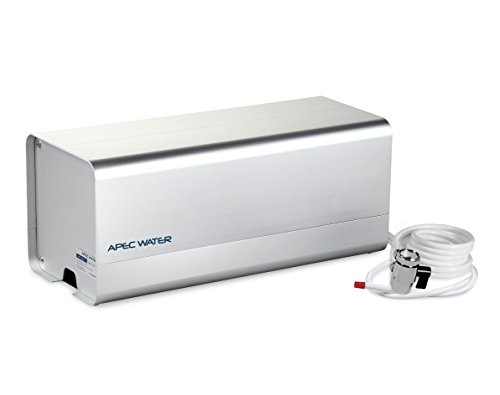
- Hooks to most standard faucets without permanent installation
- Portable countertop design includes a carrying case
- Manual system is not compatible with pull-out or sprayer faucets
Best For: Apartments, motor homes, travel, and temporary emergency setups
Off-Grid Pick
Portable Solar RO Water System

- Solar- and battery-powered portable design
- Combines sediment, carbon, and RO filtration
- Rated for up to 200 gallons of capacity
Best For: Off-grid emergency water treatment
Home Emergency Pick

- Runs without an electrical outlet
- Includes leak sensor and pressure regulator
- Stores filtered water in a 2.2-gallon tank
Best For: Fixed home emergency preparedness
Quick-Setup Pick
Portable Countertop 5-Stage RO

- Installs without permanent plumbing
- Includes 100 GPD RO and DI postfilter
- Connects to faucets or garden/laundry outlets
Best For: Fast temporary countertop filtration
Best Manual Emergency Pick – Portable RO Water Filter Pump
For shoppers comparing reverse osmosis systems for emergencies, this compact manual pump is designed for portability and off-grid use. It uses RO filtration without chemicals and can process up to 8,000 liters from suitable freshwater sources such as creeks and streams.
Best For: Camping, hiking, backpacking, travel, and emergency preparedness where portability and manual operation matter.
Pros:
- Portable freestanding design with no chemical treatment required.
- RO filtration helps reduce small particles and impurities.
- Rated capacity of up to 8,000 liters.
- Flow rate reaches approximately 200–300 milliliters per minute.
Cons:
- Manual pumping requires user effort.
- Maximum supported source-water TDS is listed as 300 ppm.
- Its flow rate is slower than powered household systems.
This is a practical lightweight option for freshwater emergencies and outdoor trips. Its main tradeoff is the need to pump manually, but its compact format and large stated filter capacity make it useful for a grab-and-go emergency kit.
Best Rechargeable Travel Option – Purewell Portable Electric RO System
This Purewell system is worth considering among reverse osmosis systems for emergencies when you want powered filtration away from a wall outlet. Its rechargeable 5,200mAh battery, Type-C charging, dual TDS display, and replaceable filter components suit camping, RV travel, and other mobile setups.
Best For: Car camping, RV trips, and off-grid travel with access to suitable freshwater sources.
Pros:
- Rechargeable electric pump works without a fixed power outlet.
- Combines a PP pre-filter, activated carbon, and RO membrane.
- Dual TDS display shows incoming and filtered-water readings.
- Includes a carry bag and built-in light for campsite use.
Cons:
- Battery operation requires charging.
- Small 0.7-liter capacity may require frequent refilling.
- Notes specify use with suitable freshwater sources, not seawater.
The electric pump reduces the effort associated with manual emergency filtration, while the display helps monitor water-quality changes. It is especially convenient for vehicle-based preparedness, though its compact reservoir is better suited to personal or small-group use than high-volume supply.
Best No-Power Home Setup – Ontulor 600 GPD Tankless RO
For household preparedness, this tankless model stands out among reverse osmosis systems for emergencies because it operates from water pressure rather than electricity. Its six-layer cartridge, 600 GPD rating, included faucet, and TDS meter provide a compact setup for kitchens, offices, RVs, or other supported installations.
Best For: Homes, offices, RVs, and emergency setups with pressurized freshwater plumbing.
Pros:
- Operates without electricity, batteries, or a pump.
- Tankless design delivers up to 600 gallons per day.
- Six-layer cartridge includes sediment, carbon, and RO filtration.
- Includes a dedicated faucet and TDS meter.
Cons:
- Requires water pressure and an installation connection.
- It is not a standalone portable field filter.
- Emergency usefulness depends on having a functioning water supply.
This is the strongest fit for a prepared home or mobile installation rather than a backpack. Its no-electricity design can be valuable during power interruptions, but it cannot replace a portable source-water purifier when plumbing is unavailable.
Best Seawater Emergency Tool – Hand-Operated RO Desalinator
When an emergency involves coastal or marine conditions, this hand-operated desalinator offers a specialized alternative to general reverse osmosis systems for emergencies. It uses a manual pump and RO membrane to desalinate seawater, with a stated salt-rejection rate of at least 97% and output of up to 2 liters per hour.
Best For: Sailing, lifeboats, coastal trips, marine rescue, and emergency kits that may need seawater desalination.
Pros:
- Requires no electricity or batteries.
- Designed specifically for seawater desalination.
- Produces up to 2 liters of fresh water per hour.
- Compact 1.35-kilogram design fits boats and survival kits.
Cons:
- Continuous hand pumping requires physical effort.
- Its stated output is modest for groups or extended use.
- Specialized marine design is less useful for ordinary household water emergencies.
This is the most targeted choice for saltwater scenarios, where ordinary freshwater filters are unsuitable. Its light weight and independence from power make it valuable marine survival gear, though users should plan for the effort and limited hourly production.
Portable DIY RO – Geekpure 4-Stage 100 GPD System
The Geekpure 4-Stage Portable Reverse Osmosis System is a practical option when you need reverse osmosis systems for emergencies, travel, RV use, or other temporary setups. Its sediment, carbon, RO, and DI stages are designed to reduce a broad range of contaminants, while the tankless format saves space.
Best For: Apartments, RVs, boats, mobile homes, aquariums, and DIY users who have a suitable water connection and want high daily output.
Pros:
- Four-stage filtration includes sediment, carbon, RO, and DI filters.
- 100 gallons-per-day capacity, with a listed flow of about 260 milliliters per minute.
- Quick-connect fittings, color-coded tubing, and an installation manual support DIY setup.
- NSF/ANSI 58-compliant components and included filters add practical value.
Cons:
- Requires 40–100 psi feed-water pressure and a suitable water source.
- Tankless design has no faucet and cannot switch on and off automatically.
- Produces wastewater at a listed 1:2 pure-to-waste ratio.
This is a strong emergency-preparedness choice for users who can connect it to pressurized tap or well water. Remember to flush new filters for 30 minutes and plan for periodic filter replacement, including DI-filter replacement when its taste changes.
Battery-Powered Survival Filter – ITEHIL Hybrid & RO Purifier
The ITEHIL portable purifier is built for situations where conventional plumbing is unavailable, making it a particularly convenient choice among reverse osmosis systems for emergencies, camping, and survival kits. It combines hybrid and RO filtration with a built-in rechargeable battery and a freestanding dispenser format.
Best For: Camping, hiking, outdoor preparedness, and emergency use where portability and battery operation matter more than high-volume household production.
Pros:
- Portable, freestanding design does not require countertop installation.
- Hybrid and RO filter elements are designed to purify 99.99% of impurities, according to the supplied product information.
- Built-in 12,000 mAh LiFePO4 battery is rated for up to 27 liters per charge.
- Includes a pre-filter, internal filter, storage bag, and Type-C cable.
Cons:
- Battery operation requires charging before extended use.
- Maximum flow rate is 250 milliliters per minute, so filling larger containers takes time.
- At 13.3 pounds, it is portable but not especially lightweight for hiking.
With its rechargeable battery and carrying bag, this model is more self-contained than plumbed-in RO units. Its stated 27-liter charge capacity can suit a day outdoors, while the included accessories support transport and setup.
Quick Countertop Setup – APEC RO-CTOP-C Portable RO System
The APEC RO-CTOP-C offers a simple countertop approach to reverse osmosis systems for emergencies, especially in apartments, motor homes, and temporary living spaces. It connects to most standard faucets in minutes and uses a manual, gravity-fed design without permanent installation.
Best For: Apartment residents, travelers, seniors, students, and motor-home users who want a portable RO system that can be connected when needed.
Pros:
- Installation-free countertop design is lightweight and portable.
- Connects to most standard faucets in minutes.
- Includes the osmosis system, filters, parts, owner’s manual, and carrying case.
- Supports listed source-water TDS levels up to 2,000 ppm.
Cons:
- Not compatible with pull-out, sprayer, or certain designer faucets.
- Manual/gravity-fed operation may be less convenient than powered systems.
- Designed for countertop use rather than direct whole-home installation.
This APEC is a practical grab-and-use option when you have access to a compatible faucet. Its compact format and carrying case make it easier to store or transport, but faucet compatibility should be checked before purchase.
Off-Grid Pick – Portable Solar RO Water System
Rover R.O. | Off-Grid, Portable Reverse Osmosis Travel Water System (200 Gallons Per Day)
Check Price On AmazonFor emergencies that may leave you away from dependable utilities, the Rover R.O. is one of the more purpose-built reverse osmosis systems for emergencies. It combines sediment and carbon filtration with reverse osmosis, runs from solar power or its included battery, and is designed for water drawn from sources such as lakes, streams, and rivers.
Best For: Off-grid emergency preparation, camping, boating, and disaster-affected areas where portability and independent power matter.
Pros:
- Portable, compact, freestanding design with included solar kit, battery, and booster pump.
- Uses sediment, carbon block, and reverse osmosis filtration for water from varied sources.
- Provides up to 200 gallons of capacity and can operate without conventional grid power.
- Remineralizes treated water with minerals according to the supplied product description.
Cons:
- Its maximum flow rate is 0.14 gallons per minute, so filling containers may take time.
- Designed for source water up to 1,000 ppm TDS.
- Requires access to sunlight or a charged battery for operation.
The Rover R.O. stands out when emergency water treatment must travel with you. Its all-in-one solar-and-battery setup is convenient, though its slower flow rate makes it better suited to deliberate, planned water production than high-volume use.
Home Emergency Pick – Compact 5-Stage Under-Sink RO
For households preparing for interruptions to treated tap water, this compact model is a practical choice among reverse osmosis systems for emergencies. Its five-stage filtration operates without electricity, stores filtered water in a 2.2-gallon tank, and includes features intended to simplify installation and help protect against leaks.
Best For: Apartments, houses, basements, garages, and other fixed locations with pressurized plumbing but limited cabinet space.
Pros:
- Five-stage filtration includes a reverse osmosis membrane and NSF/ANSI-certified filter components.
- Non-electric operation works from incoming water pressure.
- Built-in leak sensor and pressure regulator add protection during home use.
- Preassembled unit, color-coded tubing, adapters, faucet, and storage tank support DIY installation.
Cons:
- It is an under-sink system rather than a portable emergency purifier.
- Its 2.2-gallon storage tank limits the amount of treated water immediately available.
- Installation still requires a compatible under-sink plumbing connection.
This system is best viewed as a home preparedness upgrade rather than a solution for untreated outdoor water. Its no-electricity design and integrated safety features make it useful when the plumbing supply remains available but power or cabinet space is limited.
Quick-Setup Pick – Portable Countertop 5-Stage RO
When you need a portable countertop option for emergency drinking water, this five-stage unit emphasizes speed and flexibility. It requires no permanent fixture or plumbing job, connects through a faucet or garden/laundry outlet, and uses a 100 GPD reverse osmosis membrane with a DI postfilter designed to produce water close to 0 ppm.
Best For: Renters, temporary setups, and emergency kits used where a countertop system can access a compatible faucet or outlet.
Pros:
- Countertop design installs in less than 60 seconds according to the supplied product notes.
- Offers faucet and garden/laundry outlet connection options.
- Five-stage filtration includes a 100 GPD RO membrane and DI deionizing postfilter.
- Portable design needs no permanent installation and is designed to remove more than 600 contaminants.
Cons:
- Not compatible with pull-down or sprayer faucets.
- Supported source water is listed up to 100 ppm TDS.
- It requires a compatible water connection, so it is not intended for untreated lakes, streams, or rivers.
This model is a strong fit for quick, temporary use when tap water and a compatible connection are available. Its compact format and high nominal production rate improve convenience, while the low supported TDS limit and faucet compatibility requirement should be checked before purchase.
How We Picked the Best Reverse Osmosis Systems for Emergencies
We focused on the features that matter when normal water service, electricity, or household plumbing may be unavailable. Our comparison considered portability, filtration stages, reverse osmosis membrane capacity, power requirements, water-source compatibility, output rate, storage convenience, certifications, and ease of setup.
We also separated systems designed for occasional travel from higher-capacity units better suited to household backup use. Product descriptions and specifications were checked for practical details such as gallons-per-day ratings, tankless operation, manual pumping, and suitability for camping, RVs, coastal travel, or under-sink installation.
Quick Comparison
- Most portable: Compact pump-powered and hand-operated models are easiest to carry for hiking, travel, and emergency kits.
- Best for powered convenience: Electric countertop systems can provide faster, simpler filtration when an outlet or portable power station is available.
- Best for off-grid use: Manual or no-electricity systems are useful when generators, batteries, and grid power are unavailable.
- Best for household backup: Countertop and under-sink systems generally offer more consistent daily capacity than ultralight travel models.
- Best for coastal emergencies: A purpose-built seawater desalination unit is more appropriate than a standard freshwater RO system.
Key Buying Factors for Reverse Osmosis Systems for Emergencies
Water Source and Contaminants
Confirm that the system is designed for the water you expect to treat. Most household RO units are intended for treated freshwater, while seawater requires specialized desalination equipment. Sediment-heavy water may also require prefiltration to protect the membrane and maintain flow.
Power and Pump Requirements
Electric models may be convenient but can become unusable during an outage unless you have a generator, battery station, or vehicle power. Manual and gravity-assisted options are slower, yet they offer greater resilience when no reliable power source is available.
Capacity, Speed, and Storage
Gallons-per-day ratings are useful for comparison, but real output depends on water temperature, pressure, and membrane condition. Check whether the system includes a tank, requires a separate container, or produces water slowly enough that advance storage is necessary.
Portability and Maintenance
For evacuation bags and travel, prioritize weight, compact dimensions, durable fittings, and straightforward cleaning. Replacement membranes and prefilters should be available and affordable. A system that cannot be maintained is a poor long-term emergency solution.
Certification and Materials
NSF/ANSI claims can help verify filtration or material standards, but review exactly what the certification covers. Look for clear specifications, food-contact-safe components, and instructions that explain installation, flushing, sanitizing, and filter replacement.
Who Should Buy Which Reverse Osmosis Systems for Emergencies?
Choose a compact portable system if you need backup treatment for hiking, travel, camping, or a vehicle emergency kit. Choose an electric countertop model if you want convenient emergency use at home or in an RV and have dependable backup power.
Choose a manual or no-electricity unit for remote locations, sailing, coastal trips, or extended outages where power cannot be assumed. Choose a countertop or under-sink system if your priority is higher-volume household preparedness rather than lightweight transport.
Before buying, estimate how much water your household needs per day, identify the likely source water, and confirm how the unit will be powered, stored, maintained, and supplied with replacement filters. Those practical details matter more than a high capacity rating alone.