The best portable reverse osmosis systems make it easier to produce cleaner-tasting water without installing a permanent under-sink setup. The models in this roundup range from compact travel purifiers and camping-focused units to countertop systems designed for everyday household use.
Use the comparison and buying advice below to match capacity, power requirements, filtration features, wastewater handling, and portability to your specific needs.
Best 10 Portable Reverse Osmosis Systems Picks for 2026
Best DIY Capacity Pick
Geekpure 4-Stage Portable RO System

- 4-stage filtration with RO and DI polishing
- 100-gallon-per-day rated capacity
- Quick-connect, tankless DIY design
Best For: RV, apartment, aquarium, and mobile setups needing customizable filtration
Best Rechargeable Camping Pick
Purewell Portable Electric RO Filter

- 5200mAh battery with Type-C charging
- Dual TDS and battery-level display
- Carry bag and separate drain outlet
Best For: Camping, RV travel, and car-based outdoor use
Best Off-Grid Power Option
Rover Portable RO Travel System

- Solar- and battery-powered operation
- Includes booster pump and solar kit
- RO filtration with remineralization
Best For: Off-grid living, boating, camping, and emergency preparedness
Best High-Battery Outdoor Purifier

- 12,000mAh LiFePO4 battery
- Up to 27 liters per charge
- Hybrid and RO filtration with NSF/ANSI 58 listed
Best For: Camping, hiking, survival kits, and small-group outdoor use
Best Glass-Carafe Pick
Bluevua RO100ROPOT Countertop RO System
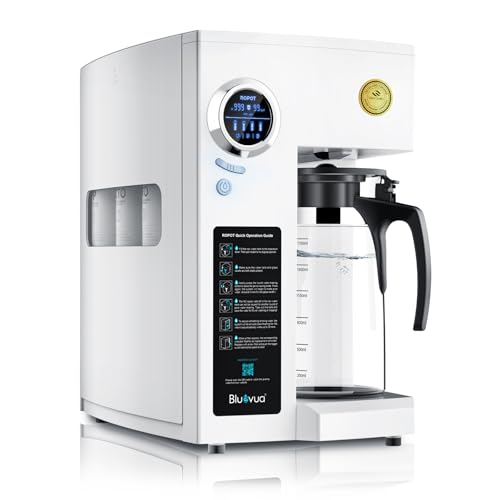
- Six-stage RO filtration with UV and remineralization
- 1.7-liter borosilicate glass carafe
- No plumbing; built-in TDS and filter-life monitoring
Best For: Countertop users wanting glass, UV treatment, and remineralization
Best for Outdoor Emergencies

- Compact pump-style design for field use
- Chemical-free filtration for creeks and streams
- Rated for up to 8,000 liters of water
Best For: Camping, hiking, travel, and emergency preparedness
Best High-TDS Countertop Option
DREO RO Water Filter Countertop

- Seven-in-one filtration with SGS NSF/ANSI 58 testing
- Supports up to 1,200 ppm TDS
- Three-liter autofill pitcher and touch controls
Best For: Installation-free home filtration with automated dispensing
Best Aquarium Pick
Aquatic Life RO Buddie 4-Stage
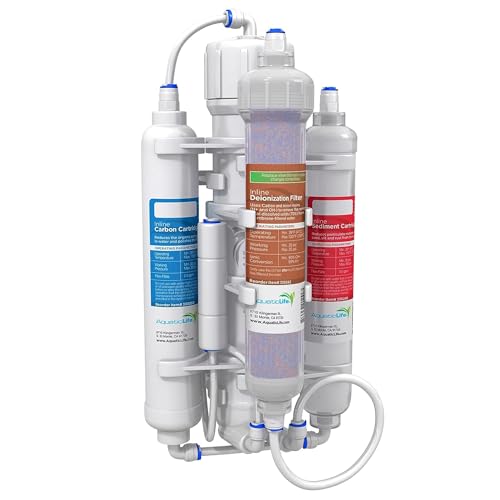
- Four-stage RO/DI filtration
- Compact, non-electric design
- 50 GPD aquarium-focused capacity
Best For: Aquarium water, fountains, humidifiers, and hobby setups
Best Feature-Rich Countertop Pick

- Seven-stage filtration with TDS monitoring
- No plumbing or installation required
- 5-liter tank with two autofill pitchers
Best For: Daily drinking water for homes, offices, or bedrooms
Best Simple Countertop Pick

- Seven-stage RO filtration
- TDS and filter-life monitoring
- Self-cleaning with two autofill pitchers
Best For: Stationary, installation-free countertop drinking water
Best DIY Capacity Pick – Geekpure 4-Stage Portable RO System
For shoppers comparing portable reverse osmosis systems for an apartment, RV, boat, or mobile setup, the Geekpure offers a 4-stage filtration path and a 100-gallon-per-day capacity. Its tankless design and color-coded quick-connect tubing support DIY installation, though it requires a suitable water connection and does not include a faucet.
Best For: Users who want a higher-capacity, customizable RO setup for travel, aquariums, or compact living spaces.
Pros:
- Four stages include sediment, carbon, RO, and DI filtration.
- Rated for up to 100 gallons per day at 60 psi.
- NSF/ANSI-compliant components and quick-connect fittings simplify maintenance.
- Works with qualifying tap or well water and includes installation guidance.
Cons:
- Tank and faucet are sold separately.
- It cannot turn on and off automatically.
- Installation may take a couple of hours and requires 40–100 psi feed water.
The Geekpure is a practical choice when capacity and multi-stage filtration matter more than plug-and-play convenience. Budget for replacement filters and remember to flush new cartridges before use.
Best Rechargeable Camping Pick – Purewell Portable Electric RO Filter
The Purewell is one of the more convenient portable reverse osmosis systems for camping and RV travel because its electric pump draws water through the filters without manual pumping. A rechargeable 5200mAh battery, Type-C charging, dual TDS display, and included carry bag make it suited to mobile use.
Best For: Campers and RV travelers who want battery-powered filtration with visible incoming and filtered-water readings.
Pros:
- Rechargeable operation supports use away from fixed outlets.
- Dual TDS display shows source and filtered-water readings.
- Compact aluminum-alloy housing includes a carry bag and built-in light.
- Separate filtered-water and drain outlets make setup straightforward.
Cons:
- The listed capacity is 0.7 liters, so it is better for personal use than large-volume supply.
- Requires routine filter replacement, with a stated 12-month cycle.
- Instructions call for initial flushing before use.
Choose the Purewell when portability, monitoring, and rechargeable power are priorities. Its compact output makes it especially appropriate for individual travelers or small groups rather than continuous high-volume filtration.
Best Off-Grid Power Option – Rover Portable RO Travel System
Rover R.O. | Off-Grid, Portable Reverse Osmosis Travel Water System (200 Gallons Per Day)
Check Price On AmazonFor off-grid trips, the Rover combines reverse osmosis, sediment and carbon filtration, remineralization, a booster pump, battery, and solar kit in one portable system. Among portable reverse osmosis systems, it is designed for more demanding travel scenarios, including boating, emergency preparation, and water collection from lakes, streams, and rivers.
Best For: Off-grid users who need solar- or battery-powered RO treatment in a self-contained travel case.
Pros:
- Includes a solar kit, battery, booster pump, and tubing.
- Combines RO with sediment and carbon filtration.
- Remineralizes treated water after filtration.
- Supports source water with a listed maximum TDS of 1,000 ppm.
Cons:
- Its listed maximum flow rate is 0.14 gallons per minute.
- Solar-powered operation depends on available sunlight and battery charge.
- Water-source setup requires securing tubing in the source.
The Rover stands out for self-sufficient operation rather than fast household dispensing. It is a strong fit for preparedness and remote travel when solar capability and an integrated treatment package justify the added setup.
Best High-Battery Outdoor Purifier – ITEHIL Hybrid and RO Filter
The ITEHIL combines hybrid and RO filter elements in a freestanding, battery-powered unit aimed at outdoor drinking-water use. Its built-in 12,000mAh LiFePO4 battery is rated to produce up to 27 liters per charge, while the 250-milliliter-per-minute flow rate supports personal or small-group activities.
Best For: Hikers, campers, and survival-minded users who want a portable electric purifier with substantial battery capacity.
Pros:
- Hybrid and RO filtration is designed to remove 99.99% of listed impurities.
- 12,000mAh LiFePO4 battery supports up to 27 liters per charge.
- NSF/ANSI 58 certification is listed alongside other certifications.
- Includes a pre-filter, internal filter, storage bag, and Type-C cable.
Cons:
- At 13.3 pounds, it is heavier than many compact travel filters.
- Its 250-milliliter-per-minute flow rate is intended for portable use, not rapid filling.
- Battery-powered operation requires charging between extended uses.
With its larger battery and included carrying accessories, the ITEHIL is well suited to organized outdoor trips and emergency kits. Its weight is the main trade-off for longer battery-supported operation.
Best Glass-Carafe Pick – Bluevua RO100ROPOT Countertop RO System
The Bluevua RO100ROPOT-UV is a polished choice for shoppers comparing portable reverse osmosis systems for a kitchen counter, apartment, office, or other space without plumbing access. Its six-stage filtration includes UV treatment and remineralization, while the glass carafe and built-in monitoring add convenience.
Best For: Countertop users who want a glass carafe, UV treatment, remineralization, and no-installation setup.
Pros:
- Six-stage filtration includes a 0.0001μm RO membrane, UV light, and remineralization filter.
- Uses a 1.7-liter borosilicate glass carafe and requires no plumbing installation.
- Offers a built-in TDS meter, filter-life monitoring, standby power saving, and a stated 2:1 pure-to-drain ratio.
- Filters are designed for approximately 12 months of use, with some components listed for 12–24 months.
Cons:
- At 17.8 pounds and roughly 10.9 by 15.4 by 14.3 inches, it is less convenient to move frequently.
- It requires a power source and has a maximum supported water TDS level of 500 ppm.
- The stated flow rate is relatively modest at 0.26 liters per minute.
The Bluevua stands out when countertop convenience and a premium glass reservoir matter more than compact travel. Its monitoring features and added treatment stages make it a strong everyday home option, though its size and corded design limit portability on the go.
Best for Outdoor Emergencies – Portable RO Water Filter Pump
This portable reverse osmosis system is designed for camping, hiking, backpacking, travel, and emergency preparedness rather than everyday countertop use. The pump-style design can process water from creeks and streams without chemical treatment, with a listed flow rate of up to 300 milliliters per minute.
Best For: Outdoor adventurers and emergency kits that need a compact pump for untreated surface water.
Pros:
- Compact design measures approximately 3.74 by 1.77 by 10.63 inches.
- Uses high-precision reverse osmosis filtration to help remove small particles and impurities.
- Does not rely on chemical treatment and is rated to filter up to 8,000 liters.
- Listed flow rate reaches 200–300 milliliters per minute.
Cons:
- The product notes do not provide a detailed contaminant-reduction certification or testing standard.
- Its maximum supported water TDS level is listed as 300 ppm, which may limit source-water compatibility.
- The notes identify only the filter pump as included, so users should not assume extra accessories are supplied.
This pump is the most field-oriented option in the group, prioritizing compactness, chemical-free operation, and a high stated capacity. It is a practical fit for planned outdoor use, but buyers should verify source-water limits and included equipment before relying on it for emergencies.
Best High-TDS Countertop Option – DREO RO Water Filter Countertop
The DREO countertop purifier is a convenient choice among portable reverse osmosis systems for users who want a larger pitcher and automated features without installation. Its seven-in-one filtration is tested by SGS against NSF/ANSI 58 standards, and the unit includes TDS and filter-life monitoring.
Best For: Home users who want an installation-free countertop dispenser with an autofill pitcher and support for higher incoming TDS.
Pros:
- Seven-in-one filtration is stated to remove 99.9% of possible contaminants, including PFOA, PFOS, chlorine, and fluoride.
- Supports water with a listed maximum TDS level of 1,200 ppm.
- Includes a three-liter autofill pitcher, built-in TDS meter, change-filter indicator, and touch controls.
- Offers a stated 3:1 pure-to-drain ratio, plus self-cleaning and installation-free operation.
Cons:
- The listed filter life is six months, shorter than the replacement interval noted for some competing models.
- At 14.5 by 6.7 by 13.4 inches, it still requires dedicated counter space.
- The notes list an ABS body and do not indicate a glass water container.
DREO is a compelling countertop pick for households that value automation, a larger pitcher, and a higher stated TDS tolerance. Its shorter listed filter cycle and plastic construction may matter to buyers prioritizing longer maintenance intervals or glass storage.
Best Aquarium Pick – Aquatic Life RO Buddie 4-Stage
The Aquatic Life RO Buddie is a compact option among portable reverse osmosis systems, designed primarily for aquarium water, fountains, humidifiers, and similar uses. Its four-stage process combines sediment, carbon, reverse osmosis, and deionization filtration without requiring electricity.
Best For: Aquarium owners and hobbyists who need purified water for fish tanks, plants, fountains, or humidifiers.
Pros:
- Four-stage RO/DI filtration removes sediment, chlorine, odors, most TDS, and remaining dissolved solids.
- Color-changing DI resin provides a visual replacement reminder.
- Compact 13.75-by-7.5-by-6-inch design and 3.9-pound weight suit portable setups.
Cons:
- It is intended for a maximum source-water TDS level of 500 ppm.
- The carbon block does not remove chloramines.
- Its stated capacity is 50 gallons per day, so it may be slower for high-volume household use.
Choose this model when aquarium-focused RO/DI filtration matters more than countertop drinking-water conveniences. It has no built-in pump, display, or dispenser, but its simple, non-electric design can be useful for flexible hobby setups.
Best Feature-Rich Countertop Pick – DREO RO Water Filter 113
The DREO RO Water Filter 113 is a countertop choice for shoppers who want portable reverse osmosis systems without plumbing. It combines seven-stage filtration with a built-in TDS meter, filter reminders, a 5-liter tank, and two autofill pitchers.
Best For: Homes, offices, or bedrooms where three to four people need convenient, installation-free drinking water.
Pros:
- Filters 99.9% of possible contaminants listed by the manufacturer, including PFOA, PFOS, chlorine, and fluoride.
- Real-time raw- and purified-water TDS monitoring helps track performance.
- Offers a 3:1 pure-to-drain ratio, BPA-free water-contact materials, and twist-in filter replacement.
- Includes a 5-liter tank and two 1.1-liter autofill pitchers.
Cons:
- At 10.8 pounds, it is substantially heavier than a compact aquarium RO unit.
- Its countertop footprint requires dedicated space and access to an outlet.
- The filter is listed with a six-month life cycle and a maximum source TDS of 500 ppm.
This DREO is a strong fit when convenience and monitoring are priorities. Its no-plumbing setup and pitcher accessories make it easier to integrate into daily routines, while the stated water-saving ratio helps limit drain-water waste.
Best Simple Countertop Pick – DREO Install-Free RO System
This DREO countertop purifier is a practical option among portable reverse osmosis systems for users who want an install-free setup. It provides reverse osmosis filtration, a 3:1 pure-to-drain ratio, self-cleaning operation, TDS and filter-life monitoring, and two autofill pitchers.
Best For: Drinkers who want countertop RO filtration with convenient monitoring and pitcher filling, without connecting plumbing.
Pros:
- Seven-stage filtration is stated to remove 99.9% of possible contaminants and was tested by SGS against NSF/ANSI 58 standards.
- Built-in TDS and filter-life indicators make routine monitoring easier.
- Includes self-cleaning functionality, a 5-liter capacity, and two autofill pitchers.
- The 3:1 pure-to-drain ratio is designed to reduce water waste.
Cons:
- Its 15.7-by-6.7-by-13.4-inch dimensions require meaningful counter space.
- The 10.8-pound unit is less convenient to move frequently than smaller systems.
- The listed filter life is six months.
Consider this version when you want the DREO 113 platform’s core countertop features, including monitoring and autofill pitchers, in a straightforward install-free format. It is better suited to stationary daily use than frequent travel.
How We Picked These Portable Reverse Osmosis Systems
We selected these systems to represent the main ways shoppers use portable RO filtration: countertop drinking water, RV and camping travel, emergency preparedness, outdoor purification, and aquarium or fountain maintenance. We considered portability, stated production capacity, filtration stages, power requirements, controls, water storage, filter monitoring, and the practical space each unit needs.
Because performance depends on source-water quality, temperature, pressure, and maintenance, stated gallons-per-day figures should be treated as maximum or laboratory-style ratings rather than guaranteed real-world output. Buyers should also confirm whether a model is intended for treated municipal water, tap water, or less-controlled outdoor sources.
Quick Comparison
| Best For | Look For | Trade-Off |
|---|---|---|
| Kitchen countertop use | Fast dispensing, storage tank, filter-life indicators | Less convenient to carry |
| RV and camping | Compact construction, simple controls, suitable power input | Lower capacity or more manual filling |
| Emergency and outdoor use | Portable pump, durable design, compatible source-water guidance | May require more setup and maintenance |
| Aquariums and fountains | RO/DI compatibility, appropriate output volume | Usually not designed for drinking-water convenience |
Key Buying Factors for Portable Reverse Osmosis Systems
Capacity and Daily Output
Choose capacity based on demand, not just the largest advertised number. A household countertop unit may be more practical for repeated drinking-water use, while a compact travel system is easier to transport but can take longer to fill containers.
Power and Portability
Check voltage, adapter requirements, battery or vehicle compatibility, and whether the system needs a pressurized supply. For RVs and off-grid trips, weight, handle design, footprint, and setup time can matter as much as filtration performance.
Filtration and Certifications
Reverse osmosis removes many dissolved contaminants, but not every system has the same prefilters or certification status. Look for clearly stated NSF/ANSI standards when relevant, and verify what the manufacturer says about sediment, chlorine, minerals, and microbial contaminants.
Water Waste and Maintenance
RO systems typically produce wastewater. Compare the stated pure-to-drain ratio and plan for a suitable drain or collection container. Replacement filter availability, filter cost, sanitizing instructions, and TDS or filter-life displays also affect long-term ownership.
Who Should Buy Which Portable Reverse Osmosis Systems?
Choose a countertop model if you want convenient daily drinking water at home and have room near an outlet and water source. These units are generally the easiest for families and frequent users.
Choose a compact travel or RV system if portability, flexible placement, and simple operation are your priorities. Confirm power and water-source requirements before taking one on the road.
Choose an outdoor or emergency-focused purifier if you need equipment for preparedness, hiking, or off-grid use. Pay close attention to source-water limitations and whether the product is designed for drinking water rather than general purification.
Choose an aquarium-oriented RO/DI unit for fish tanks, fountains, or other non-drinking applications where controlled mineral content matters. These systems may need separate collection containers and additional deionization media.