Making smooth tomato sauce, fruit purée, jam, or mashed potatoes at home does not require an expensive commercial appliance. The best food strainer machines under $100 can separate skins, seeds, and pulp while reducing prep time and manual effort.
This roundup includes hand-crank mills, chinois strainers, filter bags, stand mixers attachments, and electric tomato sauce makers. The right choice depends on your batch size, preferred texture, storage space, and how much hands-on work you want to do.
Best 10 Food Strainer Machines Under 100 Picks for 2026
Classic Sauce Making
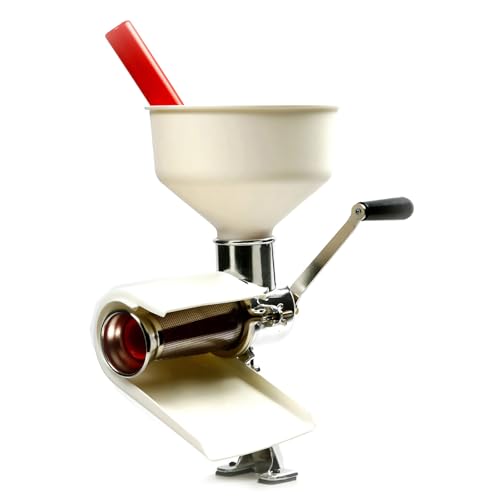
- 3-quart capacity for larger batches
- Separates juice and pulp in one operation
- Includes fine mesh screen and standard spiral
Best For: Sauces, juices, purees, and batch cooking
Tomato Prep Pick

- Skins and seeds eject to the side
- No peeling, coring, or deseeding required
- Includes stainless steel pusher
Best For: Fresh tomato sauce, juice, salsa, and puree
KitchenAid Attachment Pick
Fruit and Veg Strainer Attachment

- Designed for KitchenAid KSMFGA grinder
- Removes seeds for smooth purees
- Dishwasher-safe parts included
Best For: KitchenAid owners making sauces, jams, and baby food
Stainless Steel Pick

- Three discs for varied textures
- Sturdy stainless steel construction
- Dishwasher-safe with dual hooks
Best For: Sauces, purees, mashed potatoes, and jams
Compact Kitchen Pick
Soy Milk and Yogurt Food Strainer
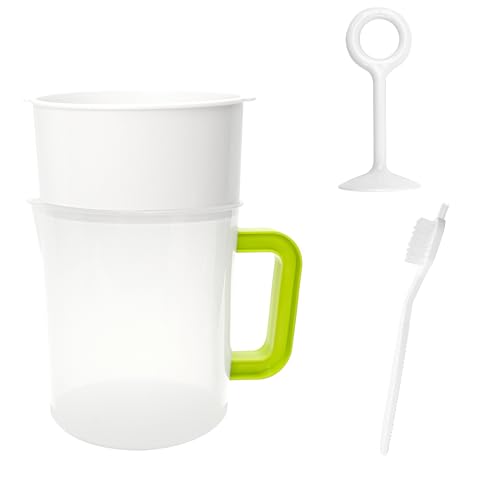
- Five-piece filtering set
- 0.5 mm ultrafine mesh
- Includes press and cleaning brush
Best For: Yogurt, plant milk, juice, and tea
Batch Processing Pick
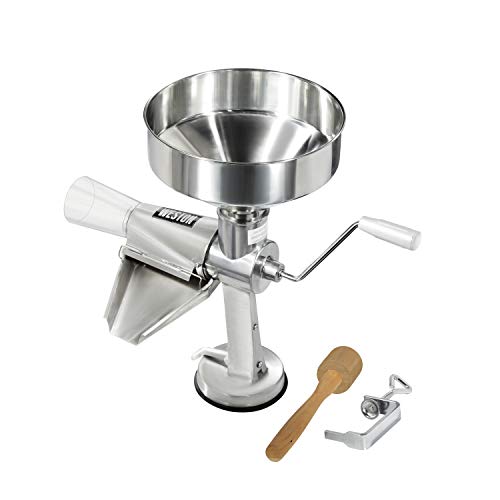
- One-gallon hopper for larger batches
- Dual mounting system
- Includes stomper and 1.5 mm screen
Best For: Tomato sauce, salsa, purees, jams, and preserves
Best Electric Batch Strainer
VEVOR Electric Tomato Strainer

- Separates skins and seeds in one pass
- Four screens support varied textures
- 304 stainless steel parts and splash guard
Best For: Large-batch sauces, salsa, and purees
Best Manual Chinois Set
Stainless Steel Chinois Strainer

- Includes cone, stand, and wooden pestle
- Fine perforations strain seeds and skins
- Dishwasher-safe metal components
Best For: Manual soups, sauces, stocks, and purees
Best Large-Hopper Strainer
Weston Deluxe Electric Tomato Strainer

- One-gallon hopper for larger batches
- 250W motor with forward and reverse speeds
- Three stainless steel screens included
Best For: Canning and preserving large harvests
Classic Sauce Making – Norpro Sauce Master
For shoppers comparing food strainer machines under 100, the Norpro 1951 Sauce Master offers a versatile manual setup for processing fruits, vegetables, and purees. Its chrome-plated steel screen separates juice and pulp in one operation, and the 3-quart capacity suits larger batches.
Best For: Home cooks making sauces, purees, juices, and fruit or vegetable preparations in family-size batches.
Pros:
- 3-quart, or 95-ounce, capacity.
- Separates juice and pulp while straining.
- Includes a fine mesh screen, standard spiral, and recipe booklet.
- Additional berry, pumpkin, and salsa screens are available separately.
Cons:
- Extra screens require a separate purchase.
- Its listed dimensions are relatively large at 16 by 15.5 by 20 inches.
The Sauce Master is a strong choice when capacity and flexibility matter more than compact storage. The included fine screen handles general straining, while optional screens expand its use for specialized recipes.
Tomato Prep Pick – Suction-Mount Tomato Strainer
Among food strainer machines under 100, this tomato strainer focuses on simplifying fresh tomato prep. It ejects skins and seeds to the side while juice flows into the tray, helping you make sauces, salsa, and purees without peeling, coring, or deseeding first.
Best For: Gardeners and home cooks preparing fresh tomato sauce, salsa, juice, or potato puree.
Pros:
- Processes tomatoes without peeling, deseeding, or coring.
- Suction-cup base helps hold the food mill in place.
- Includes a stainless steel pusher.
- Designed for straining, juicing, and pureeing tomatoes.
Cons:
- The plastic construction may feel less substantial than stainless steel alternatives.
- Its recommended uses are especially centered on tomatoes.
This is a practical option for seasonal tomato processing, particularly if you value a simple suction-mounted design. It is less versatile on paper than a multi-screen mill but directly addresses common tomato-preparation tasks.
Most Versatile Manual Mill – Pantula Rotary Food Mill
For shoppers seeking food strainer machines under 100 with texture control, the Pantula Rotary Food Mill combines a stainless steel bowl with three interchangeable grinding disks. Its manual crank can process soft fruits and vegetables into fine, medium, or coarse preparations.
Best For: Cooks who want one manual mill for mashed potatoes, applesauce, soups, sauces, jams, and baby food.
Pros:
- Food-grade stainless steel construction with dishwasher-safe cleaning.
- Includes fine, medium, and coarse disks.
- Two anti-slip handles help position the mill over a pot or bowl.
- 2-quart capacity supports moderate-size batches.
Cons:
- Requires manual cranking and assembly before use.
- The 2-quart capacity is smaller than some larger sauce mills.
The Pantula stands out for its three texture options and broad range of soft-food applications. It is a good fit when you want stainless steel durability and adjustable results without relying on an electric appliance.
KitchenAid Attachment Pick – Fruit and Veg Strainer Attachment
If you already own the compatible KitchenAid Food Grinder, this attachment is a convenient choice among food strainer machines under 100. It helps puree and strain fruits and vegetables for sauces, jams, and baby food while removing seeds and reducing prep work.
Best For: KitchenAid owners with Food Grinder model KSMFGA who want a dedicated fruit and vegetable straining attachment.
Pros:
- Designed to work with the KitchenAid KSMFGA Food Grinder.
- Helps remove seeds and create smooth sauces and purees.
- Dishwasher-safe parts simplify cleanup.
- Includes a cone, shield, splash lid, pusher, and removable tray.
Cons:
- Requires the KSMFGA Food Grinder, sold separately.
- Not compatible with the discontinued FGA Food Grinder.
- It is an attachment rather than a standalone strainer.
This model makes the most sense for an existing compatible KitchenAid setup. It can reduce manual prep and cleanup, but buyers without the required KSMFGA grinder will need to account for the additional equipment.
Stainless Steel Pick – 3-Disc Rotary Food Mill
If you want food strainer machines under 100 for sauces, mashed potatoes, jams, and soft fruits, this rotary food mill offers a sturdy stainless steel design with three interchangeable milling discs. Its dual hooks help secure it over a bowl while the silicone-covered handle and crank support steadier operation.
Best For: Home cooks making sauces, purees, mashed potatoes, jams, and strained fruits or vegetables.
Pros:
- Includes three milling discs for different textures and uses.
- Stainless steel construction is sturdy, polished, and dishwasher-safe.
- Dual hooks and a nonslip silicone grip help stabilize the mill.
- Includes a multifunctional spoon for pressing and scraping food.
Cons:
- Manual cranking requires more effort than an electric machine.
- The product weighs about 1.29 kg, so it is less lightweight for storage or handling.
This is a versatile choice for buyers who value durable materials and multiple textures in one manual tool. It can also serve as a colander or vegetable steamer, adding flexibility beyond straining.
Compact Kitchen Pick – Soy Milk and Yogurt Food Strainer
Among food strainer machines under 100, this compact five-piece set is designed for filtering liquids rather than processing solid foods. It includes an ultrafine mesh strainer, 1.5-liter pitcher, handle, press, and cleaning brush for soy milk, nut milk, juice, yogurt, and tea.
Best For: Beginners and small kitchens that need an easy way to make Greek yogurt, plant milk, juice, or tea.
Pros:
- Five-piece set includes a press and brush for faster filtering and easier cleanup.
- Ultrafine 0.5 mm mesh is designed to produce smooth, low-residue results.
- Suitable for yogurt, fruit and vegetable juice, soy milk, nut milk, rice milk, oat milk, almond milk, and tea.
- Compact pitcher holds 1.5 liters.
Cons:
- Its polypropylene construction may feel less substantial than a stainless steel strainer.
- The 1.5-liter pitcher is better suited to smaller batches than large-scale preparation.
- It is intended for liquid filtering, not milling potatoes or separating tomato skins.
This set is a practical option when clean liquid separation is the priority. The included press and brush make it more convenient than using a loose filter bag, especially for routine yogurt or plant-milk preparation.
Batch Processing Pick – Weston Metal Tomato Strainer
For shoppers comparing food strainer machines under 100 for tomato processing, the Weston Metal Tomato Strainer is built around a one-gallon hopper and manual handle. Its stainless steel screen separates skins and seeds from tomatoes and other soft produce without requiring peeling or coring first.
Best For: Home gardeners and cooks preparing larger batches of tomato sauce, salsa, purees, jams, or preserves.
Pros:
- One-gallon stainless steel hopper supports larger batches.
- Dual-mount system uses a suction-cup base and C-clamp for flexible placement.
- Includes a stomper and 1.5 mm multipurpose screen.
- Splash guard and directed chute help make processing cleaner.
Cons:
- Additional screens for broader puree and sauce use are sold separately.
- The manual handle requires hands-on effort during processing.
- Its tomato-focused design is less suited to fine liquid filtering than a mesh pitcher strainer.
This model stands out for batch tomato work, particularly when you want to process produce quickly without peeling or coring. The secure mounting options and splash guard make it more practical for repeated kitchen or garden-table use.
Best Electric Batch Strainer – VEVOR Electric Tomato Strainer
For shoppers comparing food strainer machines under 100, the VEVOR Electric Tomato Strainer offers powered processing for sauces, purees, salsa, and juice. Its stainless steel construction, multiple screens, and steady motor are suited to repeated or larger-batch preparation.
Best For: Home cooks processing garden harvests, tomato sauce, salsa, and fruit purees in batches.
Pros:
- Separates peels and seeds in a single pass.
- Includes four screens for different textures and recipes.
- Uses 304 stainless steel parts and includes a cleaning brush.
- Guard cover helps reduce juice splatter.
Cons:
- At 7.2 pounds, it is less compact than a manual strainer.
- The listed 800W maximum and 300W rated power may require careful comparison with other electric models.
Choose this model if continuous operation, screen flexibility, and easier cleanup matter more than having the smallest countertop footprint.
Best Manual Chinois Set – Stainless Steel Chinois Strainer
If you are comparing food strainer machines under 100 but prefer a simple manual setup, this chinois strainer uses a wooden pestle instead of a motor. The cone, stand, and pestle work together to strain soups, sauces, berries, and softened vegetables.
Best For: Cooks who want a compact manual straining set for sauces, stocks, baby food, and canning preparation.
Pros:
- Handles fruits, vegetables, berries, soups, sauces, and stocks.
- Stand supports the cone over suitable pots and bowls.
- Fine perforations retain seeds, skins, pulp, and coarse solids.
- Strainer and stand are dishwasher safe.
Cons:
- Manual pressing requires more hands-on effort than an electric machine.
- Compatibility depends on using suitable pots or bowls within the stated size range.
- The wooden pestle is recommended for hand washing.
This is a practical choice for occasional batches and cooks who value quiet, motor-free operation and straightforward cleanup.
Best Large-Hopper Strainer – Weston Deluxe Electric Tomato Strainer
Among food strainer machines under 100, the Weston Deluxe Electric Tomato Strainer stands out for its one-gallon hopper and 250-watt motor. It is designed to remove skins and separate seeds from tomatoes and other soft produce for sauces, jams, jellies, salsa, and purees.
Best For: Canning and preserving projects that involve processing larger quantities of soft fruits and vegetables.
Pros:
- One-gallon hopper supports larger batches.
- Two speeds include reverse operation to help prevent jamming.
- Three stainless steel screens cover fine, medium, and chunky results.
- Includes a stomper for feeding produce safely.
Cons:
- Its 14-by-12-by-17-inch dimensions require substantial storage space.
- It has fewer included screens than some four-screen alternatives.
- The unit is intended for soft fruits and vegetables rather than general-purpose grinding.
With its large hopper, reverse function, and three screen sizes, this Weston model is well suited to preserving days when throughput is more important than compact storage.
How We Picked the Best Food Strainer Machines Under 100
We evaluated these options by considering straining performance, construction, ease of use, cleanup, capacity, versatility, and typical kitchen value. The selection covers several designs rather than treating every machine as interchangeable: manual tomato strainers, rotary food mills, fine-mesh chinois strainers, reusable filter systems, mixer attachments, and electric sauce makers.
For Food Strainer Machines Under 100, practical details matter as much as the headline feature. A stainless-steel body may offer better durability, while a plastic model can be lighter and easier to store. We also considered whether each design handles seeds and skins, works with hot foods, and suits occasional or frequent batch cooking.
Quick Comparison
| Type | Best suited to | Main advantage | Potential limitation |
|---|---|---|---|
| Manual tomato strainer | Sauces and passata | Efficient separation of skins and seeds | Requires hand cranking |
| Rotary food mill | Potatoes, vegetables, and fruit | Adjustable texture and broad versatility | Usually needs pre-cooked food |
| Chinois strainer | Very smooth soups and sauces | Fine filtration and simple storage | Requires pressing or stirring by hand |
| Electric strainer | Large sauce batches | Less manual effort | Heavier and harder to store |
| Filter bag or attachment | Juices, yogurt, and nut milk | Flexible, low-clutter setup | Slower for some thick mixtures |
Key Buying Factors
Capacity and Batch Size
Check the hopper or bowl capacity before buying. A compact mill works well for family meals and small preserving projects, while a larger hopper or electric unit is more practical for garden harvests and repeated sauce batches.
Strainer Material and Durability
Stainless steel is generally a strong choice for frequent use because it resists staining and odors. Plastic components can still be useful when weight, price, and easy handling are priorities. Look for a sturdy frame, secure supports, and a handle that turns smoothly.
Texture and Food Compatibility
Interchangeable screens or milling discs provide more control over fine and coarse results. Confirm that the product is intended for the foods you plan to process. Tomato strainers are optimized for removing skins and seeds, whereas food mills are better suited to cooked potatoes, vegetables, and soft fruit.
Cleaning and Storage
Removable parts make cleanup easier, especially after processing sticky fruit or tomato pulp. Before choosing, verify whether components are dishwasher-safe and whether the machine fits in your cabinet. Electric models may require additional counter space and careful cleaning around the motor.
Manual Versus Electric Operation
Manual models are quieter, less expensive to maintain, and useful when outlets are unavailable. Electric machines reduce cranking effort and can be worthwhile for high-volume work, but they tend to cost more, weigh more, and produce more noise.
Who Should Buy Which Food Strainer Machines Under 100?
Choose a manual tomato strainer if your priority is smooth tomato sauce with minimal peeling and seeding. A rotary food mill is the better all-purpose option for mashed potatoes, baby food, cooked vegetables, and fruit purées. Select a chinois when you want exceptionally fine results and already have a pot or bowl to support it.
A mixer attachment makes sense for KitchenAid owners who want to avoid storing a separate motorized appliance. A reusable filter system is better for yogurt, soy milk, juice, or nut milk than for thick tomato batches. For frequent preserving or large harvests, an electric tomato strainer can justify its larger footprint by reducing repetitive hand work.