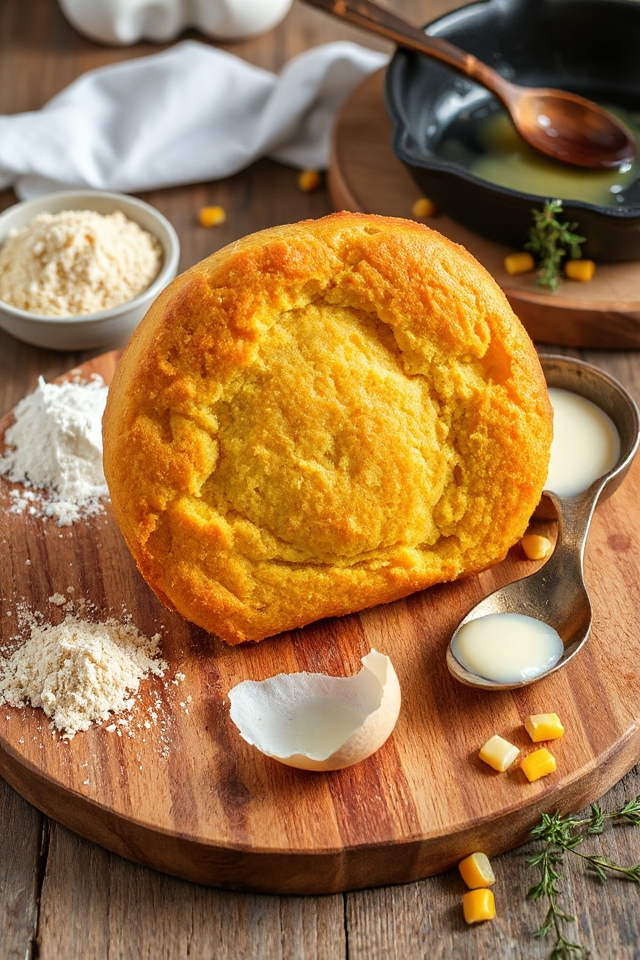
Why You’ll Love this Gluten Free Cornbread Recipe
If you’ve been searching for a delicious gluten-free cornbread, you’ll love this recipe because it combines the nutty flavor of sorghum flour with the sweetness of cornmeal.
The texture is delightfully moist, making it perfect for slathering with butter or enjoying alongside your favorite chili.
What I appreciate most is how easy it’s to whip up—just mix the ingredients, pour the batter into a hot skillet, and let the oven do the work.
Plus, it’s versatile enough to be served at breakfast, lunch, or dinner.
Honestly, I can’t remember the last time I made cornbread that disappeared so quickly!
This recipe has become a staple in my home, and I think it’ll become one in yours too.
Ingredients of Gluten Free Cornbread
When it comes to making gluten-free cornbread, the ingredients play an essential role in crafting that perfect, fluffy texture and rich flavor. This recipe is a delightful mix of various gluten-free flours, which not only guarantee that you can enjoy this classic dish without the gluten but also add unique tastes and textures that will surprise and please your palate.
From the nutty undertones of sorghum flour to the hearty sweetness of cornmeal, each ingredient has its part to play in this delicious ensemble. So, let’s take a look at what you’ll need to whip up this scrumptious cornbread.
Ingredients for Gluten Free Cornbread:
- 1/4 cup sorghum flour
- 1/4 cup rice flour
- 1/2 cup tapioca flour
- 1 cup cornmeal
- 3 1/2 teaspoons baking powder
- 3/4 teaspoon salt
- 3 tablespoons sugar
- 1 teaspoon xanthan gum
- 1/4 cup butter (for batter)
- 2 large eggs
- 1 cup buttermilk
- 3 tablespoons butter (for skillet)
Now, about those ingredients—don’t be intimidated by the variety. Each flour brings its own flair to the party.
Sorghum flour adds a lovely nuttiness, while rice flour contributes to that light texture we all love. Tapioca flour is a secret weapon for chewiness, and cornmeal? Well, that’s the star of the show.
If you’re like me, you might’ve a bit of a pantry that resembles a science experiment, filled with all these random gluten-free flours. Fear not; they’re not just sitting there collecting dust. They come together beautifully in this recipe.
And if you don’t have buttermilk on hand, a quick substitute of regular milk with a splash of vinegar or lemon juice will work just fine. So grab your ingredients, and let’s get ready to make some cornbread magic.
How to Make Gluten Free Cornbread

Making gluten-free cornbread is a fun little adventure that starts in your kitchen. First things first, preheat your oven to a toasty 425°F.
Now, here’s a tip that I learned the hard way: while the oven is heating up, pop your cast iron skillet in there too. This little trick guarantees that your cornbread gets that beautiful crispy crust we all adore. It’s like giving your cornbread a warm hug before it even hits the oven.
Now, let’s get mixing. In a large bowl, combine 1/4 cup of sorghum flour, 1/4 cup of rice flour, 1/2 cup of tapioca flour, and 1 cup of cornmeal. Sprinkle in 3 1/2 teaspoons of baking powder, 3/4 teaspoon of salt, 3 tablespoons of sugar, and 1 teaspoon of xanthan gum. Mix it up until it looks like a lovely floury blend.
Now, here comes the magical part: add 1/4 cup of butter (cut into tiny pats) to the dry ingredients. It’s like making a pie crust, so use your hands to mix it in until it resembles coarse crumbs. If you’re like me, you might get a little flour on your nose during this step—just consider it a badge of honor.
Next, grab those 2 large eggs and 1 cup of buttermilk, and add them to your dry mixture. Give it a good stir with a fork, but don’t overdo it. You want just enough mixing to bring everything together.
Once that’s done, take your hot skillet out of the oven (careful, it’s hot!) and toss in 3 tablespoons of butter. Let it melt and sizzle; it’s music to your ears. Pour that batter right over the melted butter and then slide the skillet back into the oven.
Bake for about 20 minutes, and while you wait, you can start dreaming about how delicious this cornbread is going to be. When the time’s up, flip it onto a plate—upside down, of course. Sure, the top mightn’t be golden brown, but trust me, no one will ever know once they take that first bite. Enjoy!
Gluten Free Cornbread Substitutions & Variations
After whipping up a delicious batch of gluten-free cornbread, you might find yourself wanting to customize the recipe to suit your taste or dietary needs.
One easy swap is using almond flour or coconut flour instead of sorghum or rice flour for a nutty flavor. If you’re dairy-free, try coconut milk or almond milk in place of buttermilk.
For a sweeter cornbread, toss in some honey or maple syrup. You can also add mix-ins like jalapeños, cheese, or corn kernels for extra texture and flavor.
If you’re looking for a healthier option, consider adding some ground flaxseed or chia seeds.
Don’t hesitate to experiment until you find your perfect combination!
What to Serve with Gluten Free Cornbread
While gluten-free cornbread is delicious on its own, pairing it with the right dishes can elevate your meal.
I love serving it alongside hearty chili; the warmth and spices complement the cornbread perfectly.
Barbecue pulled pork is another favorite of mine, as the sweetness of the cornbread balances the savory flavors of the meat.
You can’t go wrong with a fresh garden salad, either; the crunch adds a delightful contrast.
For a cozy breakfast, I enjoy it with scrambled eggs and a drizzle of honey.
Finally, consider serving it with a flavorful soup, like butternut squash or minestrone, for a comforting combination.
Each pairing enhances the cornbread’s unique taste and texture, making every bite memorable.
Additional Tips & Notes
To guarantee your gluten-free cornbread turns out perfectly, I’ve gathered a few helpful tips. First, make sure your ingredients are at room temperature; this helps them blend together nicely.
If you want a sweeter cornbread, feel free to add an extra tablespoon of sugar. I also recommend using a high-quality cast iron skillet; it gives a wonderful crust.
When melting the butter in the hot skillet, be careful not to let it brown too much. For added flavor, you can mix in some herbs or cheese.
If you prefer a denser texture, consider reducing the baking powder slightly. Finally, let the cornbread cool for a few minutes before flipping it, ensuring it holds its shape beautifully.
Enjoy!