Choosing the right dough machine can make a small bakery faster, more consistent, and easier to run. The best options balance bowl size, motor strength, and practical controls without taking over your workspace.
This roundup of 10 dough kneading machines for small bakeries focuses on models that suit real production needs, from everyday bread dough to specialty fills and seasonal fermentation workflows.
Best 10 Dough Kneading Machines for Small Bakeries Picks for 2026
Compact Commercial Pick

- 10Qt bowl with stainless-steel food-contact parts
- 450W motor with 3 adjustable speeds
- Includes dough hook, flat beater, and wire whip
Best For: Small bakeries needing one flexible mixer for dough and prep
Fermentation Specialist

- 77–100°F fermentation support for proofing
- 7.4Qt bowl for up to 2200g flour
- Adjustable mix and ferment timing
Best For: Small bakeries that want kneading and fermentation in one machine
Dual-Rotation Workhorse
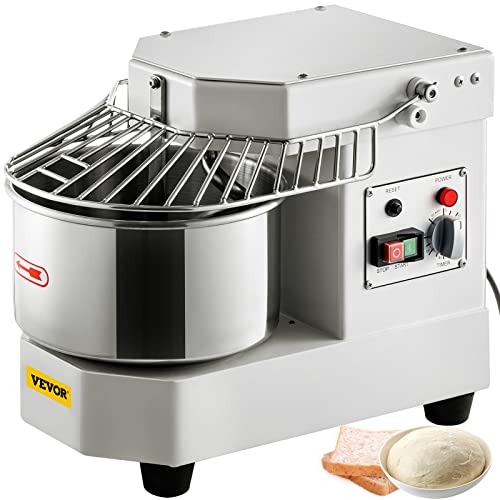
- Dual rotation for more even kneading
- 8L / 7.3Qt bowl handles up to 3 kg dough
- 60-minute timer with safety shield
Best For: Small bakeries prioritizing even kneading in a simple commercial mixer
High-Capacity Dough Maker
Joydeem 9.5Qt Dual-Function Mixer

- 9.5Qt bowl handles up to 2800g flour
- MIX kneads dough; BLEND mixes fillings
- Winter and summer fermentation modes
Best For: Small bakeries needing larger batches and filling-mix versatility
Commercial Heavy-Duty Pick
VEVOR 15Qt Commercial Food Mixer
- 500W gear-driven motor with 3 speeds
- 15Qt stainless steel bowl for larger batches
- Includes dough hook, flat beater, and wire whip
Best For: Small bakeries and pizzerias needing a multi-purpose mixer
Compact Budget-Friendly Pick
5L Electric Dough Maker with Timer

- 200W motor with 140-170 rpm kneading
- 5-40 minute microcomputer timer
- Includes measuring tools and dough blade
Best For: Small-batch baking and compact bakery prep
Compact Proofing Mixer
AIZIYO DoughChief 7.4QT Dough Maker
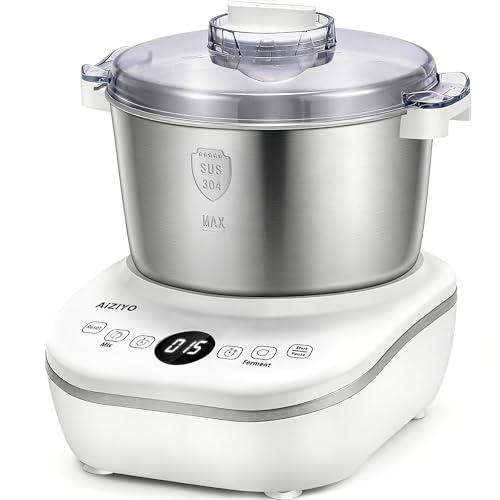
- 7.4QT 304 stainless steel bowl
- Mix-pause-mix kneading style
- Built-in ferment mode for proofing
Best For: Small bakeries needing compact mixing and proofing
Quiet All-in-One Mixer
7.4QT Electric Dough Mixer with Ferment

- Timer control with touch panel
- Low-noise design with silicone pad
- Mix and proof modes in one unit
Best For: Small bakeries wanting quieter, easy-to-monitor dough prep
Compact Commercial Pick – VEVOR 10Qt Mixer for Bakeries
If you need dough kneading machines for small bakeries that can also handle general mixing, this VEVOR 10Qt commercial mixer is a flexible all-rounder. Its 450W motor, 3-speed control, and included dough hook make it suited to pizza dough, bakery batters, creams, and fillings in a compact commercial format.
Best For: Small bakeries and pizzerias that want one mixer for dough plus broader prep tasks.
Pros:
- 3 included attachments: dough hook, flat beater, and wire whip
- 10Qt stainless steel bowl with food-grade parts for easy cleaning
- 450W gear-driven motor with low, medium, and high speed settings
- 30-minute timer and bowl-lift design add convenience for busy workflows
Cons:
- Not a dedicated spiral dough machine, so it’s more versatile than specialized
- Large and heavy for very tight counters
- Speed changes require stopping the machine first
For small operations that need one machine to cover dough, fillings, and whipping, this VEVOR offers strong utility without sacrificing basic commercial features. It is a practical choice if you value flexibility and a stainless-steel build over a single-purpose kneader.
Fermentation Specialist – Joydeem 7.4Qt Dough Maker
For dough kneading machines for small bakeries that need built-in proofing support, the Joydeem 7.4Qt dough maker stands out with seasonal fermentation control. Its interval-style kneading, adjustable mix/ferment times, and stainless bowl make it well suited to bread, pizza, sourdough, and other doughs that benefit from a managed rise.
Best For: Bakeries or home-based bakers who want kneading plus fermentation in one compact unit.
Pros:
- Built-in fermentation range of 77–100°F for controlled dough rising
- 7.4Qt bowl handles up to 2200g flour, with a 1600g max for fermented dough
- Adjustable mixing and fermentation timing in 5-minute steps
- 304 stainless steel bowl and blade for durability and easier cleaning
Cons:
- Single-speed design limits mixing flexibility
- Fermentation performance may need warm water in colder conditions
- Best suited to dough preparation, not broader mixing jobs
This is a smart pick if your priority is making dough with less manual oversight and better rise control. It focuses on dough workflow rather than multitasking, which is often exactly what a small bakery needs.
Dual-Rotation Workhorse – VEVOR 8.5Qt Commercial Mixer
If you’re comparing dough kneading machines for small bakeries, this VEVOR 8.5Qt model focuses on efficient dough development with a dual-rotation system. The 450W motor, stainless-steel food-contact parts, and 60-minute timer make it a practical option for batches of dough, cream, fillings, and other light prep.
Best For: Small bakeries that want more dough-focused kneading in a compact commercial mixer.
Pros:
- Dual rotation helps simulate manual kneading for more even dough mixing
- 8L / 7.3Qt bowl can handle up to 3 kg of dough
- 60-minute timer and simple controls support batch work
- Safety shield and nonslip feet improve day-to-day use
Cons:
- Single-speed operation offers less control than multi-speed machines
- Heavier commercial build may be overkill for very small kitchens
- Better suited to kneading and mixing than specialized proofing
This model makes sense when dough consistency matters more than fancy controls. The dual rotation and sturdy build give it a strong case for bakeries that want dependable kneading in a straightforward format.
High-Capacity Dough Maker – Joydeem 9.5Qt Dual-Function Mixer
For dough kneading machines for small bakeries that need extra capacity and more seasonal flexibility, the Joydeem 9.5Qt dough maker is a strong option. It offers intermittent MIX kneading, continuous BLEND mixing, and winter/summer fermentation modes, making it useful for bread dough, pizza dough, fillings, and other bakery prep.
Best For: Bakeries needing a larger dough maker with both kneading and filling-mix functions.
Pros:
- Large 9.5Qt bowl handles up to 2800g flour
- Two mixing modes: MIX for dough and BLEND for fillings
- Winter and summer fermentation modes improve year-round flexibility
- Adjustable time settings support controlled prep cycles
Cons:
- More specialized as a dough maker than a general-purpose stand mixer
- Single-speed design may not suit all mixing preferences
- Larger capacity may be unnecessary for very low-volume shops
This is a versatile choice if your bakery needs one machine for dough plus filling prep. The larger bowl and dual-function design make it especially appealing where batch size and workflow variety both matter.
Commercial Heavy-Duty Pick – VEVOR 15Qt Commercial Food Mixer
If you need dough kneading machines for small bakeries that can also handle mixing, whipping, and filling prep, this VEVOR 15Qt commercial mixer is built for that kind of workflow. Its 500W gear-driven motor, 3 speeds, and dough hook make it a practical option for pizza dough and other heavier mixtures, while the stainless steel bowl keeps cleanup straightforward.
Best For: Small bakeries, pizzerias, and commercial kitchens that need a versatile mixer for dough and general prep.
Pros:
- 500W motor with gear-driven transmission for fast, even mixing
- 3 speeds, including a low speed suited to kneading dough
- 15Qt stainless steel bowl and food-contact parts for durability
- Includes dough hook, flat beater, and wire whip for multiple tasks
Cons:
- Large and heavy compared with countertop home-style dough makers
- Requires stopping the machine before changing speeds
- Timer is limited to 30 minutes
Overall, this is the most versatile pick in the group if your bakery needs one machine to cover dough plus broader mixing jobs. It leans more commercial than compact, but the added capacity and accessory set make it a strong fit for routine bakery production.
Smart Fermenting Choice – Joydeem Electric Dough Maker 7.4Qt
For small bakeries that want dough kneading machines for small bakeries with built-in fermentation support, this Joydeem dough maker brings a smart, compact approach. It uses microcomputer control to simulate natural kneading with intermittent motion, and it can handle dough-making and proofing in one machine, which helps simplify bread and pizza prep.
Best For: Bakers who want a compact dough maker with fermentation and preset timing.
Pros:
- Microcomputer timing with preset programs for easier operation
- Ferment function supports kneading and proofing in one unit
- 7.4Qt stainless steel bucket suited to larger dough batches
- Face-up touch panel and removable top cover help with use and cleaning
Cons:
- Single speed and not speed-adjustable
- More specialized for dough than for multi-purpose mixing
- Plastic and stainless steel construction is less heavy-duty than full commercial mixers
This model stands out if you value automation and proofing more than raw mixing versatility. It is a good fit for small-scale baking workflows where space, timing, and convenience matter.
Compact Budget-Friendly Pick – 5L Electric Dough Maker with Timer
If you are comparing dough kneading machines for small bakeries and want a compact option for smaller batches, this 5L dough maker is built around simple timed kneading and fermentation support. Its 200W motor, 140-170 rpm range, and built-in timer make it straightforward for routine dough prep without taking up much counter space.
Best For: Small-batch baking, test doughs, and operators who want a compact dough maker with useful extras.
Pros:
- Built-in microcomputer timer for 5-40 minute mixing and kneading
- 200W motor with 140-170 rpm for fast kneading
- Fermentation function adds flexibility for dough development
- Includes measuring cup, measuring spoon, egg white separator, and dough blade
Cons:
- 5L capacity is smaller than the larger commercial-style options here
- Less suited to high-volume bakery production
- Noise level is listed at 75 db
This is the most space-conscious choice in the lineup and a practical fit when batch size matters more than output volume. The included accessories also make it appealing if you want an all-in-one starter kit for dough prep.
Compact Proofing Mixer – AIZIYO DoughChief 7.4QT Dough Maker
If you’re comparing dough kneading machines for small bakeries, this AIZIYO DoughChief makes sense when you need a compact unit that can mix and proof in one workflow. Its 7.4QT stainless steel bowl, mix-pause-mix kneading pattern, and built-in fermentation mode are geared toward consistent bread, pizza, and pasta dough without constant manual handling.
Best For: Small bakeries or home-style prep stations that want a space-saving dough maker with built-in proofing.
Pros:
- Mix-pause-mix program and S-shaped blade aim to mimic hand kneading.
- Constant-temperature ferment mode supports proofing at 77–100°F.
- Removable lid lets you add flour or water without stopping the machine.
- 304 stainless steel bowl and dishwasher-safe removable parts simplify cleanup.
Cons:
- One speed setting limits fine control over mixing intensity.
- At 7.4QT, it suits smaller batches rather than high-volume production.
This is a practical pick if you want a straightforward dough maker that handles both mixing and fermentation in a compact footprint. The design leans more toward efficient everyday batching than heavy-duty commercial use.
Large Batch Workhorse – 7.4QT Electric Dough Mixer with Ferment
For dough kneading machines for small bakeries, this 7.4QT model is aimed at larger prep sessions where you want one machine to handle bread, pizza, and pastry dough with less stopping and starting. The top small window, constant-temperature fermentation, and intermittent kneading design make it a useful fit for bakeries that value convenience and steady dough handling.
Best For: Small bakeries that need a larger-capacity mixer with easy ingredient additions and built-in fermentation.
Pros:
- 7L capacity supports bigger batches for bread, pizza, and pastries.
- Constant-temperature fermentation helps dough rise consistently.
- Top window makes it easy to add water or seasoning during mixing.
- Intermittent operation is designed to reduce overheating during kneading.
Cons:
- One speed setting may feel limiting for users who want more control.
- It is still a countertop mixer, so it won’t replace larger commercial equipment.
This model stands out for bakeries that want a simple, large-capacity dough mixer with practical day-to-day features. It focuses on efficient batching and proofing rather than advanced customization.
Quiet All-in-One Mixer – 7.4QT Electric Dough Mixer with Ferment
Among dough kneading machines for small bakeries, this 7.4QT electric dough mixer is built for users who want quiet operation plus a straightforward mix-and-proof routine. The 304 stainless steel bowl, face-up touch panel, timer control, and hand-kneading simulation make it a solid option for bread, pizza, sourdough, and more.
Best For: Small bakeries looking for a quieter dough mixer with timer control and easy monitoring.
Pros:
- Mix, ferment, and mix-plus-ferment modes cover different dough workflows.
- S-shaped blade simulates hand kneading for softer, chewier dough.
- Silicone noise-reduction pad supports quieter operation.
- Transparent lid and top feeding window make it easy to monitor and add ingredients.
Cons:
- 7-quart capacity is best for smaller-scale production runs.
- Single-speed design may not suit bakers wanting more mix variation.
This is a balanced choice if your bakery needs a compact machine with proofing, timer control, and low-noise performance. It covers the basics well while staying simple to use and easy to clean.
How We Picked These Dough Kneading Machines for Small Bakeries
We focused on bakery-friendly machines that offer a useful mix of capacity, durability, and workflow efficiency. Priority went to bowl sizes and motor outputs that fit small-batch commercial use, along with features like timers, fermentation modes, and stable stainless steel construction. We also looked for models that are practical for repeated daily mixing, not just occasional home baking.
Quick Comparison
Across this group, the main differences come down to batch size and control style. Smaller 5L to 7.4QT machines are better for tight counters and lower-volume production, while 8.5QT to 15QT models are more suitable when you need larger dough batches or fewer refill cycles. Timing functions, face-up touch panels, and dual-mode designs can improve workflow, but larger capacity usually matters more if production volume is the priority.
Key Buying Factors for Dough Kneading Machines for Small Bakeries
Capacity and Batch Size
Match bowl capacity to your peak demand, not your slowest day. A bakery making frequent artisan loaves or pizza dough may be fine with mid-size machines, while a shop handling higher-volume prep should consider larger bowls to reduce interruptions.
Motor Power and Mixing Consistency
Motor strength affects how well the machine handles heavier doughs. For Dough Kneading Machines for Small Bakeries, consistent torque matters as much as raw wattage, especially when working with enriched doughs or repeated batches.
Controls, Timing, and Fermentation
Timers help standardize results, and fermentation functions can save space if you want one machine to handle more of the prep workflow. If your operation varies by season or recipe, adjustable fermentation modes can be especially useful.
Materials and Cleanup
Stainless steel bowls are the practical standard because they are durable, easier to sanitize, and better suited to commercial routines. Removable lids and simple control layouts also help speed cleanup between batches.
Who Should Buy Which Dough Kneading Machines for Small Bakeries?
If you are running a compact bakery, café, or startup kitchen, a 5L to 7.4QT unit is often the most efficient choice. If you bake multiple dough types each day or need fewer batch cycles, step up to 8.5QT or larger. For shops that want added control over proofing and workflow, look for models with fermentation settings, timing functions, and easy-to-read touch controls. The best choice depends on whether your top priority is space savings, batch size, or process automation.