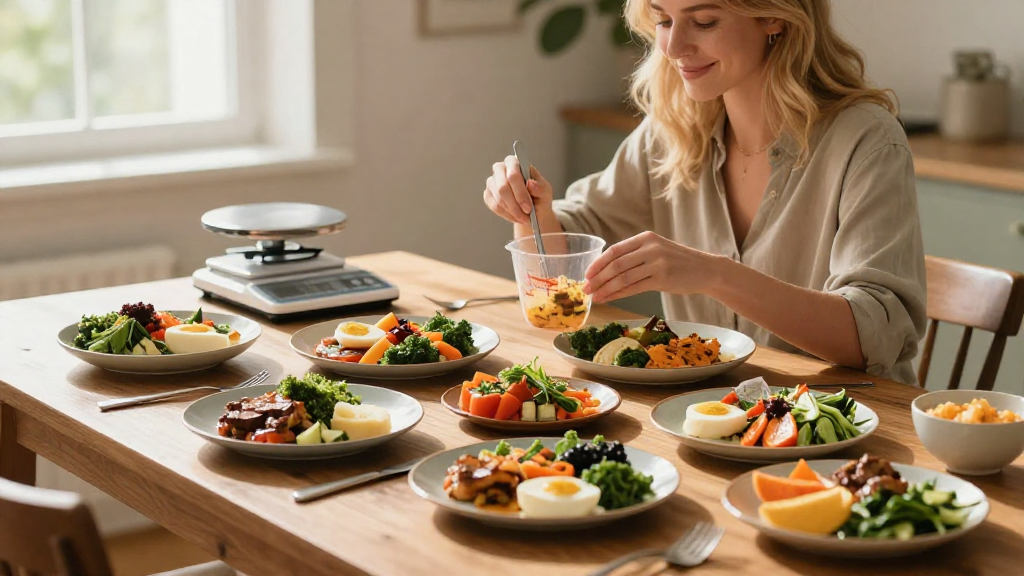
Improving food portion control is essential for maintaining a balanced diet and preventing overeating.
In this comprehensive guide, we will explore effective food portion control tips that can help you manage your plate size and enhance your overall health.
What Are the Best Food Portion Control Tips?
Managing your portion sizes is crucial for various reasons, including weight management, improved digestion, and better nutrient absorption.
Here are some practical food portion control tips to help you achieve a healthier relationship with your meals:
1. Use Smaller Plates and Bowls
One of the simplest and most effective food portion control tips is to invest in smaller dishes.
When you use smaller plates and bowls, you’ll naturally serve less food, which can trick your mind into feeling satisfied with smaller portions.
2. Measure Your Servings
Measuring out your servings can provide you with a clear understanding of appropriate portion sizes.
Using measuring cups, spoons, or even a kitchen scale ensures that you’re serving the right amounts.
Not only does this help with portion control, but it also aids in understanding nutritional values better.
3. Pay Attention to Hunger Cues
Learning to recognize your body’s hunger and fullness signals is critical for effective portion control.
Before serving yourself, ask yourself:
- Am I actually hungry, or am I eating out of boredom?
- How hungry am I on a scale from 1 to 10?
Taking a moment to assess your hunger can stop mindless eating and improve portion sizes.
4. Focus on Vegetables and Fruits
Fill at least half of your plate with vegetables and fruits.
These food groups are low in calories but high in volume, meaning you can enjoy larger portions without compromising your diet.
Opting for colorful vegetables not only boosts your health but also makes your plate visually appealing.
5. Avoid Eating from the Package
One of the biggest pitfalls of portion control is eating straight from the package.
Instead, serve out a single portion to avoid the temptation of overeating.
Here’s how to do it:
- Use snack bags or containers to hold single servings.
- Keep bulk items out of sight to minimize snacking.
6. Practice Mindful Eating
Mindful eating involves paying full attention to the experience of eating.
By slowing down and enjoying each bite, you allow your body to naturally register when it’s full.
Here are some mindful eating techniques to consider:
- Chew slowly and savor your food.
- Eliminate distractions, like television and smartphones.
- Take breaks between bites to engage with your surroundings.
7. Pre-Plan Your Meals
Planning meals can significantly help with food portion control.
By organizing what you’ll eat ahead of time, you can better gauge portion sizes and avoid impulsive eating decisions.
Consider utilizing meal prep containers that divide different food groups and help with portion sizes.
8. Utilize Portion Control Tools
Investing in portion control tools can assist you greatly.
Products like pre-portioned containers or plates marked with serving sizes can simplify the process.
Visual aids can make it easier to judge serving sizes without endless measuring.
9. Be Mindful of Liquid Calories
Don’t forget about beverages when considering your food portion control tips.
Calories from sugary drinks or even alcohol can add up quickly.
For healthier hydration options:
- Opt for water, herbal teas, or other low-calorie beverages.
- If drinking high-calorie drinks, limit portion sizes to standard serving sizes.
10. Don’t Skip Meals
Skipping meals can lead to overeating later in the day.
Instead, try to eat regular, balanced meals that include:
- Protein
- Healthy fats
- Fiber-rich carbohydrates
This helps maintain stable blood sugar levels and prevents extreme hunger, ultimately leading to better portion control.
11. Listen to Your Body
Your body is a profound communicator.
If you’re still hungry after eating a portioned meal, listen to that signal.
However, check in with yourself after 20 minutes.
Sometimes, it takes time for the brain to recognize fullness.
12. Keep a Food Diary
Tracking your food intake can help you identify patterns in your eating habits that may lead to oversized portions.
Keeping a food diary allows you to see:
- What you eat
- When you eat
- How much you eat
Creating this awareness supports better portion control.
Why Is Portion Control Important?
Every individual’s dietary needs are different; understanding portion control can assist you with:
- Weight Management: Proper portions help in maintaining a healthy weight.
- Nutritional Balance: Enjoy a variety of food groups without overeating any single one.
- Healthy Digestion: Smaller portions are easier for your body to digest.
How Can Mindfulness Enhance Portion Control?
Mindful eating encourages awareness of your eating habits, improving your relationship with food.
When you eat carefully, paying attention to each bite, you’re more likely to enjoy the experience and less likely to eat excessively.
Conclusion
Improving your portion control with food is vital for a balanced lifestyle and overall well-being.
Utilizing these food portion control tips can enhance your relationship with food, helping you manage your weight and improve your health.
By implementing these strategies—like using smaller plates, measuring servings, and practicing mindful eating—you not only control portions but also cultivate a more enjoyable dining experience.
So why not start today? The benefits of portion control will reshape your meals and your future!