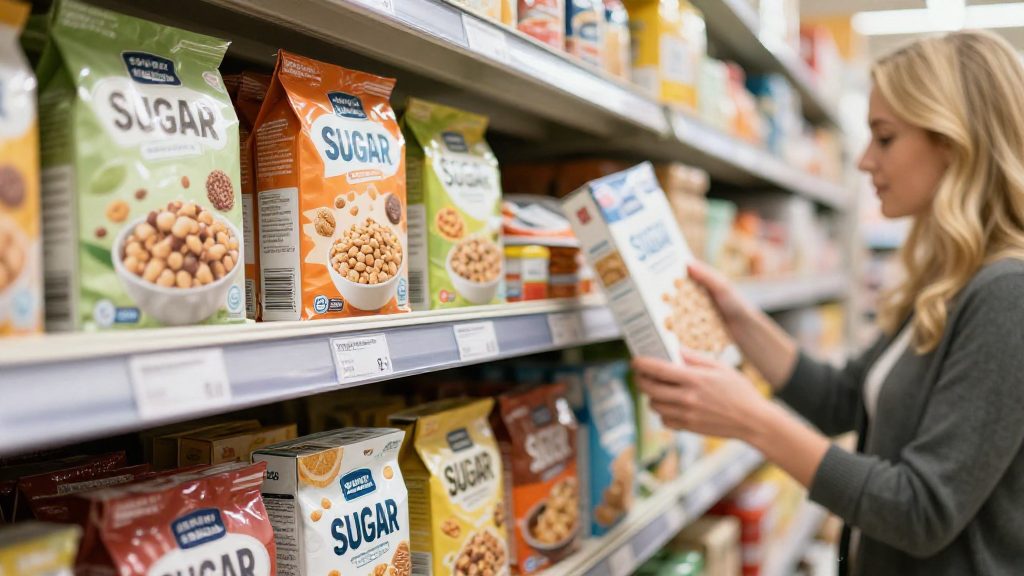
Understanding food labels and sugar content is essential for making informed dietary choices.
Being aware of the sugar content in packaged foods can help you maintain a healthy diet and avoid excess sugar intake.
What Should You Look for on Food Labels?
When checking food labels and sugar, there are several key areas to focus on:
-
Serving Size:
This indicates how much of the product is considered one serving.
Pay attention to this measurement, as all nutritional information, including sugar content, pertains to this serving size. -
Total Sugars:
This section shows the total sugars in one serving of the product.
It typically includes both natural sugars (found in fruits and dairy) and added sugars. -
Added Sugars:
This category highlights sugars that the manufacturer has added during processing.
It is essential to differentiate between natural and added sugars, as the latter can contribute to health issues when consumed excessively. -
Percent Daily Value (%DV):
This percentage helps you understand how much sugar a serving contributes to your daily diet.
A %DV of 5% or less is considered low, while 20% or more is high.
How Do Different Types of Sugar Affect Health?
When examining food labels and sugar, it’s important to understand the types of sugars listed, as they can have varying impacts on your health:
-
Natural Sugars:
Found in fruits, vegetables, and dairy, these sugars come with essential nutrients.
For example, an apple contains natural sugars along with fiber, vitamins, and minerals. -
Added Sugars:
These are sugars and syrups that manufacturers add to enhance flavor or preserve food.
Common sources of added sugars include soft drinks, candies, baked goods, and some sauces. -
Artificial Sweeteners:
These are non-nutritive sweeteners used in place of sugar.
While they contain few or no calories, their long-term health effects are still being studied.
Why is it Important to Monitor Sugar Intake?
Overconsumption of sugar can lead to various health problems, such as:
-
Obesity:
Excess sugar often leads to increased calorie intake, which can cause weight gain. -
Type 2 Diabetes:
High sugar consumption can lead to insulin resistance, which is a key factor in type 2 diabetes. -
Heart Disease:
Studies suggest a strong link between high sugar intake and increased risk of heart disease. -
Dental Issues:
Increased sugar consumption can lead to cavities and other dental problems.
Monitoring food labels and sugar content can help mitigate these risks.
How Can You Choose Healthier Options?
To navigate the sugar landscape on food labels more effectively, consider the following tips:
-
Read the Ingredients List:
Ingredients are listed in descending order by weight.
If sugar or sugar substitutes are among the first few ingredients, it might be best to choose an alternative. -
Opt for Whole Foods:
Whole foods like fruits, vegetables, and whole grains often contain natural sugars along with fiber and nutrients.
These foods are generally more beneficial than processed options high in added sugars. -
Watch for Sneaky Names:
Sugar appears in many forms under different names, including:
– High fructose corn syrup
– Sucrose
– Agave nectar
– Honey
– Maple syrup
Be aware of these alternatives when looking at food labels and sugar content.
- Be Cautious with “Healthy” Products:
Many products marketed as “healthy” can still have high sugar content.
Always check the labels, even on items like yogurts, granola bars, or cereals.
What Are Some Examples of High-Sugar Foods?
Knowing which products are often high in sugar can help you make better choices:
-
Sugary Drinks:
Sodas, energy drinks, and sweetened teas can contain a shocking amount of sugar per serving.
A standard soda can have around 39 grams of sugar or more! -
Breakfast Cereals:
Many packaged cereals are loaded with sugar.
Always compare options and select those with less than 8 grams of sugar per serving. -
Condiments and Sauces:
Ketchup, barbecue sauce, and salad dressings can often contain hidden sugars.
Look for low-sugar alternatives or make your own at home. -
Baked Goods:
Muffins, cookies, and cakes usually have high sugar content due to sweeteners added in the baking process.
A single muffin can contain up to 20 grams of sugar.
How Can You Lower Your Sugar Intake?
Reducing your sugar intake requires conscious effort, but it’s certainly achievable. Here are some strategies:
-
Choose Unsweetened Versions:
When it comes to products like yogurt or almond milk, choose unsweetened or low-sugar options.
These items generally maintain the flavor without the added sugars. -
Limit Desserts:
Indulge in sweets only on special occasions.
Gradually decrease the frequency of sugary treats to help adapt your taste buds. -
Cook More at Home:
Home-cooked meals allow you to control what goes into your food.
Experimenting with spices and herbs can replace the need for sweeteners in many dishes. -
Stay Hydrated:
Sometimes, we confuse thirst with hunger.
Drink plenty of water throughout the day to stave off unnecessary snacking.
Conclusion
In the journey towards a healthier lifestyle, understanding food labels and sugar is crucial.
The ability to identify and navigate sugar content on labels empowers you to make informed choices.
By knowing what to look for on food labels and being mindful of your sugar intake, you can significantly improve your dietary habits and overall health.
Always remember to check food labels carefully and opt for products that align with your health goals.
In doing so, you will not only become more health-conscious but also gain greater control over what you consume daily.