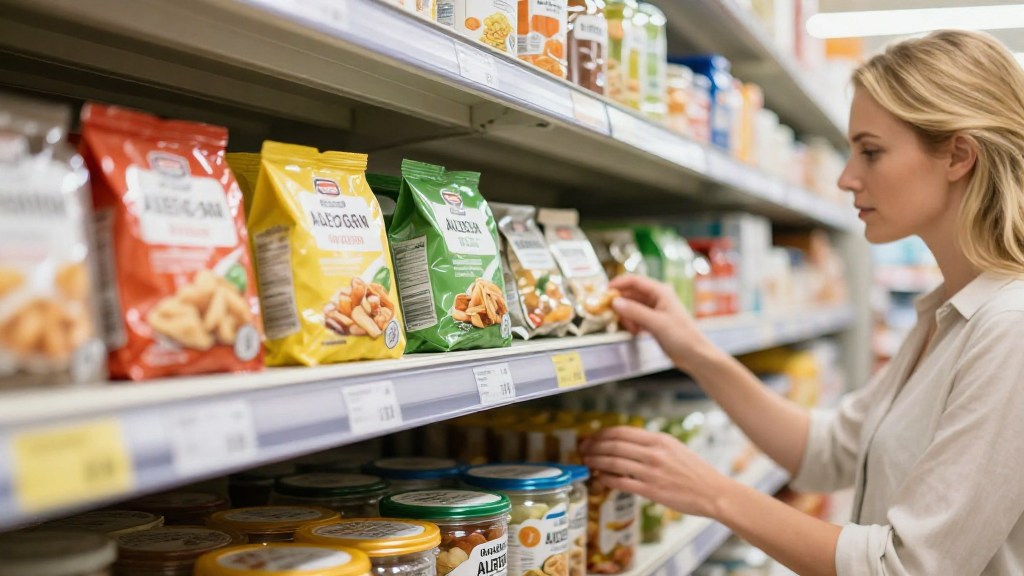
Food labeling for allergies is a crucial aspect of food safety and public health.
Many individuals rely on accurate food labeling to avoid allergens that can trigger severe reactions.
Understanding how this labeling is managed is fundamental for consumers, manufacturers, and regulators alike.
What Are the Regulations Surrounding Food Labeling for Allergies?
Food labeling for allergies is primarily governed by regulations put in place by various health organizations around the world.
In the United States, the Food and Drug Administration (FDA) oversees food labeling.
In Europe, the European Food Safety Authority (EFSA) plays a similar role.
These regulations are designed to ensure that consumers receive clear and accurate information regarding allergens.
Key aspects of these regulations include:
- Mandatory Allergen Declaration:
Certain allergens must be explicitly listed on food packaging.
This includes common allergens such as: - Peanuts
- Tree nuts
- Milk
- Eggs
- Fish
- Shellfish
- Soy
-
Wheat
-
Cross-Contamination Warnings:
Manufacturers are encouraged to include warnings about potential cross-contamination.
This is essential for individuals with extreme sensitivities.
Phrases like “may contain traces of peanuts” or “processed in a facility that handles dairy” are common. -
Allergen Information Consistency:
Allergen information must remain consistent across different batches of the same product.
This ensures reliability and trustworthiness for consumers.
How Are Allergenic Ingredients Identified in Food Products?
Food labeling for allergies relies heavily on identifying allergenic ingredients accurately.
Manufacturers are responsible for knowing what is in their products.
Several steps are involved in this process:
-
Ingredient Sourcing:
Companies must ensure that they thoroughly vet their suppliers.
This includes confirming the allergen status of each ingredient. -
Recording All Ingredients:
All ingredients must be recorded, including any potential derivatives of known allergens.
For instance, casein is a derivative of milk that must be reported. -
Regular Updates:
Manufacturers are required to keep their formulations updated.
Any changes in ingredients must be reflected in the food labeling immediately. -
Training for Staff:
Employees must be trained to manage allergenic ingredients with care.
This includes understanding the importance of food labeling for allergies and recognizing cross-contamination risks.
What Role Do Consumers Play in Reading Food Labels?
While regulations aim to guarantee safety, consumers also have a responsibility when it comes to food labeling for allergies.
Here are some key practices consumers should follow:
-
Read the Full Ingredient List:
Always check the complete ingredient list, not just the allergen warning.
Ingredients are listed by weight, meaning the first ingredient is the most prevalent. -
Be Cautious with Processed Foods:
Processed foods often contain hidden allergens.
Be mindful that even products deemed safe may contain unlisted allergens. -
Ask Questions When Dining Out:
If dining out, don’t hesitate to ask kitchen staff about food preparations.
It’s vital to understand how dishes are handled and whether they could pose an allergen risk. -
Stay Informed About Label Changes:
Food manufacturers can change their formulations anytime.
Staying informed and checking labels regularly helps mitigate risks.
How Do Manufacturers Ensure Accuracy in Food Labeling?
Ensuring accuracy in food labeling for allergies is vital for manufacturers.
Here are some significant methods they employ:
-
Quality Assurance Programs:
Most food manufacturers have stringent quality control systems in place.
These systems check both ingredient sourcing and final product labeling. -
Testing for Allergens:
Some manufacturers conduct lab tests to detect allergens in their products.
This provides an added layer of certainty for consumers. -
Third-Party Audits:
Employing independent audits can help ensure compliance with food safety regulations.
Auditors examine the accuracy of food labeling and the overall production process. -
Traceability Systems:
Implementing traceability systems allows manufacturers to track the source of each ingredient.
This helps in quickly addressing any issues with allergens.
What Challenges Do Manufacturers Face with Food Labeling for Allergies?
Despite the robust regulatory framework, challenges persist in food labeling for allergies.
Here are some of the primary hurdles:
-
Cross-Contamination Risks:
Shared equipment or facilities can inadvertently lead to allergen contamination.
Managing these risks requires vigilant processes and procedures. -
Evolving Allergen Research:
New research can lead to changes in what is considered an allergen.
Staying updated with these developments is essential for compliant labeling. -
Global Variability in Regulations:
Different countries have varying allergen regulations.
For companies exporting products, navigating international laws can be complicated.
How Can Technology Improve Food Labeling for Allergies?
Technological advancements offer tremendous potential to improve food labeling for allergies.
Here are some of the innovations currently being utilized:
-
Digital Labeling:
With the rise of smartphones, companies can offer digital labels that contain up-to-date allergen information.
QR codes can link to detailed allergen profiles. -
Blockchain Technology:
This can enhance traceability in the supply chain, allowing manufacturers to track allergens more efficiently.
Blockchain helps provide consumers with complete ingredient transparency. -
Automated Quality Control:
Advanced technologies can automate the quality control process, ensuring that labeling remains consistent and accurate.
AI-driven systems can flag discrepancies in ingredient labeling.
Conclusion
Food labeling for allergies is a vital aspect of food safety that requires cooperation among manufacturers, regulators, and consumers.
By understanding the regulations surrounding allergen labeling, the process of ingredient identification, and consumer responsibilities, individuals can better navigate food choices.
As technology continues to advance, it is likely that food labeling for allergies will become even more reliable and informative.
For both consumers and manufacturers, ongoing education and vigilance are key to minimizing allergy-related risks and ensuring a safer food environment for all.