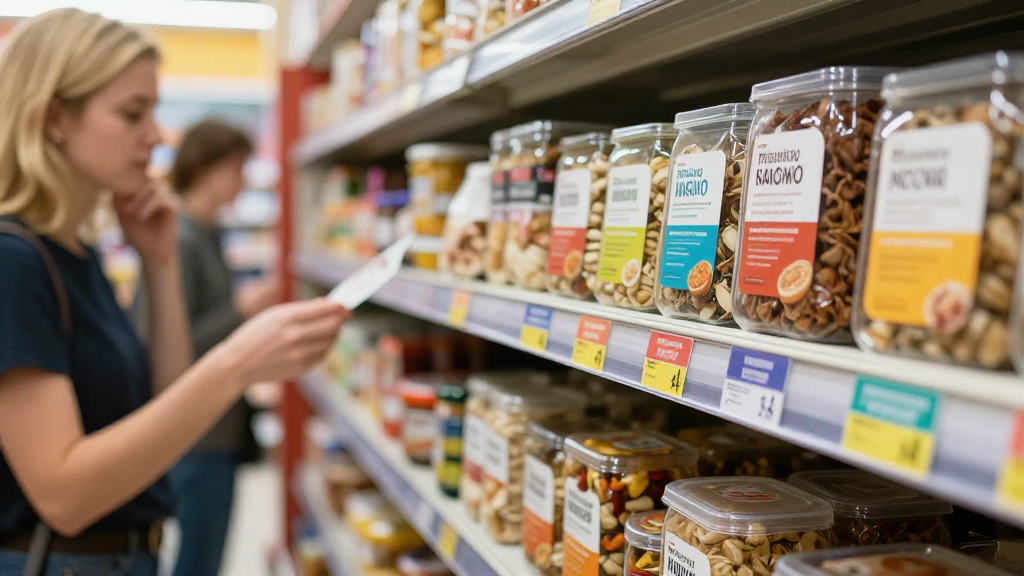
Decoding food labels can feel overwhelming, but it is essential for making informed choices about the foods you consume.
Understanding what’s in your food is crucial for your health.
Hence, this article will help you master food label decoding, enabling you to make better dietary choices.
What Is Food Label Decoding?
Food label decoding refers to the process of understanding the information provided on product packaging.
This information often includes ingredients, nutritional facts, serving sizes, and other details that can help you make healthier choices.
Here’s what you can typically find on food labels:
- Ingredient List: A comprehensive list of what is in the product.
- Nutritional Facts: Information regarding calories, fats, sugars, proteins, vitamins, and minerals.
- Serving Size: The amount recommended or typically consumed in one sitting.
- Allergen Information: Warnings regarding potential allergens such as nuts, dairy, and gluten.
- Expiration Dates: The date by which the product should be consumed for safety and quality.
Being able to decode food labels can empower consumers to make healthier choices and understand what they are putting in their bodies.
How Are Ingredients Listed?
One of the first steps in food label decoding is understanding how ingredients are listed.
Ingredients are generally listed in descending order by weight, meaning the first ingredient is the most predominant in the product.
For example, if a bag of chips lists “potatoes” as the first ingredient, it will contain more potatoes than any other component.
Here are some key points to consider:
- Read Between the Lines: Ingredients can be labeled in various ways. “High fructose corn syrup” may simply be labeled as “sugar” or “sweetener.”
- What’s ‘Natural’?: Terms like “natural” are not strictly regulated. So, asking yourself what that means in terms of ingredients is crucial.
- Recognize Additives: Some foods may contain preservatives, colorings, or flavorings that you might want to avoid.
Tip for Ingredients:
If you can’t pronounce it, you might want to think twice about eating it!
What Are Nutritional Facts?
The nutritional facts section is one of the most critical parts of food label decoding.
This area provides an overview of the essential nutritional components contained in the food.
Here’s what you should pay attention to:
- Calories: Understand how many calories you’re consuming.
- Total Fat: Look for both saturated and trans fats. Aim for lower values as both can raise cholesterol levels.
- Sugars: Be cautious of added sugars. Look for foods with low added sugars.
- Protein: Pay attention to the protein content, especially if you’re looking to increase your protein intake.
- Dietary Fiber: High fiber content is generally beneficial for digestive health.
Daily Values and Percentages:
Most food labels also display Daily Values (DVs), which indicate how much a nutrient contributes to your daily diet based on a 2,000-calorie diet.
- 5% or Less: Considered low for most nutrients (like total fat or sugars).
- 20% or More: Considered high, meaning the food is a good source of that nutrient.
What Should You Know About Serving Sizes?
Serving sizes can often be misleading, making them a vital aspect of food label decoding.
Many people do not realize that the serving size listed is not necessarily the amount one might typically consume.
Why Be Cautious?
- Underestimation: Food packaging often underestimates the portion sizes, especially snacks or beverages.
- Calories Per Serving: Be wary of products that contain multiple servings per package. If a bag of chips has three servings, it means you could easily consume three times the calories if you munch straight from the bag.
To decode food labels effectively, check the serving size and calculate accordingly based on how much you actually eat.
How Do Allergens Play a Role in Food Label Decoding?
Accurate allergen information can be a lifesaver for those with food sensitivities or allergies.
Food manufacturers are required to list common allergens such as:
- Dairy
- Eggs
- Fish
- Crustaceans
- Peanuts
- Tree Nuts
- Soy
- Wheat
What to Look Out For:
Always look for the phrase “may contain” or “produced in a facility that processes…” to avoid cross-contamination with allergens.
What Are Nutrition Claims?
Nutrition claims often catch your eye while shopping, and they are essential to food label decoding.
These claims can be about the food being “low-fat,” “sugar-free,” or “high-fiber,” but it’s crucial to assess what these terms mean.
Types of Claims:
- Nutrient Content Claims: These describe the level of a nutrient in a product (e.g., “low sodium,” “good source of fiber”).
- Health Claims: These connect a food to a health benefit (e.g., “may reduce the risk of heart disease”).
Be Skeptical:
Just because a product claims to be “healthy” doesn’t always mean it is.
For example, granola bars may be marketed as healthy but can contain high amounts of added sugars.
How Can You Use Food Label Decoding in Meal Planning?
Understanding food labels is vital for effective meal planning.
By decoding food labels, you can:
- Make Healthier Choices: Focus on products higher in nutrients and lower in unhealthy ingredients.
- Plan Balanced Meals: Choose a variety of foods with differing nutrients for a balanced diet.
- Track Your Nutritional Intake: Keep an eye on how much of certain nutrients like sodium or sugar you’re consuming daily.
Quick Tip:
Consider using a food journal or mobile app to help track your nutritional intake based on the labels you decode.
Conclusion: Is Food Label Decoding Worth It?
Decoding food labels may seem daunting, but with practice, it becomes second nature.
By mastering food label decoding, you can make more informed choices about what you eat.
From understanding ingredient lists to interpreting nutritional facts, being equipped with this knowledge enhances your eating habits,
leading to a healthier lifestyle.
Going forward, remember these key points:
- Always check the serving size.
- Pay attention to the ingredient list and allergen information.
- Be skeptical of nutrition claims that sound too good to be true.
- Use the nutritional facts to maintain a balanced diet.
Start decoding food labels today for a healthier tomorrow!