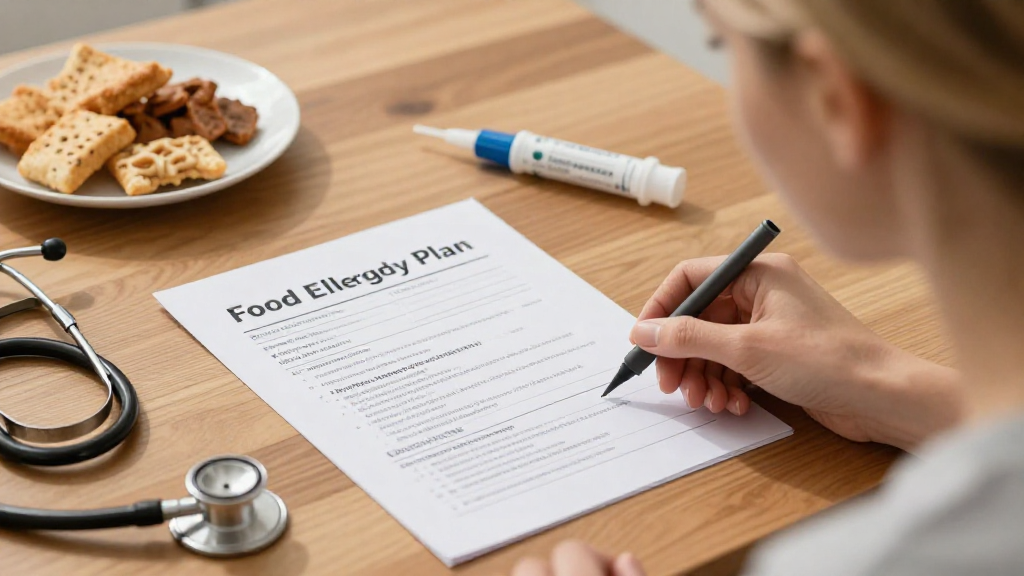
Creating a food allergy emergency plan is essential for anyone living with food allergies.
This guide outlines the critical steps needed to create an effective plan that can help manage potentially life-threatening situations.
What Should You Include in a Food Allergy Emergency Plan?
A comprehensive food allergy emergency plan should include several key components:
-
Identification of Allergies:
– Clearly outline all food allergies.
– Include specific allergens, such as nuts, dairy, shellfish, eggs, and gluten. -
Emergency Contacts:
– List urgent contact numbers for family, friends, and healthcare providers.
– Include the local poison control center phone number. -
Symptoms to Watch For:
– Detail the signs of an allergic reaction.
– Common symptoms include:- Hives
- Swelling of the lips or throat
- Difficulty breathing
- Nausea or vomiting
-
Emergency Medication:
– Note the type and dosage of medications needed, such as antihistamines or epinephrine auto-injectors.
– Ensure that medications are easily accessible. -
Action Steps for Allergic Reactions:
– Create a step-by-step guide for responding to an allergic reaction.
– For mild reactions, include steps such as administering antihistamines.
– For severe reactions, detail how to use an epinephrine injector and call emergency services. -
Communication Plan:
– Inform teachers, coaches, and caregivers about allergies.
– Provide copies of the food allergy emergency plan to all relevant parties.
How Do You Share Your Food Allergy Emergency Plan?
Sharing is a crucial part of an effective food allergy emergency plan.
Here are some ways to ensure everyone is informed:
- Print Copies:
-
Distribute hard copies to family members, caregivers, and school staff.
-
Digital Access:
- Use apps or cloud storage to store and share your plan.
-
Ensure that everyone who needs access can easily retrieve it.
-
Regular Meetings:
- Schedule meetings to review the food allergy emergency plan with everyone involved, especially new caregivers or teachers.
Where Do You Keep Your Food Allergy Emergency Plan?
The location of your food allergy emergency plan is just as important as its content.
Here are suggested storage options:
- Emergency Kits:
- Include the plan in your epinephrine auto-injector kit.
-
Ensure it’s visible and recognizable for quick access during an emergency.
-
Home Location:
-
Keep a copy in a common area of your home, such as on the refrigerator or near the front door.
-
School Supplies:
- Provide a copy to your child’s school and ensure it’s stored safely in the nurse’s office.
When Should You Review Your Food Allergy Emergency Plan?
Regular reviews of your food allergy emergency plan can ensure its effectiveness.
Here are some recommended times for reassessment:
- Before New Activities:
-
Review the plan before school starts or when engaging in new sports or activities.
-
After Reactions:
-
Analyze any allergic reactions that occur to improve your plan.
-
Every Six Months:
- Conduct a thorough review of your plan every six months.
- Update it for any changes in allergies, symptoms, or medications.
Why Is a Food Allergy Emergency Plan Important?
Understanding the significance of a food allergy emergency plan is pivotal in preventing life-threatening situations.
Here are some reasons:
- Rapid Response:
-
An emergency plan ensures a quicker response during allergic reactions.
-
Informed Support:
-
Friends, family, and caregivers will know how to assist effectively if they are informed.
-
Peace of Mind:
- Knowing you have a plan in place can provide peace of mind for both the individual with allergies and their loved ones.
How Do You Practice Your Food Allergy Emergency Plan?
Practicing the food allergy emergency plan is as important as having one in place.
Here’s how to effectively conduct practice sessions:
- Role-Playing Scenarios:
- Simulate allergic reactions and practice the steps in your emergency plan.
-
Involve children in mock scenarios to empower them.
-
Regular Drills:
- Schedule regular emergency drills at home and school.
-
Ensure everyone knows where medications are stored and how to use them.
-
Feedback and Improvement:
- After drills, gather feedback to identify any gaps in your plan.
- Make necessary adjustments for clarity or effectiveness.
What Additional Resources Can Support Your Food Allergy Emergency Plan?
To further fortify your food allergy emergency plan, consider additional resources:
- Food Allergy Organizations:
-
Join organizations like the Food Allergy Research and Education (FARE) for support and resources.
-
Consult Healthcare Professionals:
-
Regularly consult with an allergist for updates on managing allergies and treatment options.
-
Educational Materials:
- Use websites, books, and materials focused on food allergies to stay informed.
Conclusion
Creating a food allergy emergency plan is vital for individuals with food allergies.
By outlining allergies, symptoms, medication, and a response strategy, you can safeguard against potential emergencies.
Don’t forget to share, store, and regularly review your plan to ensure its effectiveness.
Implementing these steps can help you lead a safer, more confident life, free from the fear of unexpected allergic reactions.
===
By being proactive, informed, and prepared, you can ensure that both you and those around you are equipped to handle any food allergy emergencies that may arise.