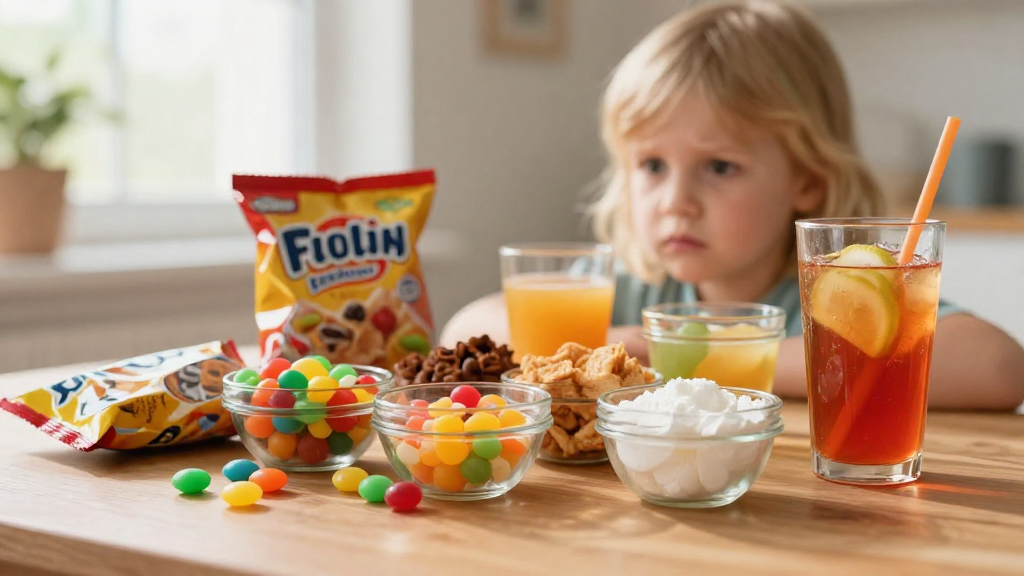
The potential link between food additives and hyperactivity has become a topic of great interest among parents, educators, and health professionals alike.
What Are Food Additives?
Food additives are substances added to food to enhance flavor, texture, appearance, and shelf-life.
These additives can be naturally derived or synthetic.
Here’s a list of common types of food additives:
- Preservatives: Extend the shelf life of products.
- Coloring Agents: Improve the visual appeal of food.
- Flavor Enhancers: Intensify the taste of food.
- Emulsifiers: Help mix ingredients that don’t normally blend well.
Some widely used food additives include artificial colors (like Red 40 and Yellow 5), sweeteners (like aspartame), and flavor enhancers (like monosodium glutamate – MSG).
The concern surrounding food additives primarily arises from their potential health impacts, particularly regarding hyperactivity in children.
What Is Hyperactivity?
Hyperactivity refers to a condition often characterized by an unusually high level of activity, impulsiveness, and difficulty concentrating.
It is most commonly associated with Attention Deficit Hyperactivity Disorder (ADHD), a neurodevelopmental disorder that can affect children and continue into adulthood.
Symptoms of hyperactivity may include:
- Impulsiveness
- Restlessness
- Difficulty focusing
- Excessive talking
- Trouble following rules
Research has suggested that certain behaviors may be exacerbated by external factors, including diet.
Does Research Support the Link Between Food Additives and Hyperactivity?
Several studies have explored the connection between food additives and hyperactivity.
Early research indicated that certain artificial colors and preservatives could trigger hyperactive behavior in susceptible children.
The most notable study, conducted by the University of Southampton in 2007, found significant correlations between specific food additives and increased hyperactivity in children.
The study concluded that consuming a combination of artificial colors and sodium benzoate (a common preservative) could lead to greater hyperactivity and distractibility.
However, subsequent research has yielded mixed results.
What Do Recent Studies Say?
-
A meta-analysis published in 2018 reviewed various studies and suggested that while some children may be sensitive to these additives, the overall effect on the general population is minimal.
-
A large cohort study conducted in 2019 indicated that children who consumed a diet high in processed foods were more likely to show signs of hyperactivity, but it did not specifically link this behavior to individual food additives.
-
Longitudinal studies have suggested that diet alone cannot fully explain behaviors associated with ADHD or hyperactivity, indicating the need for a multifactorial approach to treatment and understanding.
Which Food Additives Are Commonly Associated With Hyperactivity?
Some food additives have been particularly scrutinized when it comes to hyperactivity.
These include:
- Artificial Colors: Dyes such as Red 40 and Yellow 5 have been linked to behavioral issues in some children.
- Preservatives: Sodium benzoate, when combined with certain artificial colors, has shown a connection to hyperactive behavior.
- Flavor Enhancers: MSG has been indicated in some studies as a potential neurotoxin, although further research is needed to clarify its effects.
Are All Children Affected by Food Additives and Hyperactivity?
Not all children respond the same way to food additives.
Research suggests that some children may be more susceptible to hyperactivity when consuming these substances.
Key factors that may influence this susceptibility include:
- Genetics: Some children may have genetic predispositions that affect how they metabolize food.
- Existing Conditions: Children with ADHD or other behavioral conditions may experience more pronounced effects.
- Overall Diet: A diet deficient in essential nutrients can exacerbate symptoms, regardless of additive consumption.
What Can Parents Do to Mitigate the Effects?
Parents concerned about food additives and hyperactivity in their children can take several steps to help manage their diets:
- Read Labels: Be vigilant about checking ingredient lists for known additives.
- Choose Whole Foods: Opt for fresh fruits, vegetables, grains, and proteins rather than processed foods.
- Limit Sugary Snacks: Reducing the quantity of sugar can lead to stabilized energy levels and behavior.
- Involve Children in Meal Prep: Teaching children about healthy eating can foster better choices and decrease the likelihood of consuming additives unknowingly.
When Should You Consult a Professional?
If you suspect that your child’s behavior may be linked to diet, it’s essential to consult healthcare professionals.
Here are some indicators that a professional evaluation may be necessary:
- Persistent hyperactivity despite dietary modifications.
- Significant difficulty in social settings or at school.
- Emotional distress associated with their behavior.
Consulting a pediatrician or a registered dietitian can help in developing a tailored approach to nutrition that accounts for your child’s individual needs.
Conclusion
While there may be a link between food additives and hyperactivity, it’s crucial to recognize that the relationship is complex and influenced by various factors.
Food additives, especially artificial colors and preservatives, may exacerbate hyperactive behaviors in some children, particularly those already predisposed to such conditions.
As research continues to evolve, parents should stay informed and take proactive steps to foster a healthy diet for their children, prioritizing whole foods and natural ingredients over processed options whenever possible.
By understanding the role of diet in behavior, caregivers can better support children’s health and well-being.