Reliable drinking water can be difficult to find when you are camping, traveling in an RV, or preparing for an emergency. The best reverse osmosis systems for camping help reduce dissolved solids and common contaminants while giving you a more controlled water source away from home.
This roundup compares portable pumps, electric travel systems, countertop units, and hybrid filters so you can match purification performance with your available power, water source, storage space, and daily water needs.
Best 10 Reverse Osmosis Systems for Camping Picks for 2026
Trail-Ready RO Pump
Portable Reverse Osmosis Water Filter Pump

- Compact freestanding design for outdoor use
- Up to 8,000-liter rated capacity
- Flow rate up to 300 milliliters per minute
Best For: Camping, hiking, travel, and emergency kits
High-Capacity Under-Sink RO
Waterdrop G5P500A Reverse Osmosis System

- Eight-stage filtration with alkaline mineralization
- 500 GPD tankless capacity
- 2:1 purified-to-drain water ratio
Best For: Cabins, base camps, and plumbed RV kitchens
Hand-Pumped Outdoor RO
Purewell Water Hand Purifier Pump

- Three-stage filtration with RO membrane
- Up to 95% stated TDS reduction
- About 400 milliliters per minute
Best For: Off-grid camping, hiking, and emergency preparedness
Best Portable Electric Pick

- Rechargeable 5200mAh battery with Type-C charging
- Dual TDS, battery, and status display
- Includes pre-filter, carbon, and RO filtration
Best For: Car camping, RV travel, and off-grid freshwater use
Best Countertop Option
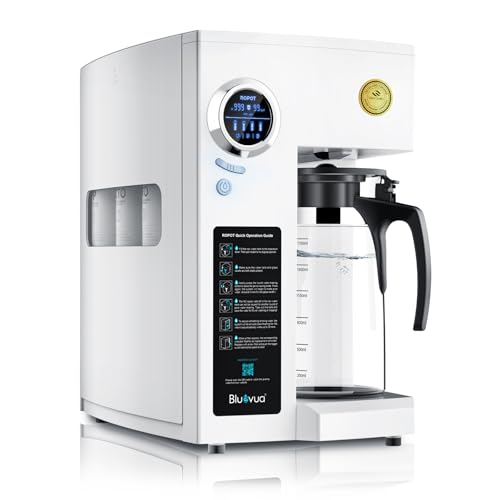
- Six-stage RO filtration with UV and remineralization
- No plumbing; includes a 1,700 ml glass carafe
- Built-in water-quality and filter-life monitor
Best For: Powered camp kitchens, cabins, and RV countertops
Best High-Capacity Battery Pick

- 12,000mAh LiFePO4 battery rated for 27 liters
- Hybrid and RO filter elements
- 250 ml-per-minute maximum flow rate
Best For: Group camping, survival kits, and extended off-grid use
Off-Grid Pick
Rover R.O. Portable Water System

- Solar- and battery-powered portable RO system
- Includes filtration, remineralization, pump, and tubing
- Designed for lakes, streams, camping, and emergencies
Best For: Off-grid camping and emergency water treatment
Easy Countertop Choice

- No plumbing required for countertop setup
- Includes two autofill pitchers and TDS monitoring
- Self-cleaning with a filter-change indicator
Best For: Powered RVs, cabins, and simple countertop use
Hot-and-Cold Option
Countertop RO System With 9 Temperatures
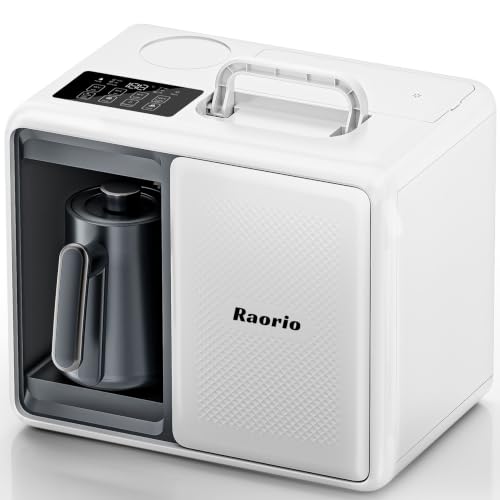
- No plumbing required; fill the feed tank and plug in
- Dispenses hot and cold purified water
- Offers nine temperatures plus boil-dry protection
Best For: Powered RVs and camp kitchens needing hot water
Trail-Ready RO Pump – Portable Reverse Osmosis Water Filter Pump
For shoppers comparing reverse osmosis systems for camping, this portable pump is designed for drawing and treating outdoor water from sources such as creeks and streams. Its compact, freestanding design suits camping, hiking, travel, and emergency-preparedness kits.
Best For: Campers and backpackers who want a compact, chemical-free RO pump for outdoor water sources.
Pros:
- Reverse osmosis filtration helps reduce small particles and impurities.
- Portable design measures about 3.74 by 1.77 by 10.63 inches.
- Rated capacity of up to 8,000 liters.
- Flow rate reaches up to 300 milliliters per minute.
Cons:
- Maximum supported source-water TDS is listed as 300 ppm.
- Its 200–300 milliliter-per-minute flow is better suited to personal use than large-group filling.
- The notes do not specify a built-in battery or detailed power method.
This is a focused outdoor purifier rather than a household-style RO installation. Its long rated capacity and small footprint make it a practical choice when portability matters most, provided your source water falls within the stated TDS limit.
High-Capacity Under-Sink RO – Waterdrop G5P500A Reverse Osmosis System
Although it is not a portable campsite purifier, the Waterdrop G5P500A is worth considering for campers who need an RO system at a base camp, cabin, or RV-style kitchen with plumbing. It combines eight-stage filtration, alkaline mineralization, and a 500 GPD tankless design.
Best For: Stationary camping setups, cabins, or RV kitchens with a reliable electrical and plumbing connection.
Pros:
- Eight-stage filtration reduces listed contaminants including lead, fluoride, chlorine, PFAS, and other impurities.
- 0.0001 μm RO membrane with alkaline mineralization adds calcium, magnesium, sodium, and potassium.
- 500 GPD capacity and a 2:1 pure-to-drain ratio support frequent use.
- Tankless construction saves under-sink space and can connect to appliances such as ice makers and refrigerators.
Cons:
- Requires corded electricity and under-sink installation.
- Faucet installation requires drilling a countertop hole.
- At 21.4 pounds, it is not intended for backpacking or remote campsites.
The G5P500A offers household-style performance for a permanent or semi-permanent camping base, but its installation requirements limit its usefulness for mobile outdoor trips. Consider it when flow rate and appliance connectivity matter more than portability.
Hand-Pumped Outdoor RO – Purewell Water Hand Purifier Pump
For reverse osmosis systems for camping that do not depend on a wall outlet, the Purewell hand purifier provides a compact pump-based option. Its staged filtration combines sediment reduction, activated carbon, and a 0.0001-micron RO membrane for outdoor and emergency use.
Best For: Hikers, campers, and emergency-preparedness users who prefer a manually operated purifier with a higher stated TDS limit.
Pros:
- Three filtration stages include PP cotton, coconut activated carbon, and a 0.0001-micron RO membrane.
- Claims up to 95% TDS reduction and supports source water up to 2,000 ppm TDS.
- Delivers about 400 milliliters per minute and uses a 1:1 pure-to-drain ratio.
- Compact BPA-free ABS body includes a durable 304 stainless-steel handle.
Cons:
- The listed 400-milliliter capacity is limited for filling larger containers.
- Manual pumping requires more effort than powered systems.
- Filter replacement is required for continued performance.
This purifier balances portability, a relatively fast outdoor flow rate, and operation without a conventional electrical connection. It is especially suited to personal water needs, though groups may find its small capacity and hand-pump operation less convenient.
Portable Countertop RO – Bluevua RO100ROPOT-Travel Water Filter
The Bluevua RO100ROPOT-Travel is a convenient countertop choice among reverse osmosis systems for camping when you have access to a power outlet. It needs no plumbing installation: fill the reservoir, plug it in, and dispense purified water into the included glass bottle.
Best For: Car camping, travel, offices, dorms, and other powered settings where quick setup is important.
Pros:
- Six-stage RO filtration combines a 0.0001-micron membrane, a five-in-one filter, and UV light.
- Reduces listed contaminants including TDS, PFOA, PFOS, chlorine, fluoride, arsenic, and lead.
- Compact 10 by 5 by 13.5-inch design includes a stainless-steel handle and glass bottle.
- Plug-and-play operation, self-cleaning, filter-life alerts, and a 3:1 filtered-to-waste ratio simplify use.
Cons:
- Requires a corded power outlet, limiting use at remote campsites.
- At about 5 kg, it is better for vehicle-based travel than backpacking.
- The included glass bottle may require careful handling during transport.
This model is a strong fit for powered camping and travel because it avoids plumbing and provides a dedicated bottle-filling setup. Its portability is practical for cars and temporary spaces, but the electrical requirement rules it out for fully off-grid trips.
Best Portable Electric Pick – Purewell Portable RO Filter
For campers and RV travelers who want reverse osmosis systems for camping without relying on an outlet, the Purewell K8680 combines rechargeable operation with a compact, carry-ready design. Its electric pump, dual TDS display, and separate filtered-water and drain outlets make campsite setup straightforward.
Best For: Car camping, RV travel, and off-grid freshwater filtration where rechargeable power is useful.
Pros:
- 5200mAh battery and Type-C charging support use away from fixed power.
- Displays incoming and filtered-water TDS readings, battery level, and operating status.
- Includes PP pre-filtration, activated carbon, and a reverse osmosis membrane.
- Carry bag, aluminum alloy housing, and built-in light improve outdoor convenience.
Cons:
- Its listed 0.7-liter capacity is smaller than that of larger countertop systems.
- Requires hose connections and an initial flushing process before use.
- Designed for suitable freshwater sources rather than untreated water of unknown quality.
The Purewell is a practical choice when portability and battery operation matter more than high-volume dispensing. The TDS display adds useful visibility during trips, while replaceable filter components support routine maintenance.
Best Countertop Option – Bluevua RO100ROPOT-UV
The Bluevua RO100ROPOT-UV is a countertop choice for reverse osmosis systems for camping when you have access to a power source and want a larger carafe. It requires no plumbing, uses six filtration stages with UV and remineralization, and provides a built-in monitor for water quality and filter life.
Best For: Camp kitchens, cabins, and RV setups with countertop space and corded power.
Pros:
- No plumbing or installation is required; simply fill the system and plug it in.
- Six-stage filtration includes a 0.0001μm RO membrane, UV light, and remineralization.
- High-borosilicate glass carafe holds 1,700 ml and avoids a plastic container.
- Monitor tracks water quality and filter service life, with a stated 2:1 pure-to-drain ratio.
Cons:
- Corded electric operation limits use away from an available power source.
- At 17.8 pounds, it is less convenient to carry than smaller camping-focused units.
- Its listed maximum source-water TDS is 500 ppm.
This Bluevua model makes the most sense for stationary camping or RV use where countertop convenience is a priority. Its glass carafe, UV stage, and remineralization filter add features, but the size and corded design favor a basecamp setup over remote hiking.
Best High-Capacity Battery Pick – ITEHIL Hybrid RO Purifier
The ITEHIL portable purifier is aimed at groups that need reverse osmosis systems for camping with substantial battery capacity. Its hybrid and RO filter elements, 12,000mAh LiFePO4 battery, and stated 250 ml-per-minute flow rate make it suited to extended outdoor use without fixed power.
Best For: Group camping, survival preparedness, and outdoor activities requiring multiple liters of treated water.
Pros:
- Hybrid and RO filter elements are designed to purify 99.99% of impurities, according to the supplied product notes.
- 12,000mAh LiFePO4 battery is rated for up to 27 liters per charge.
- 250 ml-per-minute maximum flow rate supports faster filling than many compact units.
- Includes a pre-filter, internal filter, storage bag, and Type-C cable.
Cons:
- At 13.3 pounds, it adds noticeable weight to a portable setup.
- The supplied details do not specify a dual-TDS display or filter-life monitor.
- Its listed 340,000-gallon capacity appears unusually high, so buyers should verify the intended capacity and maintenance schedule.
With its large battery and stated 27-liter output per charge, the ITEHIL is the strongest fit here for group-oriented trips. It is heavier than a minimalist purifier, but the faster flow and included carrying storage support extended outdoor use.
Off-Grid Pick – Rover R.O. Portable Water System
Rover R.O. | Off-Grid, Portable Reverse Osmosis Travel Water System (200 Gallons Per Day)
Check Price On AmazonFor shoppers comparing reverse osmosis systems for camping, the Rover R.O. is designed for locations without dependable plumbing or grid power. This portable unit combines reverse osmosis with sediment and carbon filtration, includes a remineralization stage, and can draw from sources such as lakes, streams, and rivers. Its solar kit, battery, tubing, and booster pump are included in the case.
Best For: Off-grid camping, boating, emergency preparedness, and other situations where portable solar- or battery-powered water treatment is useful.
Pros:
- Portable, compact, freestanding design with solar and battery power.
- Combines RO, sediment, and carbon filtration for varied water sources.
- Includes solar kit, battery, tubing, and booster pump.
- Rated for up to 200 gallons of capacity and 1,000 ppm source-water TDS.
Cons:
- Its 0.14 gpm maximum flow rate is relatively modest.
- It is designed for portable use rather than a permanently plumbed installation.
The Rover R.O. stands out when self-contained operation matters more than countertop convenience. Its included power and pumping components make it particularly practical for remote camps, though the slower flow rate may require patience when filling containers.
Easy Countertop Choice – DREO Install-Free RO Filter
The DREO is a convenient option for campers, RV users, or cabins with access to an electrical outlet but no desire to install plumbing. This countertop reverse osmosis system has a 5-liter capacity, two autofill pitchers, touch controls, a built-in TDS meter, and a filter-change indicator. The manufacturer states that it was tested by SGS to meet NSF/ANSI 58 standards and filters out 99.9% of possible contaminants, including PFOA, PFOS, chlorine, and fluoride.
Best For: Countertop use in an RV, cabin, or campsite with electrical power and a preference for simple, install-free operation.
Pros:
- Requires no plumbing and includes two autofill pitchers.
- Built-in TDS meter and filter-life indicator simplify monitoring.
- Compact 15.7-by-6.7-by-13.4-inch countertop footprint.
- Self-cleaning operation and touch controls add convenience.
Cons:
- Its 5-liter capacity is smaller than the capacity listed for some larger systems.
- The supplied details do not identify solar or battery operation, so it is better suited to powered locations.
Choose the DREO when easy setup and day-to-day monitoring are priorities. It offers a more appliance-like camping solution than a source-water field system, making it a strong fit for powered RV or cabin environments.
Hot-and-Cold Option – Countertop RO System With 9 Temperatures
This countertop model is among the more versatile reverse osmosis systems for camping when you want purified water for drinking, cooking, coffee, or tea. It needs no plumbing: fill the feed tank, plug it in, and select from nine temperature options. The unit uses a 0.0001um RO membrane, offers instant hot and cold dispensing, and includes auto shut-off and boil-dry protection.
Best For: RVs, camp kitchens, and countertop setups with electrical power where hot and cold purified water are useful.
Pros:
- No-plumbing setup with a 6.6-pound portable countertop design.
- Provides instant hot and cold water with nine temperature options.
- 304 stainless steel interior components help avoid unwanted tastes and odors.
- Lists 75% water savings and a 12-month filter life cycle.
Cons:
- Requires corded electric power, limiting use at unpowered campsites.
- Heating functionality adds features that may be unnecessary if you only need cold drinking water.
- The supplied details do not specify a solar or battery option.
This system is a practical choice for campers who value beverage and cooking convenience as much as filtration. Its plug-in, tank-fed design is easy to deploy, while the hot-water functions make it especially useful in an RV or powered camp kitchen.
How We Picked the Best Reverse Osmosis Systems for Camping
We evaluated these systems by focusing on the features that matter outside a standard kitchen setup: portability, power requirements, filtration design, output capacity, reject-water handling, setup complexity, and replacement-filter availability. We also considered whether each unit is better suited to treated tap water, campground hookups, freshwater tanks, or more variable outdoor sources.
Certification claims are especially important. NSF/ANSI 58 is a useful benchmark for reverse osmosis performance, but certification does not mean every contaminant is removed or that untreated surface water is automatically safe to process. Always check the manufacturer’s source-water limits and use appropriate prefiltration when needed.
Quick Comparison
| Type | Best for | Main advantage | Watch for |
|---|---|---|---|
| Hand-pump purifier | Backpacking and emergencies | Works without electricity | Slower output and more effort |
| Portable electric RO | Camping and RV travel | Convenient powered filtration | Needs power and replacement filters |
| Countertop RO system | Camp kitchens and cabins | Simple operation and higher convenience | Requires counter space and a stable outlet |
| Hybrid RO filter | Variable outdoor water sources | Combines multiple filtration approaches | More components to maintain |
| High-capacity travel system | Groups and extended stays | Greater daily production | Bulkier storage and transport |
Key Buying Factors for Reverse Osmosis Systems for Camping
Power and Portability
Choose a manual pump if you need a system for remote trails or emergency kits. Electric models are more practical at powered campsites, in RVs, or when paired with a generator, battery station, or vehicle outlet. Confirm voltage, wattage, and whether the pump can handle your available power source.
Water Source and Pretreatment
RO membranes are most comfortable with relatively clear, pressurized feed water. Sediment-heavy lake or stream water may require settling, prefiltration, or a dedicated outdoor purifier before it reaches the membrane. Do not assume a countertop RO unit can safely process untreated water simply because it is portable.
Capacity, Waste, and Storage
Compare gallons per day with real-world flow rate and tank size. A high-rated daily capacity may not equal fast filling at low pressure or cold temperatures. Also check the pure-to-drain ratio, where reject water goes, and whether the system can be stored without leaks or membrane damage.
Maintenance and Filter Costs
Look for clearly labeled replacement cartridges, realistic service intervals, easy sanitizing procedures, and accessible customer support. A cheaper unit can cost more over time if filters are difficult to find or the membrane requires frequent replacement.
Who Should Buy Which Reverse Osmosis Systems for Camping?
Backpackers and emergency-preparedness buyers should prioritize compact hand-pump or hybrid systems that operate without mains power. RV travelers and car campers will usually prefer portable electric RO units with simple tanks and low setup time. Families, groups, and cabin users should consider countertop models with larger reservoirs, faster production, or higher daily capacity. If water quality is uncertain, choose a system with robust pretreatment and verify its certified contaminant-reduction claims rather than relying on the RO label alone.