Choosing the right meat grinder for bones means focusing on motor strength, build quality, and safe grinding performance—not just wattage claims.
This roundup highlights 10 heavy-duty options that can handle tougher prep jobs, from soft bones and pet food to frequent high-volume use.
Best 10 Meat Grinder for Bones Picks for 2026
Commercial-Grade Home Grinder

- 1.5 HP motor handles large batches fast
- Can process poultry and raw chicken bones
- Includes plates, knife, and stuffing tubes
Best For: Hunters and home cooks needing heavy-duty grinding
Smart Bone-Grinding Pick
Huanyu 2000W Touchscreen Grinder

- Handles meats and soft bones, excluding large leg bones
- 2000W motor grinds about 5 lbs per minute
- Touchscreen control with auto-reverse and dishwasher-safe parts
Best For: Pet food makers and home users wanting easy controls
Commercial Bone Mincer

- Grinds chicken and fish bones plus meat
- Rated up to 370 lb/h for busy prep
- Stainless build with blades, plates, and stuffer tube
Best For: Small restaurants needing soft-bone grinding
High-Output Home Grinder

- Fast home grinder with high meat throughput
- Includes plates, blades, stuffing tubes, and kubbe maker
- Explicitly not designed to grind bones
Best For: Home meat prep when bone grinding is not needed
Heavy-Duty Shop Grinder
Commercial #12C Stainless Steel Workhorse

- 650W rated motor with 1100W peak power
- Built for large-batch home butchering and small-farm processing
- Includes two blades, plates, stuffing tubes, and pusher
Best For: Large-batch meat prep and durable commercial-style grinding
Soft-Bone Specialist
STX Turboforce II 4000 Package
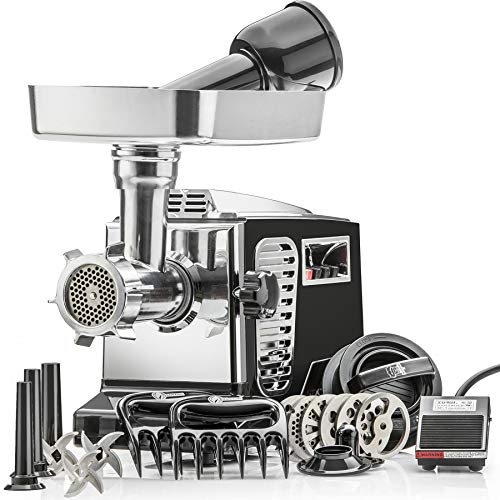
- Explicitly handles soft bones like chicken and rabbit
- 2000W max motor with air-cooled protection
- Comes with foot pedal and a large accessory set
Best For: Soft-bone grinding with lots of included accessories
Bone-In Poultry Grinder
#12 Heavy Duty 1.3 HP Stainless Model

- Handles bone-in chicken and frozen bone
- 950W motor with low-speed screw extrusion
- Large tray and 2.3-inch feed input for batch work
Best For: Grinding bone-in poultry and frozen meat in bigger batches
Heavy-Duty Home Grinder
STX Magnum 1800W Soft-Bone Grinder
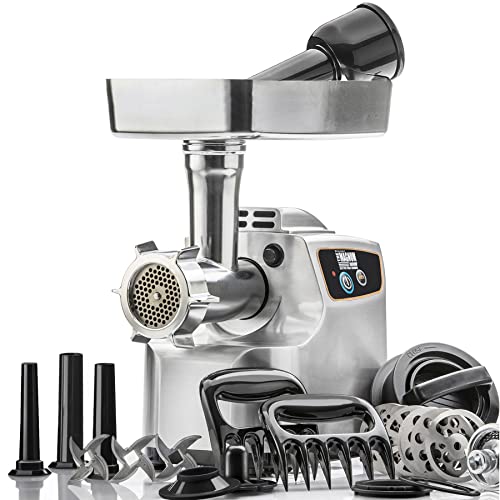
- 1800W air-cooled motor with safety breaker
- Handles soft bones like chicken and rabbit
- Includes plates, blades, stuffer tubes, and kubbe maker
Best For: Home users needing a powerful soft-bone grinder
Best Heavy-Duty Pick
#32 Heavy-Duty Pet Food Grinder

- 1500W motor with commercial-style output
- Suitable for chicken bones, venison, and pet food
- Reverse function helps limit clogging
Best For: Farms, hunters, and pet food processing
Low-Speed Bone Grinder
#12 Chicken Bone and Frozen Meat Grinder
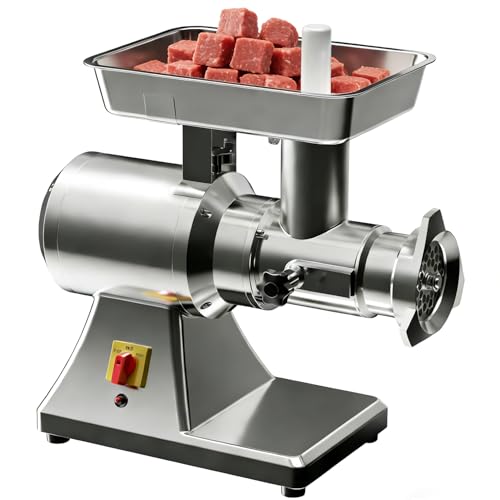
- 950W stainless steel grinder for chicken bones
- Low-speed extrusion helps preserve texture
- Large tray and detachable parts aid cleanup
Best For: Home or light commercial chicken-bone grinding
Commercial-Grade Home Grinder – LEM BigBite #32 1.5 HP
If you want a meat grinder for bones that can also handle big family batches, the LEM BigBite #32 is built for serious home and light professional use. Its 1.5 HP motor, stainless steel construction, and ability to process poultry and raw chicken bones make it a strong fit for hunters, bulk buyers, and anyone making burgers, sausage, or pet food from scratch.
Best For: Home cooks and hunters who want a heavy-duty grinder that can handle meat, poultry, and raw chicken bones.
Pros:
- Processes up to 17 lbs of meat per minute for high-volume prep
- Stainless steel build with permanently lubricated motor for smoother operation
- Includes three plates, knife, stomper, and stuffing tubes for sausage making
- Noise-dampening design helps keep operation quieter
Cons:
- Large 64.8-pound footprint may be more machine than small kitchens need
- Designed for raw chicken bones, not every type of bone
This is one of the more capable options if your priority is durability and output. It offers a practical balance of power, included accessories, and easy disassembly, while the five-year factory warranty adds reassurance for long-term use.
Smart Bone-Grinding Pick – Huanyu 2000W Touchscreen Grinder
For shoppers focused on a meat grinder for bones, the Huanyu electric grinder is built to handle a variety of meats and bones, excluding large leg bones. With a 2000W pure copper DC motor, 5-speed touchscreen control, and auto-reverse, it is aimed at making pet food, grinding venison, and handling soft bone prep with less hassle.
Best For: Home users who want a feature-rich grinder for soft bones, pet food, and game meat.
Pros:
- Designed for meats and bones, excluding large leg bones
- 2000W motor and size #10 head grind about 5 lbs per minute
- 5-speed touchscreen with automatic reverse for jam clearing
- Many parts are dishwasher safe for easier cleanup
Cons:
- Not suitable for large leg bones
- Smaller #10 head may not match the output of larger commercial units
This model stands out for convenience features more than brute force. The touchscreen controls, cooling vents, and dishwasher-safe parts make it appealing if you want easier day-to-day use while still grinding soft bones and bulk meat at home.
Commercial Bone Mincer – Newhai 950W Stainless Grinder
If you need a meat grinder for bones in a restaurant or busy prep area, the Newhai commercial grinder is designed for soft bone work like chicken and fish bones. Its 950W motor, stainless steel build, and high-efficiency output make it a practical choice for grinding fillings, minced meat, and other kitchen prep jobs at scale.
Best For: Small restaurants and commercial kitchens that need to process soft bones and frequent batches.
Pros:
- Handles soft bones like chicken and fish bones
- Stainless steel construction is durable and easy to clean
- Up to 370 lb/h efficiency for higher-volume prep
- Includes two blades, three plates, and a sausage stuffer tube
Cons:
- Heavy 46-pound unit may be less convenient to move
- Best suited to soft bones rather than harder bone types
This is a solid workhorse if you care more about output and reliability than compact size. The low-speed auger helps preserve texture, and the included warranty and lifetime service support add value for commercial buyers.
High-Output Home Grinder – STX Turboforce 3000 Classic
The STX Turboforce 3000 is a powerful home-use grinder, but it is not a meat grinder for bones. According to the product notes, it should not be used to grind bones, tendons, vegetables, nuts, or fruit, so it makes sense only if you want fast meat grinding and a full set of sausage and burger accessories.
Best For: Home users who want high-volume meat grinding and accessory support, not bone grinding.
Pros:
- Strong home-use output with a locked motor wattage of 3000W
- Can grind about 180 to 240 lbs of meat per hour when properly prepped
- Includes five grinding plates, three blades, stuffing tubes, and kubbe attachment
- Extra-large hopper holds about 3 lbs of prepped meat
Cons:
- Explicitly cannot grind bones
- Not intended for commercial use
For buyers comparing grinders, this model is the clearest reminder to check the fine print. It offers impressive meat-processing speed and a generous accessory bundle, but it is the wrong pick if bone grinding is your main goal.
Heavy-Duty Shop Grinder – Commercial #12C Stainless Steel Workhorse
If you need a meat grinder for bones-adjacent prep and large-volume grinding, this #12C commercial unit is built more for power and throughput than for compact countertop use. It’s designed for home butchering, small-farm processing, and pet food from scraps, with a high-torque motor, oversized hopper, and stainless steel build.
Best For: Large batches of meat processing, game, and pet food prep where durability and volume matter most.
Pros:
- High-torque 110V motor with 650W rated power and 1100W peak power for heavy workloads
- Large hopper supports batch processing for home butchering or small-farm use
- Includes two stainless steel blades, two grinding plates, stuffing tubes, and a meat pusher
- Detachable parts make cleanup straightforward
Cons:
- Heavier, larger machine at 43 pounds, so it is not especially portable
- Notes do not specify bone grinding capability, so it is better suited to meat and scraps
Overall, this is a solid pick if you want a tough, commercial-style grinder for big jobs and broad meat processing rather than a specialized bone grinder.
Soft-Bone Specialist – STX Turboforce II 4000 Package
This meat grinder for bones is one of the clearest fits in the group if your work includes soft poultry bones. The STX Turboforce II 4000 is described as handling soft bones such as chicken, rabbit, squirrel, and quail bones, while also offering a high-capacity tray, foot pedal, and a full accessory package for home grinding.
Best For: Users who want a home grinder that can handle soft bones plus a wide range of grinding tasks.
Pros:
- Explicitly stated to handle soft bones such as chicken, rabbit, squirrel, and quail bones
- 2000-watt maximum motor with air-cooled design and circuit breaker protection
- High-capacity tray and claimed throughput of 220 to 260 lbs per hour depending on use
- Includes foot pedal, multiple plates, blades, sausage tubes, kubbe maker, meat claws, and patty press
Cons:
- Best suited to soft bones, not heavy-duty bone processing
- Large accessory set may be more than casual users need
If you want a grinder that’s clearly rated for soft-bone work and still comes loaded with accessories, this model offers the most direct match in the lineup.
Bone-In Poultry Grinder – #12 Heavy Duty 1.3 HP Stainless Model
If your priority is a meat grinder for bones and frozen protein, this #12 heavy-duty model is built around that use case. The notes specifically say it handles bone-in chicken, frozen meat, frozen bone, and fish, while its low-speed screw extrusion is aimed at preserving texture and limiting heat buildup during grinding.
Best For: Home or commercial users who need to grind bone-in chicken, frozen meat, and other tough ingredients.
Pros:
- Rated to handle bone-in chicken and frozen bone, along with fresh and frozen meat
- 950W pure motor and low-speed screw extrusion for steady grinding
- Large stainless steel tray and 2.3-inch feed input support bigger batches
- Fully stainless steel construction with detachable parts for cleaning
Cons:
- Bulky at 46.3 pounds, so it is not ideal for frequent moving
- Only two grinding plates are included
This is the strongest match here for buyers who specifically want a grinder that can process bone-in poultry and frozen ingredients without giving up capacity.
Heavy-Duty Home Grinder – STX Magnum 1800W Soft-Bone Grinder
If you want a meat grinder for bones that still works well in a home kitchen, the STX Magnum 1800W is built around that idea. It is sized as a No.12 grinder, includes a high-capacity tray, and is specifically noted for handling soft bones like chicken, rabbit, squirrel, and quail bones while still offering multiple plates and accessories for regular grinding and sausage making.
Best For: Home users who want a powerful grinder for soft bones, large batches, and versatile meat prep.
Pros:
- 1800W locked motor with air-cooled design and circuit breaker for safety
- Can handle soft bones such as chicken and rabbit bones
- Large tray and high hourly output for batch grinding
- Includes multiple plates, blades, stuffing tubes, and kubbe attachment
Cons:
- Designed for soft bones, not a general all-bone solution
- Heavier and bulkier than compact home grinders
- May be more machine than occasional users need
The STX Magnum stands out if your priority is a capable home grinder with enough strength for soft bones and enough accessories to handle several prep tasks. It is a practical pick for users who want more than a basic meat-only unit.
Best Heavy-Duty Pick – #32 Heavy-Duty Pet Food Grinder
For buyers comparing a meat grinder for bones in a commercial-style setup, this #32 model is aimed at heavy workloads. It uses a 1500W pure copper motor, stainless steel construction, and is described as suitable for chicken bones, wild game, and pet food processing, with a very high claimed throughput for fast batch grinding.
Best For: Farms, hunters, restaurants, and pet food makers who need a heavy-duty grinder for bones and large batches.
Pros:
- 1500W motor with commercial-duty grinding performance
- Rated for chicken bones, venison, and other tough ingredients
- Reverse function and removable auger help reduce clogging
- Stainless steel build, plates, blades, and easy disassembly
Cons:
- Very heavy at 108 pounds
- Large footprint may not suit small kitchens
- More specialized than a basic household grinder
This model makes sense if you need strength, speed, and durability more than compact convenience. Its feature set leans strongly toward serious processing jobs where bones, game, and pet food prep are part of the workflow.
Low-Speed Bone Grinder – #12 Chicken Bone and Frozen Meat Grinder
If you want a meat grinder for bones with a quieter, lower-speed approach, this #12 unit is built for chicken bones and frozen meat. It uses a 950W motor, full stainless steel construction, and low-speed screw extrusion to process ingredients like chicken with bones while helping preserve texture and flavor.
Best For: Home and light commercial users who want a stainless steel grinder for chicken bones, frozen meat, and regular batch prep.
Pros:
- Specifically designed to process chicken bones and frozen meat
- Low-speed extrusion helps preserve meat texture
- Full stainless steel build with heat-dissipation features
- Large tray and detachable parts make prep and cleaning easier
Cons:
- Lower wattage than larger commercial units
- Best suited to chicken bones rather than broader hard-bone use
- Single blade setup is simpler than multi-blade models
This grinder is a balanced option if you want bone-processing capability without moving into oversized commercial territory. It emphasizes steady grinding, stainless construction, and practical everyday use for mixed kitchen tasks.
How We Picked the Best Meat Grinder for Bones
We prioritized grinders with enough motor power, sturdy metal construction, and features that support tougher grinding tasks. That includes reverse functions, multiple grinding plates, strong feed systems, and models designed for soft bones or frozen meat. We also looked for practical details buyers care about, such as tray capacity, cleaning convenience, and whether a unit fits home, pet food, or commercial use.
Quick Comparison
The strongest choices in this group generally fall into three buckets: high-capacity home-use grinders, pet-food-friendly models that can handle soft bones, and commercial-grade machines built for frequent processing. If you need occasional bone grinding, a robust #12 or similar mid-size grinder may be enough. For higher volume or tougher workloads, larger #32 systems and heavier-duty commercial units are better suited.
Key Buying Factors for a Meat Grinder for Bones
Motor Power and Torque
Wattage helps, but torque and gear design matter just as much. A grinder that can maintain speed under load is more useful than one that advertises a high peak number but struggles when fed denser material.
Material and Internal Build
Look for stainless steel or similarly durable metal components in the auger, blades, housing, and tray. Bone grinding is hard on parts, so lightweight construction can wear faster and produce inconsistent results.
Bone Type and Intended Use
Not every Meat Grinder for Bones is meant for the same job. Some are suitable for soft bones like chicken necks or wings, while others are better for frozen meat and pet food prep. Always match the grinder to the material you plan to process.
Safety and Workflow Features
Reverse functions, pushers, foot pedals, and stable feeding systems can improve control and reduce jams. These features are especially helpful if you grind in batches or work with tougher ingredients.
Who Should Buy Which Meat Grinder for Bones?
Home cooks should look for a dependable mid-size grinder with reverse and solid metal components. Pet owners and raw-feeding households may want a model explicitly rated for soft bones and frozen meat. Small businesses and serious volume users should focus on commercial grinders with higher HP, larger body sizes, and parts built for repeated operation.
In short, choose the grinder that matches your actual workload. The best option is not always the biggest machine—it is the one that balances power, durability, and safe handling for the bones you intend to grind.