Choosing the right commercial espresso machine can make or break drink quality, service speed, and day-to-day workflow. The best option depends on your volume, menu, staff skill, and available counter space.
Below, we focus on machines that fit different business needs, from compact café setups to high-output operations that need reliable performance hour after hour.
Best 10 Commercial Espresso Machine Picks for 2026
High-Volume 3-Group Pick
Professional 3-Group Commercial Espresso Machine

- Three group heads for simultaneous brewing
- Programmable shot timing and temperature control
- Dual steam wands plus hot water tap
Best For: Busy cafes and restaurants needing fast, repeatable output
Compact Cafe-Style Classic
Nuova Simonelli Oscar II Espresso Machine
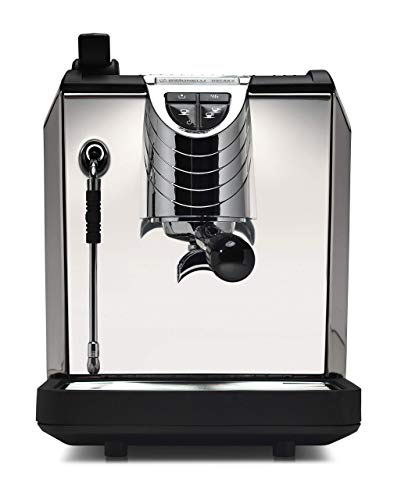
- Compact semi-automatic design for home espresso
- Includes tamper, portafilter, frother, and baskets
- 2-year manufacturer warranty included
Best For: Home users wanting a classic semi-automatic espresso machine
Guided Precision Pick
Fellow Espresso Series 1 Matte Black

- On-screen guidance and built-in presets
- Pressure profiling with temperature control
- Heats in under 2 minutes
Best For: Beginners and enthusiasts focused on precision and learning
Automatic 2-Group Workhorse
Nuova Simonelli Appia Life Auto Volumetric

- Two-group fully automatic commercial layout
- Programmable volumetric dosing for consistency
- Automated backflushing and cool-touch wand
Best For: Busy cafés and professional bars needing one-touch consistency
Premium Automated Pick
Breville Oracle Jet Espresso Machine

- Automatic grind, dose, and tamp workflow
- Fast ThermoJet heat-up with precise temperature control
- Auto MilQ for dairy and plant-based microfoam
Best For: Users wanting a premium fully automatic espresso machine with guided consistency
Hands-On Value Choice
Chefman Crema Deluxe Espresso Machine
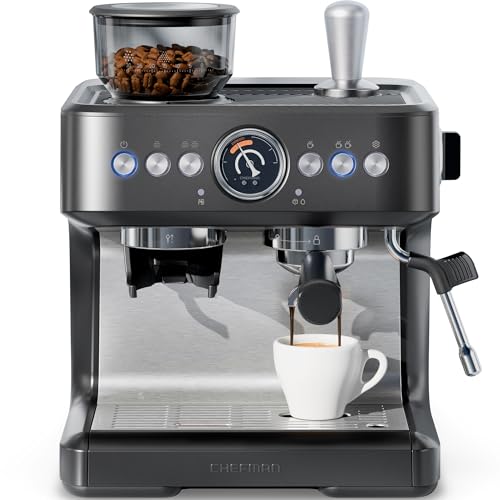
- Dual boiler supports brewing and milk frothing together
- 30 grind settings for more precise bean prep
- Includes grinder, steam wand, and barista accessories
Best For: Buyers wanting a semi-automatic machine with strong espresso control
Touchscreen All-Rounder
Breville Barista Touch Espresso Machine

- Touchscreen with five café favorites and custom settings
- Built-in grinder with adjustable grind control
- Programmable milk temp and texture for drinks
Best For: Drink makers who want guided espresso brewing with customization
Smart All-in-One Pick
Ninja Luxe Café Premier 3-in-1 Espresso Machine
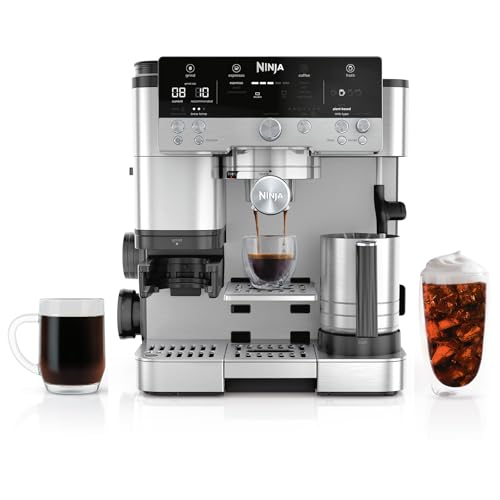
- 3-in-1 espresso, drip coffee, and cold brew
- Built-in grinder with 25 settings
- Hands-free frothing and guided brewing
Best For: Beginners who want an automated all-in-one drink station
Precision Manual Pick
Breville Barista Pro Espresso Machine
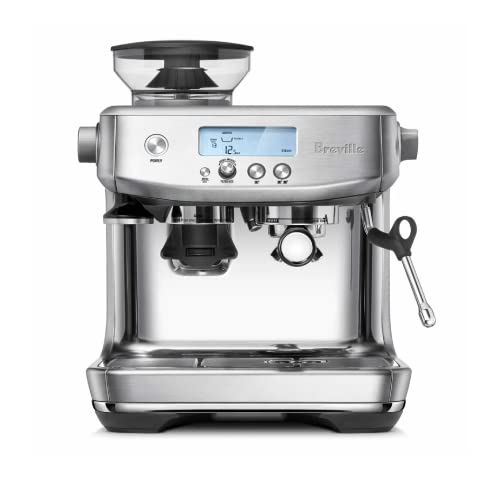
- Manual espresso machine with built-in grinder
- LCD interface and adjustable grind control
- Includes milk jug, baskets, cleaning kit, and water filter
Best For: Hands-on espresso fans who want faster prep and more control
Classic Starter Pick
Breville Barista Express Espresso Machine

- Built-in grinder with manual override
- Includes key tools for espresso prep
- Supports single or double shots
Best For: New home baristas who want a proven manual setup
High-Volume 3-Group Pick – Professional 3-Group Commercial Espresso Machine
If you need a commercial espresso machine built for busy service, this 3-group model is aimed at coffee shops, restaurants, and other high-output counters. Its stainless steel build, programmable shot timing, and dual steam wands are designed to keep drinks moving while maintaining consistency.
Best For: High-volume cafes and restaurants that need multiple drinks brewed at once.
Pros:
- Three group heads allow simultaneous espresso preparation
- Programmable shot timing and temperature controls with LED display panels
- Dual steam wands plus a separate hot water tap for milk drinks and tea
- Industrial-grade portafilters and a cup-warming surface for commercial workflow
Cons:
- Large-capacity design is better suited to commercial operations than small spaces
- Semi-automatic operation may require trained staff for best results
Overall, this is the most capacity-focused option in the group, with features that support steady output and repeatable brewing. It makes sense when speed, consistency, and multi-drink service matter more than compact size.
Compact Cafe-Style Classic – Nuova Simonelli Oscar II Espresso Machine
The Nuova Simonelli Oscar II is a semi-automatic espresso machine that fits well in a home espresso setup while still borrowing from commercial-style construction. With a copper and stainless steel exterior, a reusable filter, and included barista tools, it focuses on straightforward espresso making in a compact footprint.
Best For: Home espresso users who want a compact, semi-automatic machine with a classic build.
Pros:
- Compact dimensions make it easier to fit into a home setup
- Includes tamper, portafilter, milk frother, and shot baskets
- Reusable filter and semi-automatic operation support hands-on brewing
- 2-year manufacturer warranty is included
Cons:
- 110V power and pour-over water source may not suit every setup
- Requires attention to water quality, with softener guidance noted for warranty coverage
For buyers who want a smaller commercial espresso machine style without moving into full café equipment, this model offers a practical middle ground. It is best when you want manual control and included accessories in a manageable size.
Guided Precision Pick – Fellow Espresso Series 1 Matte Black
The Fellow Espresso Series 1 is built for users who want a commercial espresso machine feel without the learning curve. It combines guided recipes, shot feedback, pressure profiling, and fast heat-up time, making it a strong fit for dialing in espresso, lattes, and cappuccinos with more confidence.
Best For: Beginners and enthusiasts who want precise control with helpful on-screen guidance.
Pros:
- On-screen guidance and drink recipes help simplify brewing
- Shot feedback suggests grind adjustments when extraction is off
- Pressure profiling and temperature control support more precise espresso
- Heats in under 2 minutes and includes milk-steaming assistance
Cons:
- Single-group, home-oriented design is not built for high-volume service
- Designed more for learning and precision than bulk drink production
This machine stands out for usability and control rather than raw throughput. If you want to improve your espresso technique while keeping the process approachable, it offers a well-balanced feature set.
Automatic 2-Group Workhorse – Nuova Simonelli Appia Life Auto Volumetric
This commercial espresso machine is aimed squarely at high-volume service, with a fully automatic 2-group layout and programmable volumetric dosing. It is designed to improve consistency across users while adding maintenance and ergonomics features that matter in a professional café environment.
Best For: Commercial coffee bars and busy locations that need one-touch consistency and durability.
Pros:
- Programmable volumetric dosing supports consistent one-touch shot delivery
- Automated backflushing simplifies cleaning and maintenance
- Cool-touch steam wand and push-pull steam system improve usability
- Stainless steel construction with a solid steel frame is built for durability
Cons:
- Large 220-pound footprint requires substantial counter or install space
- 240V, 3400-watt setup is intended for professional electrical setups
For operators who want repeatable results and easier workflow management, this model is a strong commercial choice. Its automation and durability-focused design make it especially useful where consistency and speed are priorities.
Premium Automated Pick – Breville Oracle Jet Espresso Machine
If you want a commercial espresso machine style experience at home, the Breville Oracle Jet is built for speed, consistency, and control. Its fully automatic workflow handles grinding, dosing, tamping, and milk texturing, while still giving you room to tune extraction and temperature for espresso drinks that feel café-ready.
Best For: Home baristas who want a premium bean-to-cup machine with fast heating, automatic milk texture options, and guided shot control.
Pros:
- Built-in Baratza burr grinder with 45 grind settings for bean-to-cup convenience.
- Auto grind, dose, tamp, and Barista Guidance help correct over- or under-extraction.
- ThermoJet heating system heats quickly and supports precise temperature control.
- Auto MilQ offers microfoam settings for dairy, soy, almond, and oat milk.
Cons:
- Large footprint may be a challenge for smaller counters.
- More advanced than a basic espresso machine, so it may be more machine than occasional users need.
This is a strong pick if you want a high-end, automated setup that still focuses on espresso quality. The 22g portafilter, touchscreen control, and cold espresso/cold brew options make it especially versatile for households that make multiple café drinks.
Hands-On Value Choice – Chefman Crema Deluxe Espresso Machine
The Chefman Crema Deluxe is a practical commercial espresso machine-style choice for buyers who want hands-on control without giving up speed. Its semi-automatic design, double boiler system, and built-in grinder help you brew espresso and froth milk at the same time for lattes and cappuccinos.
Best For: Home users who want a semi-automatic espresso machine with simultaneous brewing and milk frothing.
Pros:
- Double boiler lets you brew espresso and froth milk at the same time.
- 30-setting conical burr grinder gives you more control over grind size.
- 15-bar pump and customizable shot temperature/volume support a range of espresso styles.
- Large 3-liter removable water reservoir is useful for frequent drink making.
Cons:
- Semi-automatic design requires more involvement than fully automatic machines.
- At 13.66″ deep and 12.68″ wide, it still takes meaningful counter space.
For shoppers who want more control than a one-touch machine but still want convenience, this model lands in a useful middle ground. The included accessories and built-in grinder make it especially appealing as an all-in-one setup for espresso drinks.
Touchscreen All-Rounder – Breville Barista Touch Espresso Machine
The Breville Barista Touch is a polished commercial espresso machine alternative for users who want guided operation with room to customize. Its touchscreen interface, built-in grinder, and programmable milk settings make it easy to build espresso-based drinks without sacrificing the feel of a serious home setup.
Best For: Espresso drinkers who want touchscreen simplicity with built-in grinding and customizable milk settings.
Pros:
- Touchscreen interface offers five pre-programmed café favorites plus custom settings.
- Integrated grinder with adjustable grind control supports whole-bean workflow.
- Programmable milk temperature and texture help dial in lattes and cappuccinos.
- Includes useful accessories like a stainless steel jug, water filter, and dose trimming tool.
Cons:
- Smaller bean hopper and 67 oz water tank may require more frequent refills in busy use.
- Not as fully automatic as higher-end systems that handle more of the workflow for you.
This is a smart pick if you want a well-rounded espresso machine that balances automation and control. It is especially appealing for households that make a mix of espresso drinks and want a simpler path to consistent results.
Smart All-in-One Pick – Ninja Luxe Café Premier 3-in-1 Espresso Machine
If you want a commercial espresso machine-style workflow without the learning curve, the Ninja Luxe Café Premier is built to simplify the process. It combines espresso, drip coffee, and cold brew in one stainless steel machine, with guided grinding, assisted tamping, and automatic frothing to make everyday drinks easier to dial in.
Best For: Beginners and busy home users who want one machine for espresso, coffee, and cold brew.
Pros:
- 3-in-1 design handles espresso, drip coffee, and cold brew.
- Built-in conical burr grinder offers 25 settings for more precise grinding.
- Barista Assist Technology supports grinding, dosing, tamping, and temperature/pressure adjustments.
- Dual Froth System offers hands-free milk frothing with multiple presets.
Cons:
- May be more machine than you need if you only want straight espresso.
- Countertop footprint is sizable, even with built-in storage.
Overall, this is a strong choice if you want an easier path to café-style drinks and value automation over manual control. It delivers broad drink flexibility and a polished workflow in a single machine.
Precision Manual Pick – Breville Barista Pro Espresso Machine
The Breville Barista Pro is a practical commercial espresso machine alternative for buyers who want hands-on control with built-in convenience. It pairs a manual espresso workflow with an integrated grinder, adjustable grind control, and an intuitive LCD interface, making it easier to manage shot-making without giving up customization.
Best For: Espresso drinkers who want manual control, fast workflow, and a built-in grinder.
Pros:
- Built-in grinder and adjustable grind control streamline bean-to-shot prep.
- Intuitive LCD interface helps simplify operation.
- Includes filter baskets, a milk jug, cleaning kit, and water filter.
- 67 oz water tank and 1/2 lb bean hopper support regular use.
Cons:
- Manual operation means more involvement than a fully automatic machine.
- Designed specifically for espresso rather than all-in-one brewing.
For shoppers who want a more direct espresso-making experience, this model balances control and convenience well. It is a solid fit if you value espresso quality and a built-in grinder over automation.
Classic Starter Pick – Breville Barista Express Espresso Machine
The Breville Barista Express is a straightforward commercial espresso machine-style option for home baristas who want to build their skills. With a built-in grinder, manual override, and included dosing and tamping tools, it gives you the essentials for making café-style espresso shots, lattes, and cappuccinos.
Best For: First-time buyers who want a classic manual espresso setup with integrated grinding.
Pros:
- Integrated grinder and adjustable grind amount support fresher shots.
- Manual override gives you more control over the pull.
- Includes portafilter, tamper, milk jug, cleaning tools, and water filter.
- 67 oz water tank and single or double shot support are practical for home use.
Cons:
- Manual operation requires more practice than automatic machines.
- 1-year limited warranty is shorter than some competing models.
This is a well-rounded entry point if you want to learn espresso fundamentals without buying separate gear right away. It focuses on the basics and gives you enough control to grow into the machine over time.
How We Picked the Best Commercial Espresso Machine
We prioritized machines built for real-world service: stable temperature performance, durable components, steam capacity, ease of use, and support for busy workflows. We also looked at how well each model fits different business sizes, from smaller specialty cafés to higher-volume restaurants and coffee bars.
Quick Comparison
Not every Commercial Espresso Machine is designed for the same job. Two-group and three-group machines are better for peak-hour output, while premium single-group and prosumer-style units may suit lower-volume venues, training bars, or satellite locations. Automatic volumetrics can reduce training time and improve consistency, while semi-automatic controls give skilled baristas more flexibility.
Key Buying Factors for a Commercial Espresso Machine
Volume and Group Count
Match the machine to your busiest hour, not your average hour. More group heads generally mean faster ticket times and less bottlenecking during rush periods.
Boiler Strength and Steam Power
Milk service matters as much as espresso. Look for strong steam recovery and enough boiler capacity to keep shots and steaming moving together without drops in performance.
Workflow and Training
If you have a rotating team, features like automatic dosing, clear controls, and consistent temperature management can reduce mistakes and improve drink repeatability.
Maintenance and Serviceability
A good Commercial Espresso Machine should be easy to clean, descale, and service. Readily available parts and dependable manufacturer support can matter as much as brew quality over time.
Footprint and Utilities
Before buying, confirm countertop space, water access, drainage, and electrical requirements. A powerful machine is only useful if your location can support it safely and efficiently.
Who Should Buy Which Commercial Espresso Machine?
If you run a high-volume café or restaurant, prioritize multi-group machines with strong steam performance and volumetric controls. If you operate a smaller shop or want a machine that balances speed with a shorter learning curve, a well-designed single-group or prosumer-style model may be the better fit. For teams that value consistency and faster training, automation-focused options can be especially practical.
The best choice is the one that matches your menu, pace, and staff—not just the one with the biggest spec sheet. Use your daily drink count, peak-hour demand, and service style to narrow the field before you buy.