Reliable drinking water is essential on any camping trip, but the best way to treat it depends on your group size, destination, pack weight, and access to power. This roundup compares 10 practical options for filtering or purifying water outdoors.
We cover compact personal straws, squeeze and gravity systems, pump filters, purification tablets, and an electric solar-compatible unit so you can choose the right balance of portability, speed, capacity, and protection.
Best 10 Water Purifiers for Camping Picks for 2026
Best Lightweight Straw
LifeStraw Personal Water Filter
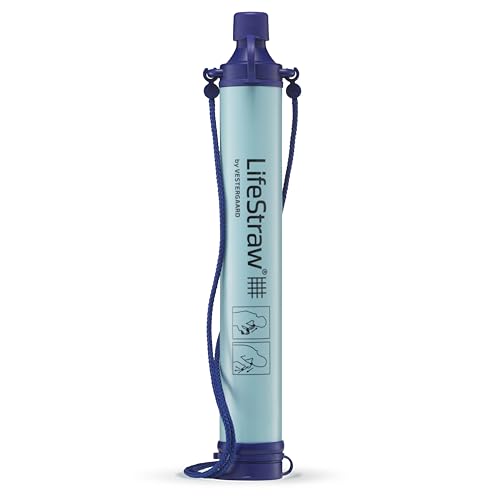
- 45 g personal filter
- No electricity or batteries
- Rated for up to 1,000 gallons
Best For: Solo hikers, campers, and emergency kits
Best Long-Life Squeeze System
Sawyer Squeeze with CNOC 2L Bladder

- Includes 2-liter TPU bladder
- Cleanable, reusable filter
- Rated for up to 100,000 gallons
Best For: Backpackers needing flexible water storage
Best Gravity-Fed Capacity
Waterdrop Gravity Water Filter Straw
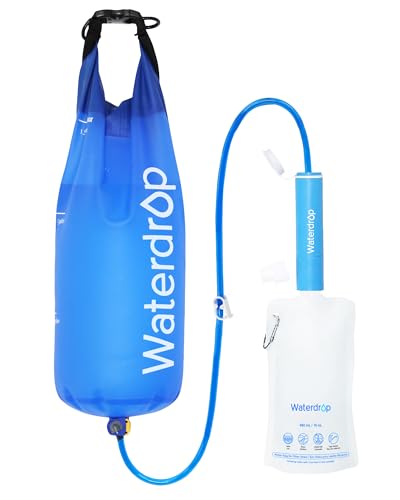
- Includes 1.5-gallon gravity bag
- Up to 700 ml/min flow
- Backwashable and rated for 1,400 gallons
Best For: Base camps and shared outdoor water supplies
Best Ultralight Versatility
Sawyer MINI Water Filtration System

- Only 2 ounces
- Works with bottles and hydration packs
- Rated for up to 100,000 gallons
Best For: Ultralight hikers wanting flexible connections
Best Pump Filter

- Filters up to 1 liter per minute
- Lightweight 11.2-ounce design
- Cartridge capacity up to 1,150 liters
Best For: Campers and backpackers wanting a reusable pump filter
Best Lightweight Treatment

- Treats up to 4 gallons in 30 minutes
- 100-tablet portable pack
- Targets bacteria, viruses, and cysts
Best For: Lightweight camping and emergency backup treatment
Best Personal Straw
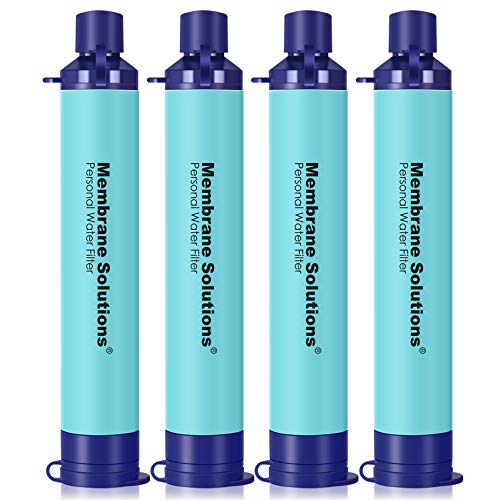
- Weighs only 2 ounces
- Five-stage, 0.1-micron filtration
- Rated for up to 5,000 liters
Best For: Solo campers and hikers needing a compact personal filter
Best High-Volume Hand Pump
Trailgo Pro Camping Water Filter

- 1.5 L/min flow for group use
- Three-stage filtration with 0.01-micron ultrafiltration
- Hand-operated, with 3,000-liter rated capacity
Best For: Group camping, base camps, and off-grid backup water filtration
Best Group-Focused Manual System

- Up to 3 L/min maximum flow
- Mineral prefilter, PP cotton, and ultrafiltration
- Replaceable filter components and lifetime warranty
Best For: Group camping and emergency-preparedness water needs
Best Lightweight Powered Option
ITEHIL Solar Camping Water Purifier
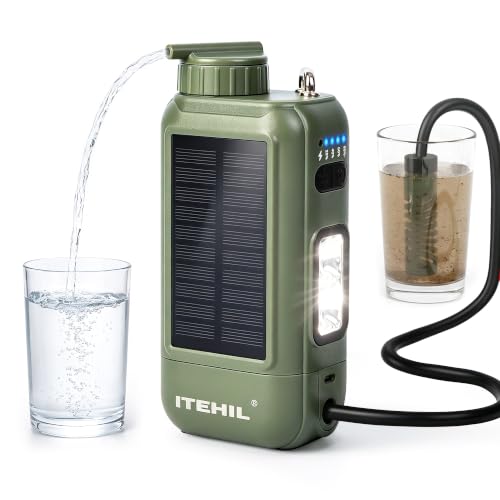
- 0.01-micron dual filtration system
- 5200mAh battery with USB-C and solar charging
- 700 ml/min flow plus light and power-bank functions
Best For: Solo campers and hikers seeking lightweight, rechargeable filtration
Best Lightweight Straw – LifeStraw Personal Water Filter
The LifeStraw Personal Water Filter is a compact option for anyone comparing water purifiers for camping, hiking, travel, or emergency kits. It uses a hollow fiber membrane, requires no electricity or batteries, and is designed for direct drinking from a water source.
Best For: Solo campers and hikers who prioritize minimal weight and simple, no-power operation.
Pros:
- Protects against listed bacteria, parasites, and microplastics.
- Weighs only 45 g and needs no electricity or battery power.
- Rated to provide up to 1,000 gallons of filtered water.
Cons:
- Its straw format is less convenient for filling bottles or sharing water.
- The supplied notes do not indicate chemical contaminant removal.
Choose this LifeStraw when pack weight and straightforward personal use matter most. Its direct-drinking design is particularly practical for quick hydration on the trail.
Best Long-Life Squeeze System – Sawyer Squeeze with CNOC 2L Bladder
The Sawyer Squeeze system combines a reusable hollow fiber filter with a durable 2-liter CNOC bladder, making it a flexible choice among water purifiers for camping. Its manual squeeze design supports portable water collection without adding a battery or power source.
Best For: Backpackers and campers who want a reusable filter with a larger flexible water container.
Pros:
- Includes a 2-liter TPU bladder with a wide mouth for easier filling.
- Removes listed bacteria, protozoa, cysts, sediment, and microplastics.
- Filter is cleanable and rated for up to 100,000 gallons.
- System weighs less than 6 ounces.
Cons:
- Requires manual squeezing rather than passive gravity filtration.
- The supplied notes do not specify chemical contaminant removal.
This is a strong fit when capacity and long-term reuse are more important than the absolute smallest pack size. The included bladder also gives the setup more versatility than a direct-drinking straw.
Best Gravity-Fed Capacity – Waterdrop Gravity Water Filter Straw
The Waterdrop Gravity Water Filter Straw is a practical choice for group use when shopping for water purifiers for camping. Its 1.5-gallon gravity-fed bag provides a larger supply than a personal straw, while the 0.1-micron ultrafiltration membrane and multi-stage design target listed particulates and unpleasant taste and odor.
Best For: Campers who want gravity-fed filtration and a larger water reserve for day use.
Pros:
- Includes a 1.5-gallon water bag and a 16-ounce pouch.
- Offers a listed flow rate of up to 700 ml per minute.
- Can be backwashed and connected to compatible water bags or bottles.
- Rated for up to 1,400 gallons.
Cons:
- The 1.5-gallon bag is bulkier than a personal straw setup.
- Limited warranty coverage is listed as 30 days.
- The supplied notes do not list virus removal.
Consider this Waterdrop system if you prefer hands-off gravity filtration and want more water available between fills. It is especially useful at a base camp or for outdoor users sharing a supply.
Best Ultralight Versatility – Sawyer MINI Water Filtration System
The Sawyer MINI is a highly portable option for campers comparing water purifiers for camping, hiking, travel, or emergency preparedness. Its 2-ounce inline filter can attach to the included pouch, compatible bottles, or hydration packs, and it can also be used with the included straw.
Best For: Ultralight hikers who want multiple ways to collect and drink filtered water.
Pros:
- Weighs just 2 ounces and fits in the palm of your hand.
- Connects to the included pouch, standard 28 mm bottles, and hydration packs.
- Removes listed bacteria, protozoa, and microplastics.
- Includes a cleaning plunger and is rated for up to 100,000 gallons.
Cons:
- The included pouch holds only 16 ounces.
- Manual operation is required.
- The supplied notes do not specify chemical contaminant removal.
The MINI stands out for packability and connection options. It is a sensible pick for lightweight trips where you want more flexibility than a direct-drinking straw without carrying a larger gravity bag.
Best Pump Filter – Katadyn Hiker Pro
For campers who want a reusable option among water purifiers for camping, the Katadyn Hiker Pro combines manual pumping with a compact, high-capacity filter. Its transparent housing makes cartridge condition easy to monitor in the field.
Best For: Campers, backpackers, and hikers who need a fast, reusable filter for bottles or hydration packs.
Pros:
- Filters up to 1 liter per minute.
- Lightweight 11.2-ounce design with included carry bag.
- 0.2-micron glass fiber cartridge handles up to 1,150 liters.
- Activated carbon helps improve taste, while the pre-filter protects against debris.
Cons:
- Requires manual pumping for each liter.
- Performance depends on maintaining and eventually replacing the cartridge.
The Hiker Pro is a practical choice when you expect repeated trips and prefer a higher-throughput system over disposable treatment. Its included adapters also make it versatile for common camping hydration setups.
Best Lightweight Treatment – Aquatabs Purification Tablets
Aquatabs offer an exceptionally compact approach to water purifiers for camping, emergency kits, and backup supplies. Each 397mg tablet treats up to 4 gallons in 30 minutes, making the 100-pack easy to carry and portion.
Best For: Campers, hikers, and emergency-preparedness users who prioritize minimal pack weight and simple water treatment.
Pros:
- Lightweight 100-tablet pack is easy to store and carry.
- Purifies up to 4 gallons in 30 minutes.
- Designed to remove 99.9999% of bacteria, 99.99% of viruses, and 99.9% of cysts including Giardia.
- Notes indicate no unpleasant iodine taste, color, or odor.
Cons:
- Requires a 30-minute treatment period.
- Tablets do not provide the same sediment-filtering function as a physical filter.
These tablets are especially useful as a lightweight primary treatment for clear water or as an emergency backup. For visibly cloudy water, pairing them with a sediment filter or pre-filter may be more practical.
Best Personal Straw – Membrane Solutions S1 Filter
The Membrane Solutions S1 is a pocket-sized option among water purifiers for camping, offering direct drinking and bottle compatibility without a pump. Its 0.1-micron, five-stage design is suited to individual outdoor use.
Best For: Solo campers, hikers, travelers, and emergency-kit users who want a lightweight personal filter.
Pros:
- Weighs about 2 ounces and fits 28mm threaded bottles.
- Five-stage filtration includes hollow fiber membranes and activated carbon.
- Rated for up to 5,000 liters of drinking water.
- Provides flow of up to 500ml per minute and supports backflushing.
Cons:
- Designed primarily for personal drinking rather than filling multiple containers quickly.
- Does not lower TDS levels.
- Requires suitable bottle, pouch, or gravity-fed setup for some use modes.
The S1 is a strong space-saving choice when every ounce matters. Its long rated lifespan and flexible threaded compatibility make it more versatile than a basic disposable straw, though it is less convenient for group water collection.
Best High-Volume Hand Pump – Trailgo Pro Camping Water Filter
For groups that need dependable water purifiers for camping, the Trailgo Pro is a practical hand-operated option. Its three-stage setup combines a 5-micron pre-filter, PP cotton, and ultrafiltration, while the 1.5-liter-per-minute flow is designed for shared use at camps, base camps, or off-grid locations.
Best For: Groups of hikers, campers, or families who want a high-volume, no-battery filtration system.
Pros:
- Hand-operated design works without batteries or electricity.
- Rated flow of 1.5 liters per minute for group use.
- Three-stage filtration targets bacteria, protozoa, cysts, microplastics, sediment, and cloudiness.
- Includes tubes, clamps, a reusable pre-filter, carry bag, and instructions.
Cons:
- At 4 pounds, it is heavier than compact personal filters.
- Requires manual pumping rather than powered operation.
- The supplied specifications list a maximum supported TDS level of 100 ppm.
The Trailgo Pro makes the most sense when shared capacity and independence from power matter more than minimum pack weight. Its 3,000-liter rated capacity and replaceable cartridges also suit repeated trips and emergency storage.
Best Group-Focused Manual System – Large Emergency Water Filter
Portable Water Filter Emergency Water Filter Large Water Filtration System Survival for Camping
Check Price On AmazonThis large manual system is one of the more group-oriented water purifiers for camping. It uses an adsorbent mineral prefilter, PP cotton filter, and ultrafiltration membrane, with a rated purified-water flow of 1.5 liters per minute and a stated maximum flow of 3 liters per minute.
Best For: Camp groups and emergency-preparedness kits that prioritize faster shared water production.
Pros:
- Three-stage filtration is designed to reduce odors and improve water quality.
- Manual operation requires no external power source.
- Replaceable membrane and pre-filter assemblies can extend usability without replacing the entire unit.
- BPA- and BPS-free plastic construction is intended for outdoor durability.
Cons:
- The 4-pound unit is relatively substantial for individual backpacking.
- The product details list a 5-liter capacity, so it may require frequent filling for larger groups.
- Filtration is described generally in the specifications, with fewer precision details than some competing models.
Choose this purifier when a manual group system, replaceable components, and a higher potential flow rate are more important than ultralight portability. Its stated lifetime warranty adds reassurance for buyers planning frequent outdoor or emergency use.
Best Lightweight Powered Option – ITEHIL Solar Camping Water Purifier
For campers who prefer powered convenience, the ITEHIL combines a 0.01-micron Ahlstrom and hollow-fiber filtration system with a rechargeable 5200mAh battery. It can filter up to 700 ml per minute, charges through USB-C or solar power, and adds an emergency light and power-bank function.
Best For: Solo campers, hikers, and emergency users who want a lightweight purifier with rechargeable and solar-charging options.
Pros:
- Compact 1-ounce design includes a backpack attachment hook.
- Dual filtration is specified at 0.01 microns and is designed to address bacteria, viruses, parasites, odors, and turbidity.
- 5200mAh battery provides up to four hours of continuous purification.
- Supports both USB-C and solar charging, with integrated light and power-bank functions.
Cons:
- Its 700-ml-per-minute flow is slower for groups than the larger hand-pump systems.
- The cartridge is listed for up to 1,000 liters and should be replaced about every six months, depending on use and water quality.
- Powered operation requires managing battery charge, even though solar charging is available.
The ITEHIL is the most portable choice here and offers useful backup functions beyond water filtration. It is particularly appealing when pack weight and charging flexibility matter more than high-volume group output.
How We Picked the Best Water Purifiers for Camping
We evaluated these Water Purifiers for Camping by looking at the treatment method, portability, expected use case, capacity, operating effort, and suitability for hiking, family camping, emergency preparation, and remote travel. We also considered whether each design is intended for one person or a larger group, how easily it can be packed, and whether it requires batteries, pumping, squeezing, gravity flow, or chemical treatment.
Because water quality varies by location, no single product is ideal everywhere. A filter may remove sediment, bacteria, and protozoa while leaving viruses or dissolved chemicals untreated. Always check the manufacturer’s performance claims and follow local guidance before drinking from an unfamiliar source.
Quick Comparison
| Type | Best for | Main advantage | Potential limitation |
|---|---|---|---|
| Personal filter straw | Solo hikers and emergency kits | Lightweight and simple | Usually limited flow and capacity |
| Squeeze filter | Backpacking and flexible use | Fast, compact, and versatile | Requires manual squeezing |
| Gravity filter | Groups and base camps | Hands-off batch filtration | Needs hanging space and time |
| Pump filter | Frequent campsite use | Controlled flow from many sources | More effort and moving parts |
| Purification tablets | Backup and ultralight kits | Very compact and low maintenance | Wait time and possible taste concerns |
| Electric purifier | Vehicle camping and prepared setups | Powered treatment and convenience | Heavier and dependent on power |
Key Buying Factors for Water Purifiers for Camping
Filtration and Purification Performance
Start with the contaminants you need to address. Look for clearly stated pore size and removal claims, and distinguish filtration from purification. If viruses, chemicals, heavy metals, or agricultural runoff are concerns, confirm that the product is designed for those contaminants rather than assuming a fine filter handles everything.
Capacity and Flow Rate
Solo hikers can often manage with a straw or small squeeze filter, while families and groups benefit from gravity systems, larger reservoirs, or faster pump and electric options. Consider how much clean water you need at once and how long you are willing to wait.
Weight, Durability, and Maintenance
For backpacking, every ounce matters, making compact straws, tablets, and squeeze systems attractive. Car campers can prioritize capacity and convenience. Check whether the filter can be backwashed, replaced, dried, or stored safely between trips, and whether the body and connections can withstand rough handling.
Power and Backup Planning
Tablets provide a useful no-power backup, while electric systems require batteries, charging, or solar access. Even with a primary filter, carrying a secondary treatment method is sensible for longer trips or uncertain conditions.
Who Should Buy Which Water Purifiers for Camping?
Choose a personal straw or mini filter for lightweight solo hiking, emergency bags, and short outings. A squeeze system is the most flexible choice for many backpackers because it can fill bottles, reservoirs, and cooking containers. Select a gravity filter when several people need water at camp with minimal supervision. A pump filter suits users who want dependable, controlled treatment from shallow or awkward water sources.
Purification tablets are best as an ultralight backup or emergency reserve, especially when space and weight matter more than taste or speed. For vehicle camping, extended base camps, or users who value powered convenience, a portable electric purifier may be worth the added size and charging requirements. Whichever option you choose, pair it with clean storage bottles and avoid cross-contaminating treated water with dirty containers.