Processing venison, elk, and other game at home is easier when you can make consistent cuts for jerky, sandwiches, roasts, and meal prep. The right slicer can reduce prep time while giving you better control over thickness and texture.
This roundup includes electric food slicers, manual jerky machines, and specialized tenderizer-slicer combinations. Consider blade size, cutting capacity, cleanup, and the type of game meat you process most often before choosing.
Best 10 Meat Slicers for Game Picks for 2026
Quiet Precision Pick

- 200W lower-noise DC motor
- 0–15 mm adjustable thickness
- Two removable 7.5-inch blades
Best For: Home cooks seeking adjustable slices for game meat and other foods
Jerky-Making Attachment
LEM 2-in-1 Slicer and Tenderizer

- Slicing and tenderizing functions
- Attaches to a meat grinder
- Aluminum body with stainless blades
Best For: Grinder owners preparing game meat for jerky and meal prep
Compact Countertop Option

- 200W motor with 0–15 mm control
- Two removable 7.5-inch blades
- Compact die-cast aluminum design
Best For: Home kitchens handling moderate amounts of game meat
High-Volume Jerky Choice

- 32 stainless steel blades
- Cuts consistent quarter-inch strips
- Handles meat up to 5 inches wide
Best For: Batch jerky preparation from large game-meat cuts
Best Compact Electric Pick

- 200W motor with 70–100 RPM operation
- Two stainless steel blades included
- 0–0.6-inch adjustable thickness
Best For: Compact home slicing of game meat and other foods
Best Manual Jerky Setup
Stainless Steel Jerky Slicer Board

- 10-inch stainless steel carving knife
- Three adjustable thickness settings
- Designed for deer and wild-game jerky
Best For: Thawed whole-muscle meat and small-batch jerky
Best Larger-Capacity Electric Pick

- 8.6-inch blade for larger portions
- 200W motor with dual blades
- Dual security lock and adjustable thickness
Best For: Powered slicing of larger game-meat portions
Hunter’s Prep Pick

- Separate blades for slicing and tenderizing
- Wide feed port for larger deboned cuts
- Manual, clamp-secured cast-aluminum design
Best For: Hunters preparing venison for jerky and tenderized recipes
Frozen-Cut Value
OSTBA 200W Electric Meat Slicer
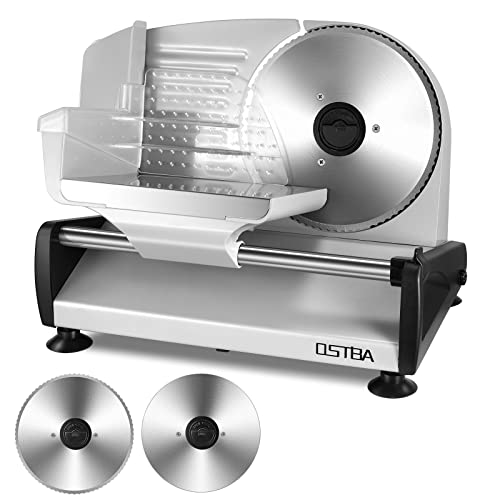
- 200W motor with a serrated blade for firmer foods
- 0–15 mm adjustable thickness range
- Two removable stainless steel blades
Best For: Home cooks wanting electric, adjustable slicing for game meat
Compact Kitchen Choice
Nutrichef Adjustable Meat Slicer

- 200W motor with a 0–15 mm adjustment range
- Removable carriage and 7.5-inch tooth blade
- Compact design with safety guard and lock
Best For: Space-conscious home kitchens slicing game meat and other foods
Quiet Precision Pick – 200W Home Meat Slicer
For home cooks comparing meat slicers for game, this 200W model offers adjustable 0–15 mm thickness control and two blade styles for handling different slicing tasks. Its compact design and quieter DC motor suit routine countertop use.
Best For: Home users who want adjustable slices for game meat, cheese, vegetables, bread, and other foods.
Pros:
- 200W DC motor provides stable torque with lower-noise operation.
- Adjustable 0–15 mm thickness supports thin or thicker slices.
- Includes serrated and non-serrated 7.5-inch stainless steel blades.
- Removable blades and tray simplify cleaning.
Cons:
- Hand washing is required according to the care instructions.
- Its 7.5-inch blades may be limiting for especially large cuts.
This is a versatile home slicer with useful safety features, including a child lock, blade cover, and non-slip feet. It is a practical choice when convenience and slice control matter more than heavy-duty commercial capacity.
Jerky-Making Attachment – LEM 2-in-1 Slicer and Tenderizer
Rather than operating as a standalone slicer, this LEM attachment connects to a compatible meat grinder for slicing and tenderizing. For shoppers considering meat slicers for game, it is especially suited to turning prepared cuts into jerky, cheesesteaks, or fajita meat.
Best For: Grinder owners who want one manual attachment for jerky slicing and tenderizing.
Pros:
- Combines jerky slicing and tenderizing in one attachment.
- Designed for use with a meat grinder.
- Aluminum construction with stainless steel blades.
- Useful for jerky, cheesesteaks, fajitas, and meal preparation.
Cons:
- Requires a compatible meat grinder and is not a standalone slicer.
- Manual operation may involve more hands-on work.
- Hand washing is required.
This compact LEM accessory makes sense for hunters or home processors who already use a compatible grinder. Its two-in-one design adds functionality without requiring a separate standalone machine.
Compact Countertop Option – 200W Electric Food Slicer
This 200W electric slicer is a practical option among meat slicers for game when you want adjustable thickness and a compact countertop footprint. Its 0–15 mm control, two removable blades, and stainless steel tray support varied home food-preparation tasks.
Best For: Home kitchens needing a compact electric slicer for game meat, bread, cheese, and vegetables.
Pros:
- 200W motor and adjustable 0–15 mm thickness control.
- Includes two removable 7.5-inch stainless steel blades.
- Removable carriage, pusher, slide-rod extension, and blade aid cleaning.
- Non-slip suction feet and a food pusher help stabilize and protect hands.
Cons:
- Hand washing is required.
- The 7.5-inch blade size may not suit very large pieces.
- It is intended for countertop use rather than high-volume processing.
With its die-cast aluminum construction and compact dimensions, this model balances durability and storage convenience. It is a sensible everyday choice for moderate home slicing rather than large-batch game processing.
High-Volume Jerky Choice – Weston Manual Jerky Slicer
For making uniform jerky from game meat, this Weston manual slicer uses 32 stainless steel blades to cut consistent quarter-inch strips. Its large chute accepts cuts up to 5 inches wide and 1.25 inches thick, making it better suited to batch jerky preparation than general-purpose countertop slicing.
Best For: Hunters and home processors making consistent jerky strips from large cuts of game, beef, turkey, or duck.
Pros:
- 32 blades can cut up to 15 quarter-inch strips at once.
- Large chute accommodates meat up to 5 inches wide and 1.25 inches thick.
- Built-in C-clamp mounts to flat surfaces up to 2 inches thick.
- Includes stainless steel combs and tongs for feeding and handling meat.
Cons:
- Manual operation requires physical effort.
- It is specialized for jerky strips rather than adjustable general slicing.
- It requires a suitable table or flat surface for mounting.
This Weston is a focused tool for consistent jerky production. The multi-blade design and generous chute make it particularly useful when processing larger game cuts, while the clamp helps keep the slicer secure during use.
Best Compact Electric Pick – VEVOR 7.5-Inch Meat Slicer
For home cooks looking for meat slicers for game, this compact VEVOR model offers powered, adjustable slicing for frozen meat, steaks, ham, and other preparation tasks. Its 200W motor, dual blades, and 0–0.6-inch thickness range make it a flexible option for occasional game-meat processing.
Best For: Home kitchens that need compact electric slicing for game meat, deli cuts, and other foods.
Pros:
- 200W motor operates at 70–100 RPM for consistent slicing.
- Includes serrated and non-serrated 7.5-inch stainless steel blades.
- Thickness adjusts from 0 to 0.6 inches.
- Removable blade, food pusher, and slide bar extender simplify cleaning.
Cons:
- Hand wash only.
- Its 7.5-inch blade may be less suitable for especially large cuts.
- Semi-automatic operation still requires hands-on feeding.
This is a practical choice when storage space matters and you want more uniform slices than hand cutting can provide. The suction-cup feet, recessed blade, and food pusher add stability and control for routine home use.
Best Manual Jerky Setup – Stainless Steel Jerky Slicer Board
This manual jerky maker is purpose-built for cooks comparing meat slicers for game, particularly deer jerky and other whole-muscle cuts. Its 10-inch stainless steel knife and adjustable board help create repeatable slices for dehydrating, though the meat must not be frozen.
Best For: Preparing uniformly sliced deer jerky, beef jerky, and other wild or exotic meats at home.
Pros:
- Designed specifically for uniform jerky slices.
- 10-inch food-grade stainless steel knife is easy to clean and maintain.
- Nylon spacers provide 1/8-, 1/4-, and 3/8-inch cut settings.
- Board has a slip-resistant stainless steel construction.
Cons:
- Not intended for frozen meats.
- Manual cutting is slower and more labor-intensive than an electric slicer.
- Thickness options are limited to three preset settings.
For jerky makers, this focused design can be more useful than a general-purpose electric slicer. It offers straightforward thickness control and a knife suited to trimming, deboning, and filleting, but it is best reserved for thawed meat and smaller-batch preparation.
Best Larger-Capacity Electric Pick – VEVOR 8.6-Inch Meat Slicer
When comparing meat slicers for game, the VEVOR 8.6-inch model is a strong electric option for handling larger pieces of frozen meat, steak, ham, and similar foods. It combines a 200W motor with dual blades and adjustable thickness for efficient home preparation.
Best For: Home users who want a longer blade and powered slicing for larger game-meat portions.
Pros:
- Longer 8.6-inch blade provides more cutting coverage.
- 200W motor runs at 70–100 RPM for uniform slicing.
- Includes serrated and non-serrated SUS420 stainless steel blades.
- Dual security lock and suction-cup feet support stable operation.
Cons:
- At 14 pounds, it is heavier than the compact VEVOR option.
- Hand wash only.
- Larger dimensions require more storage space.
The longer blade and dual security lock make this a sensible upgrade for users who expect to slice more substantial portions regularly. Its 0–0.6-inch adjustment range also supports both thin deli-style cuts and thicker serving slices.
Hunter’s Prep Pick – Paladin 2-in-1 Jerky Slicer
For hunters looking at meat slicers for game, the Paladin combines jerky slicing and meat tenderizing in one manual machine. Its wide feed port can accommodate larger cuts of venison, though meat must be deboned and partially thawed before processing.
Best For: Hunters and home processors preparing venison or other meat for jerky and tenderized dishes.
Pros:
- Includes separate stainless steel blade sets for tenderizing and slicing.
- Wide 5.8-inch by 2-inch feed port reduces the need for extensive pre-cutting.
- Cast-aluminum construction, included C-clamps, and removable components support steady, hygienic use.
Cons:
- Manual operation requires hand-cranking.
- Frozen-solid meat and bone-in cuts need preparation before processing.
- Hand-wash cleaning and extremely sharp blades require extra care.
This is the most purpose-built option here for game-meat preparation, especially if you want both even jerky strips and tenderizing capability. Choose it over an electric deli slicer when versatility for venison and manual control matter most.
Frozen-Cut Value – OSTBA 200W Electric Meat Slicer
The OSTBA is a practical electric choice among meat slicers for game when consistent thickness and faster preparation are priorities. Its serrated blade is designed for frozen meat and other firmer foods, while the dial adjusts cuts from very thin to about three-quarters of an inch.
Best For: Home users who want adjustable electric slicing for prepared game meat, deli foods, cheese, and more.
Pros:
- 200W motor and 7.5-inch serrated blade handle frozen meat and firmer foods.
- Adjustable thickness supports cuts from 0 to 15 mm.
- Includes serrated and non-serrated stainless steel blades.
- Removable food-contact parts and dishwasher-safe care simplify cleanup.
Cons:
- It is designed for home use rather than a high-volume processing setup.
- Operation requires pressing the safety lock and power button together.
- Bone-in meat still requires appropriate preparation before slicing.
With two blade styles, suction-cup feet, and adjustable thickness control, the OSTBA offers useful flexibility for occasional game-meat slicing. It is a strong fit if you prefer electric assistance and also want one machine for bread, vegetables, cheese, and deli meat.
Compact Kitchen Choice – Nutrichef Adjustable Meat Slicer
The Nutrichef offers a compact electric setup for those comparing meat slicers for game with everyday kitchen versatility in mind. Its 200W motor, 7.5-inch stainless steel tooth blade, and 0–15 mm adjustment range are suited to slicing prepared meat along with bread, cheese, and fish.
Best For: Home kitchens needing a compact slicer for game meat and a range of other foods.
Pros:
- Adjustable dial provides a 0–15 mm cutting range.
- Removable blade and food carriage make cleaning and storage easier.
- Safety guard, slicer knob, and safety lock support controlled operation.
- Compact 13.9-by-9.9-by-10.9-inch design fits more easily into kitchen storage.
Cons:
- Includes one tooth blade rather than interchangeable blade options.
- Hand-wash care requires manual cleaning.
- It is intended for home use, not described as a commercial game-processing machine.
The Nutrichef is a sensible space-conscious option when game slicing is only one part of your kitchen routine. Its adjustable thickness and removable components add convenience, while the single included tooth blade makes it less flexible than the OSTBA for different food textures.
How We Picked the Best Meat Slicers for Game
We focused on features that matter when slicing trimmed venison, elk, beef, pork, and other game meats at home. The selected models were compared by power or manual leverage, blade size, thickness adjustment, construction, cleaning convenience, and versatility. We also included dedicated jerky slicers because uniform strips are a priority for many hunters and home processors.
Electric slicers generally suit repeated batches and deli-style cuts, while manual machines can be useful when you want simpler operation, less noise, or a compact setup. Product specifications and intended use should always be checked before slicing frozen or partially frozen meat.
Quick Comparison
| Type | Best For | What to Look For |
|---|---|---|
| Electric slicer | Roasts, sandwiches, and frequent batch work | Motor power, blade diameter, thickness control, and stable feet |
| Manual jerky slicer | Consistent strips without electricity | Cut capacity, rigid construction, easy loading, and clamp stability |
| Manual tenderizer and slicer | Jerky preparation and breaking down tougher cuts | Two-in-one function, food-contact materials, and cleaning access |
| Knife-and-board setup | Occasional slicing and portable processing | Sharpness, board stability, and safe handling |
Key Buying Factors for Meat Slicers for Game
Blade Size and Cutting Capacity
Blades around 7.5 inches are common for household slicing and are usually easier to clean and store. Larger blades can handle wider roasts and longer strokes, but they also require more counter space. Check the stated maximum width and thickness, especially for large cuts.
Thickness Control
Adjustable settings help you switch between thin sandwich slices, thicker roast portions, and jerky strips. A clearly marked dial is convenient, but the usable range and consistency matter more than the number of settings.
Power, Stability, and Construction
For electric models, motor wattage is only one factor. A stable base, nonslip feet, smooth carriage, and a blade that resists flexing can make a bigger difference during real use. Aluminum or stainless-steel components may improve durability, while plastic housings can reduce weight and cost.
Cleaning and Safety
Look for removable blades, food trays, and guards that can be cleaned thoroughly. Unplug electric units before disassembly, use the food pusher rather than your hands, and follow the manufacturer’s guidance for partially frozen meat. Never assume a slicer is dishwasher-safe unless the instructions say so.
Who Should Buy Which Meat Slicers for Game?
Choose an electric slicer if you regularly process roasts, make sandwich meat, or prepare several pounds at once. These models are typically the most convenient for repeated, uniform cuts.
Choose a manual jerky slicer if jerky is your main goal, you value a compact tool, or you process meat where electricity is unavailable. Confirm that your cuts fit the listed capacity.
Choose a tenderizer-slicer combination if you want one manual tool for both preparing tougher game and creating strips. It is especially useful for hunters who want to streamline jerky preparation.
Choose a knife-based setup if you slice only occasionally or need maximum portability. It demands more technique, but it can be easier to store and maintain than a dedicated machine.