Making fresh cider at home starts with choosing a press that matches your harvest size, available space, and preferred level of effort. The best cider presses make it easier to process apples, grapes, berries, and other fruit while keeping cleanup manageable.
We compared manual basket presses, crushers, and hydraulic models across capacity, construction, operation, and versatility to help you find the right fit for occasional pressing or larger seasonal batches.
Best 10 Cider Presses Picks for 2026
Best Traditional Cider Press
4.75-Gallon Beechwood Fruit Press

- 4.75-gallon manual capacity
- Solid red beech basket
- Built-in spout and stable stand
Best For: Hands-on home cider and wine making
Best Fruit Crusher for Cider Prep
7-Liter Stainless Steel Scratter

- 7-liter fruit hopper
- Uniform 1/4-inch pieces
- 304 stainless steel construction
Best For: Preparing fruit before home cider pressing
Best High-Capacity Cider Press
10.7-Gallon Water-Powered Bladder Press
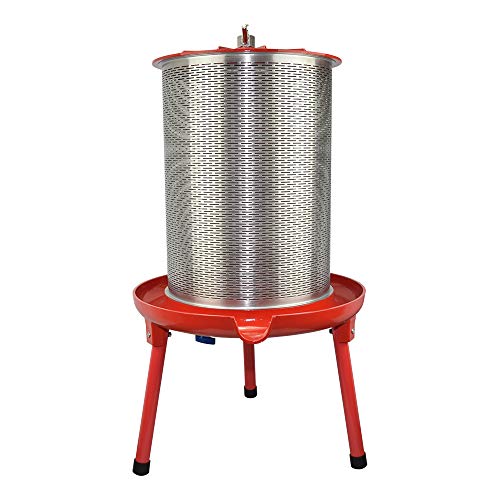
- 10.7-gallon pressing capacity
- Runs from a standard water tap
- Includes filter bag and splash guard
Best For: Large batches with minimal manual effort
Best Stainless Steel Cider Press

- Durable stainless steel build
- Heavy-duty cross-beam design
- Hose-rinse cleanup
Best For: Home and small-scale fruit pressing
Effort-Saving Manual Pick
SQUEEZE master 4.75-Gallon Classic Press

- 4.75-gallon wood basket
- Food-grade stainless-steel construction
- Manual crusher and press for hard produce
Best For: Small-batch cider, wine, and juice making
Heirloom-Style Workhorse
American Harvester Double-Tub Cider Press

- Integrated apple grinder and press
- Hard maple and cast-iron construction
- Up to 50 gallons in an afternoon with two operators
Best For: Large harvests and group cider-making sessions
High-Pressure Choice
SQUEEZE master 10.7-Gallon Hydraulic Press

- 10.7-gallon stainless-steel capacity
- Uses domestic water pressure
- Includes filter bag and splash guard
Best For: Larger batches with reduced manual effort
Compact Wooden Pick
1.6-Gallon Beechwood Fruit Press

- Natural beechwood basket with triangular support
- Includes two food-grade filter bags
- Manual 1.6-gallon capacity for home batches
Best For: Small household cider and juice batches
High-Volume Hydraulic Pick
30L Stainless-Steel Fruit Press

- 30-liter capacity for substantial batches
- Up to three tons of hydraulic pressure
- AISI 304 stainless-steel juice-contact parts
Best For: Large home, farm, and winery pressing workloads
Easy-Clean Stainless Pick
3.69-Gallon Manual Fruit Press

- Removable 304 stainless-steel basket
- Swing-open crossbeam simplifies loading
- Medium 14-liter capacity with filter bags
Best For: Moderate home cider and fruit-juice batches
Best Traditional Cider Press – 4.75-Gallon Beechwood Fruit Press
For shoppers comparing cider presses for home fruit processing, this manual beechwood model offers a straightforward way to extract juice from crushed apples, grapes, and berries. Its 4.75-gallon capacity and heavy-duty stand suit seasonal batches without requiring a motor.
Best For: Home cider and wine making, family gatherings, and small seasonal batches.
Pros:
- Solid red beech basket is designed for durability and moisture resistance.
- Manual operation is quiet and does not require electricity.
- Built-in pour spout and optional foot mounting holes support stable, tidy pressing.
- Breakaway basket design helps remove pulp between pressings.
Cons:
- Requires crushed fruit before pressing.
- Hand washing is recommended.
- Manual pressing requires more physical effort than powered or water-powered alternatives.
This is a practical traditional press for buyers who value quiet operation, natural materials, and a manageable capacity. The wooden basket and stable stand make it especially appealing for hands-on home use.
Best Fruit Crusher for Cider Prep – 7-Liter Stainless Steel Scratter
This manual fruit crusher is a useful companion for cider presses, breaking apples and pears into uniform pieces before juice extraction. Its 7-liter hopper and table-mount design are suited to home or garden processing, with the notes citing output of 35–45 kg per hour.
Best For: Preparing apples, pears, grapes, and other fruit for home cider pressing.
Pros:
- 7-liter hopper provides a relatively large batch capacity.
- Produces uniform pieces that are easier to press with minimal waste.
- Food-grade 304 stainless steel and a reinforced iron frame support repeated use.
- Suitable for multiple fruits and designed for straightforward assembly.
Cons:
- This is a crusher, not a complete juice press.
- Manual operation requires user effort.
- Hand washing is recommended.
If you already have a press or need a dedicated scratter, this model focuses on the crucial preparation stage. Its consistent crushing and table-mount components can help make downstream cider pressing more efficient.
Best High-Capacity Cider Press – 10.7-Gallon Water-Powered Bladder Press
Among cider presses, this water-powered bladder design stands out for high-capacity batches and reduced manual effort. A standard garden hose expands the internal rubber diaphragm, pressing ground fruit against the mesh basket without electricity.
Best For: Larger home batches and users who want quick, low-effort juice extraction.
Pros:
- 10.7-gallon capacity supports substantial fruit batches.
- Uses ordinary domestic water pressure instead of a motor or electricity.
- Pressure can be adjusted by controlling the tap.
- Includes a filter bag and splash guard.
Cons:
- Requires access to a suitable garden hose and mains water tap.
- At 47 pounds, it is relatively heavy to move.
- Fruit must be ground or shredded before loading.
This press is a strong option when throughput and reduced physical effort matter more than portability. Its water-powered mechanism is particularly convenient for outdoor use where a hose connection is readily available.
Best Stainless Steel Cider Press – 3.69-Gallon T-Handle Model
For buyers seeking durable cider presses in a compact-to-mid-size format, this 3.69-gallon stainless steel model combines a heavy-duty cross-beam with a manual screw mechanism. It is designed for apples, grapes, berries, cider making, and home wine production.
Best For: Home users and small-scale operations wanting a sturdy stainless steel fruit press.
Pros:
- Stainless steel construction is robust and suitable for repeated fruit pressing.
- Heavy-duty cross-beam and T-handle support stable manual operation.
- Large barrel and screw mechanism are designed for efficient extraction.
- Can be rinsed with a hose for easier cleanup between batches.
Cons:
- 3.69-gallon capacity is smaller than the listed 10.7-gallon alternative.
- Manual screw operation requires physical effort.
- Fruit preparation is needed before pressing.
This model offers a balanced choice for shoppers who prefer stainless steel and do not need the largest available capacity. Its cleanable construction and versatile fruit compatibility make it a practical all-purpose press.
Effort-Saving Manual Pick – SQUEEZE master 4.75-Gallon Classic Press
For home cider presses shoppers who want manual control, this SQUEEZE master combines a 4.75-gallon wooden basket with a stainless-steel crusher. Its longer hand shank, phase-in pressing design, and larger press plate are intended to make fruit processing easier while improving juice extraction.
Best For: Home users making cider, wine, or juice from apples and other hard fruits and vegetables without relying on electricity.
Pros:
- 4.75-gallon capacity with a solid wood basket.
- Stainless-steel construction is food-grade and rust resistant.
- Crusher is designed for apples, pears, peaches, carrots, and similar produce.
- Manual operation makes it portable and independent of a power supply.
Cons:
- Manual pressing still requires physical effort.
- Hand-wash care is specified.
- Its capacity may be less suitable for very large production runs.
This is a practical option for small-batch cider makers who value portability, straightforward operation, and a combined crushing-and-pressing setup.
Heirloom-Style Workhorse – American Harvester Double-Tub Cider Press
Among cider presses for high-volume seasonal use, the American Harvester stands out for its double-tub design and integrated grinder. Its hard maple and cast-iron construction is built for repeated use, while two-person operation can produce up to 50 gallons in an afternoon according to the supplied product information.
Best For: Families, groups, or serious home users who want a durable press for larger harvests and batch production.
Pros:
- Double-tub design supports grinding and squeezing in one setup.
- Apple Eater grinder processes apples into a fine texture.
- Hard maple and cast iron provide a durable, heirloom-style build.
- Two-person operation is rated for up to 50 gallons in an afternoon.
Cons:
- Two-person operation is needed for the stated production rate.
- Its larger-capacity design may be more than occasional users need.
- Assembly is required.
Choose this model when throughput and long-term construction matter more than the simplest setup. It is especially suited to shared harvest days and larger cider-making projects.
High-Pressure Choice – SQUEEZE master 10.7-Gallon Hydraulic Press
For shoppers comparing cider presses with less manual effort, this SQUEEZE master uses household water pressure to drive a 10.7-gallon hydraulic press. The stainless-steel unit includes a filter bag and splash guard, and its rapid pressing design is intended to support high juice yield with a short flow distance.
Best For: Home juice makers, caterers, hotels, family gatherings, and small wine operations needing a larger-capacity press.
Pros:
- 10.7-gallon capacity is suited to larger batches.
- Connects to a normal domestic water supply to reduce muscle and electricity use.
- High pressure is designed to improve juice yield, even with a partially filled basket.
- Includes a filter bag and splash guard.
Cons:
- Requires access to a domestic water supply and a garden-hose connection.
- At 46.8 pounds, it is less convenient to move than a smaller press.
- The maximum pressure setting is 3 bar, so users must operate within that limit.
This hydraulic model is a strong fit when batch size and reduced physical effort are priorities. Its included accessories and stainless-steel construction make it suitable for more demanding home or small-business use.
Compact Wooden Pick – 1.6-Gallon Beechwood Fruit Press
For shoppers comparing cider presses for home use, this 6-liter VEVOR model offers a compact manual setup with a natural beechwood basket and stable triangular base. Its extended handle and progressive screw mechanism are designed for straightforward pressing, though hard fruit should be crushed first.
Best For: Families, small batches, and home users who want a compact press for apples, grapes, fruit wine, and similar ingredients.
Pros:
- Natural beechwood basket with a stable triangular base.
- Includes two food-grade filter bags.
- Eight supporting blocks and a thick pressing block help improve extraction.
- 1.6-gallon capacity suits family gatherings and small-scale use.
Cons:
- Hard fruit must be crushed before pressing.
- Hand-wash care is required.
- Its capacity is smaller than larger orchard or commercial-style cider presses.
This is a practical choice when storage space and manageable batch sizes matter more than maximum throughput. The wooden basket and included filter bags make it approachable for occasional home cider and juice making.
High-Volume Hydraulic Pick – 30L Stainless-Steel Fruit Press
If you need cider presses for larger harvests, this Mosakar hydraulic model provides a 30-liter, or 7.93-gallon, capacity and up to three tons of pressure. Its juice-contact components use AISI 304 stainless steel, making it suited to substantial apple, grape, wine, and cider pressing sessions.
Best For: High-volume home producers, farms, wineries, and users processing larger fruit batches.
Pros:
- Large 30-liter capacity reduces the need for repeated loads.
- Hydraulic system delivers up to three tons of pressure.
- Juice-contact basket, plate, and drain pan are AISI 304 stainless steel.
- Powder-coated frame is designed for a durable protective finish.
Cons:
- At 66 pounds, it is relatively heavy to move.
- Its larger 15.6-by-19.3-by-30-inch footprint needs dedicated space.
- Large capacity may be excessive for occasional small batches.
The hydraulic design and stainless-steel juice-contact parts make this the strongest fit of the three for serious batch processing. Choose it when capacity and pressing force take priority over portability.
Easy-Clean Stainless Pick – 3.69-Gallon Manual Fruit Press
Among cider presses for regular home entertaining or moderate harvests, this 14-liter VEVOR model balances capacity with easier cleanup. The removable 304 stainless-steel basket, swing-open cast-iron crossbeam, and triangular base make loading, pressing, and post-use maintenance more convenient.
Best For: Home users and small farms wanting a medium-capacity press for cider, juice, wine, and fruit pulp.
Pros:
- Removable 304 stainless-steel basket supports quick cleaning.
- 3.69-gallon capacity handles more than small countertop presses.
- Swing-open crossbeam makes loading more convenient.
- Includes two food-grade filter bags and a stable triangular base.
Cons:
- Fruit should be pre-crushed for best results.
- At 38.39 inches tall and 34 pounds, it may need a dedicated storage area.
- Non-food-contact metal parts require food-grade lubricant to help prevent corrosion.
This model is a useful middle ground: it offers more room than a compact press while remaining manual and easier to clean than a fixed-basket design. It is well suited to recurring household batches without the scale of a hydraulic unit.
How We Picked the Best Cider Presses
We focused on practical features that affect real-world juice making: basket capacity, frame stability, pressing force, materials that contact food, ease of loading and cleaning, and the ability to handle different fruits. The selection includes compact manual presses for smaller harvests, traditional wood-basket designs, stainless-steel models, and hydraulic presses for higher-volume work.
Capacity claims are useful, but they do not tell the whole story. A press’s usable load depends on fruit preparation, the size of the basket, how finely the fruit is crushed, and how much pressure the frame can safely handle.
Quick Comparison of These Cider Presses
| Press type | Best for | Main advantage | Potential trade-off |
|---|---|---|---|
| Small manual basket press | Occasional home use | Compact and affordable | More batches and physical effort |
| Large manual press | Medium harvests | No power required | Requires steady hand cranking |
| Hydraulic press | Frequent or high-volume pressing | Greater pressure with less exertion | Heavier and usually more expensive |
| Fruit crusher | Preparing apples and other fruit | Improves pressing efficiency | Often works best alongside a separate press |
Key Buying Factors for Cider Presses
Capacity and Batch Size
Choose a smaller 1.6- to 4.75-gallon model for kitchen-scale batches, tastings, and modest backyard harvests. Seven- to 11-gallon presses are better suited to larger apple collections or repeated pressing sessions. A bigger basket can reduce batch count, but it also needs more storage space and a sturdier work surface.
Pressing Mechanism
Manual screw presses are straightforward and electricity-free, making them dependable for occasional use. Hydraulic models reduce physical effort and can apply more consistent pressure, which is useful when processing substantial quantities. If you are pressing whole apples, confirm whether a crusher is included or plan to buy a compatible scratter separately.
Materials and Construction
Stainless-steel baskets are durable and easy to sanitize. Solid wood baskets are traditional and can perform well when properly maintained, but they require careful drying and storage. Look for reinforced frames, stable feet, strong cross-beams, and food-safe components wherever juice touches the machine.
Cleanup and Safety
Removable baskets, filter bags, accessible surfaces, and simple drainage make cleanup faster. Use a dedicated food-safe cloth or filter bag, keep hands away from moving parts, and follow the manufacturer’s pressure limits. Never assume a press can safely handle uncrushed fruit unless its instructions explicitly say so.
Who Should Buy Which Cider Presses?
- For occasional backyard pressing: Choose a compact manual basket press that is easy to store and assemble.
- For traditional cider making: A wood-basket manual model offers a familiar setup and works well for moderate batches.
- For frequent or larger harvests: Select a larger-capacity hydraulic press to reduce effort and shorten processing time.
- For maximum versatility: Pair a capable press with a dedicated fruit crusher so apples and firm fruit are prepared efficiently before pressing.
- For easy maintenance: Favor stainless-steel juice-contact parts, removable components, and included filter equipment.
Before buying, measure your storage and work area, verify the stated capacity, and check whether the package includes a filter bag, crusher, collection tray, or other accessories you would otherwise need to purchase separately.