Choosing the right can sealer can help a small beverage business package drinks more consistently, reduce repetitive labor, and present a more professional product. The best machine depends on your can size, daily volume, available power, and budget.
This roundup compares 10 manual, automatic, and semi-automatic models designed for aluminum and plastic cans, with practical guidance to help you select a machine that fits your operation.
Best 10 Can Sealing Machines for Small Businesses Picks for 2026
Heavy-Duty Automatic Pick
270W Adjustable Soda Can Sealer

- 270W motor and reinforced steel frame
- Five included holders for common can sizes
- Automatic operation with height adjustment
Best For: Small beverage businesses needing regular 55mm can sealing
Budget Small-Batch Pick
55mm Manual Handheld Can Sealer

- Portable, compact, and electricity-free
- Ergonomic lever design for manual sealing
- Made for 55mm PET plastic cans
Best For: Low-volume PET beverage sealing at home or on the go
Fast Multi-Size Pick

- Automatic sealing in about three seconds
- Supports four common can capacities
- Includes holders and sample cans with lids
Best For: Frequent service using multiple 55mm beverage can sizes
Versatile Dual-Material Pick
Automatic Aluminum and Plastic Can Sealer

- Designed for aluminum and plastic cans
- Automatic lifting with digital counting
- Includes five holders for varied capacities
Best For: Drink businesses packaging both plastic and aluminum 55mm cans
Best Manual Value
Stainless Steel 202 Can Sealer

- Electricity-free manual operation
- Adjustable for three common can sizes
- Stable stainless-steel tabletop design
Best For: Portable beverage sealing for small businesses
Best for High-Volume Shops
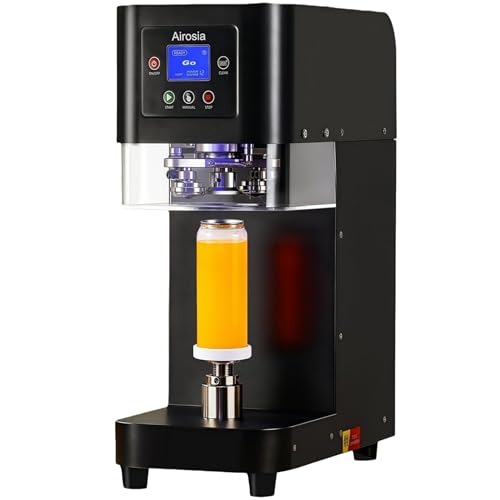
- Powerful motor for repeated sealing
- Five included holders for common can sizes
- Heavy frame helps minimize wobble
Best For: Daily commercial beverage and food packaging
Best Simple Setup

- Manual rotary operation with no motor
- Two bases cover two can heights
- Stainless-steel body and included accessories
Best For: Small venues wanting uncomplicated 55 mm can sealing
Best Semi-Automatic Pick

- Five included cup holders
- Safety-focused control panel
- Supports compatible #202 lids
Best For: Small drink businesses using standard compatible cans
Best Heavy-Duty Pick
Stainless Steel Manual Can Sealer

- Durable stainless-steel build
- Two adjustable height bases
- Up to 10 cans per minute
Best For: Low-volume shops preferring manual operation
Best Black Compact Model
Adjustable Semi-Automatic Can Sealer

- Adjusts from 2.4 to 6.7 inches
- Five included cup holders
- 405W, 110V operation
Best For: Small commercial spaces using compatible cans
Heavy-Duty Automatic Pick – 270W Adjustable Soda Can Sealer
For small businesses that need dependable can sealing machines, this automatic model combines a reinforced steel frame with a 270W motor for regular production. It is designed for 55mm cans and includes five holders for common beverage sizes, though shorter PET cans may require a quick height adjustment to prevent leaks.
Best For: Beverage shops, food trucks, bakeries, bars, and other small businesses sealing craft beer, kombucha, coffee, juice, or dessert fillings.
Pros:
- Automatic operation with a 270W motor and reinforced frame.
- Includes five holders for 250ml, 330ml, tall 330ml, 500ml, and 650ml cans.
- Adjustable for can heights from 2.4 to 6.7 inches.
- Control panel includes a power switch, start button, counter, and height adjustment.
Cons:
- At about 87 pounds, it is heavy and not especially portable.
- Designed specifically for 55mm cans rather than a broad range of diameters.
- Shorter PET cans may need holder-height adjustment to seal correctly.
This is a practical choice when consistent automatic sealing and included size flexibility matter more than portability. Its substantial frame is suited to repeated daily use, while the adjustable holder helps accommodate variations in PET can height.
Budget Small-Batch Pick – 55mm Manual Handheld Can Sealer
Among can sealing machines for small businesses, this handheld tool is the simplest option for low-volume work. It is made for 55mm PET easy-open beverage cans and uses manual leverage, so it needs no electricity or countertop machine.
Best For: Home kitchens, pop-up vendors, milk tea preparation, outdoor service, and small-batch beverage sealing.
Pros:
- Compact, portable design that can fit in a kitchen drawer.
- Manual operation requires no electricity or bulky equipment.
- Stainless steel construction is resistant to rust and corrosion.
- Simple wipe-clean design with few maintenance requirements.
Cons:
- Compatible with PET plastic cans only.
- Not suitable for aluminum cans or carbonated bubble water.
- Manual operation is less suitable for high-volume production.
This sealer makes sense when space, portability, and low upfront complexity are priorities. Its narrow compatibility and manual workflow limit throughput, but those same features make it convenient for occasional or small-batch use.
Fast Multi-Size Pick – VEVOR Automatic Can Sealer
This VEVOR model is one of the more streamlined can sealing machines for small businesses, completing an automatic cycle in about three seconds. Its steel body, stainless steel sealing parts, and included holders support several common can capacities for frequent beverage service.
Best For: Cafes, drink counters, food trucks, bars, and other operations that want quick, repeatable sealing across multiple can sizes.
Pros:
- One-touch automatic sealing takes about three seconds.
- Supports 250ml, 330ml, 500ml, and 650ml cans.
- Works with peel-off, pull-tab, and full-open 55mm lids.
- Includes matching holders, sample cans, a wrench, power cord, and manual.
Cons:
- At 68.8 pounds, it still requires a stable dedicated workspace.
- Compatibility centers on 55mm lids and the listed can sizes.
- The automatic motorized format is less portable than a handheld tool.
Its short cycle time and broad lid-format support make this a strong fit for businesses serving multiple packaged drink sizes. The included accessories also make setup more straightforward than buying holders separately.
Versatile Dual-Material Pick – Automatic Aluminum and Plastic Can Sealer
For businesses comparing can sealing machines for small businesses, this automatic unit stands out because it is specified for both aluminum and plastic cans. It handles 55mm openings, offers automatic lifting and counting, and includes five holders for different beverage capacities.
Best For: Juice shops, milk tea stores, restaurants, ice cream shops, hotels, bars, and food trucks using aluminum and plastic beverage cans.
Pros:
- Designed to seal both aluminum and plastic cans.
- Automatic lifting and dual-motor operation support efficient workflows.
- Digital control panel includes automatic counting.
- Adjustable for can heights from 2.4 to 6.7 inches and includes five holders.
Cons:
- Limited to 55mm can openings.
- Weighs about 72 pounds, so it is not easy to move frequently.
- Its listed production capacity is 10 to 20 sealing cycles per minute, depending on use.
This model is particularly useful when a small operation wants one machine for both plastic and aluminum packaging. The automatic controls and included holders offer flexibility, while the relatively heavy metal construction favors a permanent workstation.
Best Manual Value – Stainless Steel 202 Can Sealer
For small businesses seeking can sealing machines without adding electrical equipment, this manual model is a practical option for standard 202 aluminum and PET cans. Its adjustable height, sturdy stainless-steel construction, and tabletop-mounting holes support steady operation for beverage service or small-batch production.
Best For: Food trucks, cafes, beverage vendors, and small operations that need portable, electricity-free sealing for 11-, 16.9-, or 22-ounce cans.
Pros:
- Manual operation requires no electricity and is suitable for on-the-go use.
- Works with standard 202 cans measuring 55 mm in diameter.
- Adjustable height supports 11-ounce, 16.9-ounce, and 22-ounce cans.
- Stainless-steel construction and a pre-drilled stable base support regular use.
Cons:
- Manual operation requires more hands-on effort than an automatic machine.
- Its stated capacity is for standard 202 cans rather than a broad range of sizes.
- At 20 pounds, it is sturdy but less convenient to move frequently.
With a reference speed of up to 10 cans per minute, this sealer balances portability and small-scale productivity. It is a sensible fit when low equipment complexity and manual control matter more than automation.
Best for High-Volume Shops – Automatic 270W Can Sealer
Among can sealing machines for small businesses, this automatic model is geared toward operations that need repeatable output and less manual effort. Its 270W motor, reinforced frame, adjustable height, and included holders cover several common beverage-can formats.
Best For: Bubble tea shops, bars, bakeries, food trucks, diners, and other commercial venues sealing craft beer, kombucha, coffee, juice, or dessert fillings.
Pros:
- Upgraded 270W motor provides powered, consistent sealing performance.
- Reinforced steel construction and increased 82-pound weight help reduce wobble.
- Includes five holders for 250 ml, 330 ml, tall 330 ml, 500 ml, and 650 ml cans.
- Control panel includes a power switch, start button, counting cups, and height adjustment.
Cons:
- Its 82-pound weight makes relocation difficult.
- Can height and holder compatibility require careful adjustment for different PET-can manufacturers.
- It is a more substantial investment in space and equipment than a manual sealer.
This is the most production-oriented choice in the group, with automation and multiple included holders suited to daily commercial use. Buyers should verify PET-can dimensions and adjust the holder when using shorter cans to help prevent leaks.
Best Simple Setup – Adjustable Manual Cup Sealer
This manual can sealer offers a straightforward approach for small businesses that want dependable sealing without a motor. Its rotary hand crank, two interchangeable bases, and stainless-steel body accommodate selected PET and aluminum cans while keeping setup simple.
Best For: Homes, cafes, snack bars, restaurants, beverage stores, dessert shops, and other small venues needing manual sealing for 55 mm cans.
Pros:
- Precise roller design is intended to reduce spillage after sealing.
- Two bases support can heights of approximately 4.53 and 6.61 inches.
- Stainless-steel construction is designed to resist corrosion, rust, and deformation.
- Foldable hand crank and included installation accessories simplify use and storage.
Cons:
- Manual cranking requires operator effort for every can.
- Height options are limited to the two supplied bases.
- The 55 mm sealing diameter narrows compatibility with other can formats.
With a listed speed of up to 10 cans per minute, this model can handle modest service peaks while remaining uncomplicated. It is a good match for businesses prioritizing easy setup and manual control over powered automation.
Best Semi-Automatic Pick – Commercial White Can Sealer
For small businesses seeking can sealing machines for small businesses, this 110V semi-automatic model combines a compact footprint with an upgraded control panel and five included cup holders. It supports #202 lids on compatible PET and aluminum cans, making it a practical option for drink-focused operations.
Best For: Craft breweries, juice bars, coffee shops, food trucks, restaurants, and bars using compatible can sizes and lids.
Pros:
- Includes five cup holders for 250ml, 330ml, tall 330ml, 500ml, and 600ml cans.
- Independent power switch, start button, cup counter, height adjustment, and stop protection.
- Compact 405-watt design suited to startups and small-scale commercial use.
Cons:
- Only works with approximately 55mm #202 lids; easy-tear lids are not compatible.
- The PET can rotates during sealing, which can blend distinct drink layers.
- Can height differences may require cup-holder adjustment to prevent leaks.
This is a strong fit when your menu uses compatible can formats and you value guided, semi-automatic operation. Confirm lid and container dimensions before purchasing.
Best Heavy-Duty Pick – Stainless Steel Manual Can Sealer
This manual stainless-steel machine is a straightforward choice among can sealing machines for small businesses that need flexible height settings without an electrical operating mode. Its roller design is rated for up to 10 cans per minute and accommodates two container heights.
Best For: Small beverage operations and home packaging work that can handle manual sealing and use compatible 2.17-inch-diameter cans.
Pros:
- Stainless-steel construction is designed to withstand friction, corrosion, and oxidation.
- Two included bases support container heights of approximately 4.53 and 6.61 inches.
- Simple structure and included accessories support self-installation.
Cons:
- Manual operation requires more hands-on effort than an electric sealer.
- The listed maximum rate is up to 10 cans per minute, so output depends on the operator.
- Height and diameter compatibility should be confirmed before use.
Choose this model if durability, simplicity, and adjustable vertical positioning matter more than automated controls. It is best suited to modest production volumes.
Best Black Compact Model – Adjustable Semi-Automatic Can Sealer
This black semi-automatic unit offers the same compact commercial format as a practical can sealing machine for small businesses, with adjustable support for cans from 2.4 to 6.7 inches high. It includes five holders and a 110V, 405-watt control system for compatible PET and aluminum cans.
Best For: Breweries, juice bars, coffee shops, ice cream parlors, food trucks, restaurants, and bars using #202-compatible cans and lids.
Pros:
- Five holders cover 250ml, 330ml, tall 330ml, 500ml, and 600ml formats.
- Height adjustment, cup counter, start button, independent power switch, and stop protection simplify operation.
- Compact dimensions and semi-automatic operation suit small commercial spaces.
Cons:
- Accepts only approximately 55mm #202 lids and does not support easy-tear lids.
- Rotating the PET can may mix drinks with separate color layers.
- Container-height variation can require cup-holder adjustment to avoid leaks.
This model is a sensible choice for businesses wanting a compact black finish and adjustable can support. Check your can height, lid style, and rotation-sensitive recipes before ordering.
How We Picked the Best Can Sealing Machines for Small Businesses
We focused on the factors that matter most to small beverage producers, cafés, mobile vendors, breweries, and specialty food businesses. The selection includes manual machines for low-volume work, semi-automatic models for growing production, and automatic sealers intended to reduce operator effort.
We compared stated can compatibility, adjustable sealing height, motor power, operating style, material support, and likely installation requirements. Because product specifications can vary by seller and configuration, verify the exact can diameter, height range, voltage, and included tooling before ordering.
Quick Comparison
| Machine type | Best for | Main advantage | Potential trade-off |
|---|---|---|---|
| Manual | Small batches and testing | Lower purchase cost and simple operation | Slower and more labor-intensive |
| Semi-automatic | Growing businesses | Better consistency with moderate throughput | Requires power and setup space |
| Automatic | Frequent production runs | Less repetitive operator work | Higher cost and greater equipment complexity |
Key Buying Factors for Can Sealing Machines for Small Businesses
Can Size and Material Compatibility
Confirm whether the machine supports your exact can diameter and height. Many listed models are designed around 202-size cans, commonly measuring about 55 mm across, while others accommodate taller or wider containers. Check compatibility with aluminum, PET, plastic, or specialty easy-open cans before buying.
Production Volume and Sealing Speed
Estimate your busiest normal production day rather than your current average. Manual sealers can suit occasional batches, but automatic and semi-automatic machines are more practical when operators must seal dozens or hundreds of cans regularly.
Adjustability and Changeover
An adjustable sealing head or height range gives you more flexibility as your product line grows. Look for clear adjustment controls and confirm whether changing can formats requires separate dies, rollers, or other accessories.
Power, Footprint, and Maintenance
Check voltage requirements, motor wattage, bench space, and ventilation before purchase. A stronger motor may support more demanding use, but it can also increase power consumption. Ask whether replacement rollers, sealing components, and operating instructions are readily available.
Seal Quality and Operator Safety
A reliable machine should produce an even, secure seal without excessive crushing or leakage. Look for stable construction, guarded moving parts, emergency controls where applicable, and a workflow that minimizes hand placement near the sealing mechanism.
Who Should Buy Which Can Sealing Machines for Small Businesses?
Choose a Manual Sealer for Low-Volume or Test Production
Manual models are a sensible starting point for home-based brands, farmers market vendors, and businesses validating a new canned product. They keep upfront costs low and require little technical setup, but operators should allow more time per batch.
Choose a Semi-Automatic Model for Steady Growth
Semi-automatic sealers balance affordability and productivity. They are well suited to cafés, taprooms, caterers, and small production rooms that need repeatable results without investing in a fully automatic line.
Choose an Automatic Machine for Frequent Production
Automatic models make the most sense when sealing is a recurring bottleneck or labor costs are becoming significant. Prioritize exact compatibility, dependable controls, service support, and a suitable electrical setup over motor power alone.
Whichever style you choose, match the sealer to your actual can format and expected workload. A correctly sized, maintainable machine will usually deliver better long-term value than a faster model that cannot reliably handle your containers.