The best compact can sealing machines make it easier to close plastic, aluminum, PET, and specialty beverage containers without investing in a full-size production line.
This roundup compares 10 manual, semi-automatic, and automatic models, focusing on can compatibility, sealing speed, adjustability, portability, and everyday operating demands.
Best 10 Compact Can Sealing Machines Picks for 2026
Heavy-Duty Automatic Pick
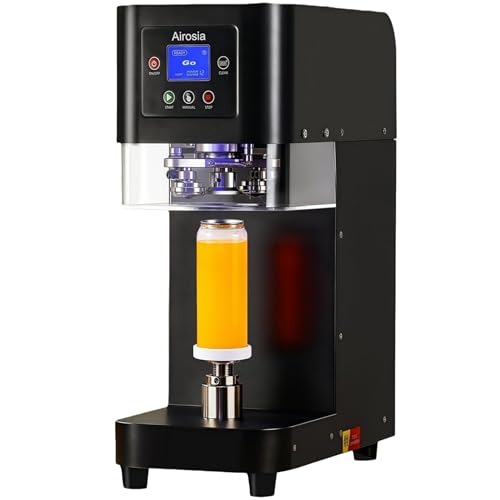
- 270W motor with reinforced steel frame
- Automatic controls and five included holders
- Handles 55 mm cans from 2.4 to 6.7 inches
Best For: Daily commercial drink and dessert sealing
Portable Manual Pick

- Handheld design needs no electricity
- Supports compatible 55 mm PET cans
- Works with two matching lid styles
Best For: Home use and small-batch mobile beverage service
Versatile Commercial Pick
Automatic Aluminum and Plastic Sealer

- Works with plastic and aluminum cans
- Adjusts from 2.4 to 6.7 inches high
- Includes five holders and digital counting
Best For: Commercial drink businesses with varied can materials
Simple Home Pick
Stainless Steel 55 mm Hand Sealer

- Compact manual tool for PET cans
- Ergonomic handle helps reduce effort
- No electricity and easy wipe-clean care
Best For: Small home batches of non-carbonated drinks
Best Automatic Pick

- One-touch sealing in about three seconds
- Supports 250 ml to 650 ml cans
- Steel and stainless steel construction
Best For: Frequent multi-size can sealing with powered automation
Best Semi-Automatic Option

- 370-watt motor seals in four to six seconds
- Offers semi-automatic and manual modes
- LED display counts sealed cans
Best For: Home brewers and small beverage shops
Best Manual Pick
Stainless Steel 202 Can Sealer

- Operates manually without electricity
- Fits 11 oz, 16.9 oz, and 22 oz cans
- Stainless steel body with stable base
Best For: Portable or off-grid sealing of standard 202 cans
Best Commercial Pick

- Five included cup holders
- Commercial safety and control panel
- Rotates cans during sealing
Best For: Small beverage businesses using compatible 55mm PET cans
Best Portable Option
55mm Manual Handheld Can Sealer

- No electricity required
- Lightweight 8-ounce design
- For 55mm plastic easy-open cans
Best For: Home and small-batch beverage preparation
Best Manual Capacity
Rotary PET and Aluminum Can Sealer

- Up to 10 cans per minute
- Two adjustable can-height bases
- Supports PET and aluminum cans
Best For: Small food-service settings needing manual throughput
Heavy-Duty Automatic Pick – 270W Commercial Can Sealer
For shops that need compact can sealing machines for regular beverage service, this automatic model emphasizes a stronger motor, a reinforced steel frame, and adjustable height. It is designed for #202 cans with a 55 mm opening and includes five holders for common PET can sizes.
Best For: Bubble tea stores, food trucks, bars, bakeries, and other businesses sealing drinks or dessert fillings in daily service.
Pros:
- 270W motor and heavier reinforced frame are intended to reduce wobble during operation.
- Automatic operation includes a power switch, start button, cup counter, and height adjustment.
- Supports can heights from 2.4 to 6.7 inches and includes five cup holders.
- Suitable for craft beer, kombucha, coffee, juice, and dessert fillings.
Cons:
- At 87 pounds and 18 by 10 by 24 inches, it is not especially portable.
- It is designed for #202, 55 mm cans, so compatibility should be confirmed before purchase.
- Shorter PET cans may require raising the cup holder to prevent leaks.
This is the most substantial option in the group for recurring commercial use. Its adjustable holders and upgraded motor add flexibility, but the heavy footprint makes it better suited to a dedicated work surface than a mobile setup.
Portable Manual Pick – VEMORA 55 mm PET Can Sealer
If space and portability matter most, this handheld option is among the more compact can sealing machines for small-batch drink service. It uses manual roller pressure, needs no electricity, and is designed for compatible 55 mm PET cans and lids.
Best For: Home kitchens, cafés, pop-up beverage stalls, and mobile drink service that use properly matched 330 mL, 500 mL, or 650 mL PET cans.
Pros:
- Compact handheld design weighs 9.6 ounces and requires no cord or power source.
- Works with compatible easy-open and full-open lids for different drinks and toppings.
- Simple four-step manual sealing process is suitable for occasional small batches.
- Small footprint is convenient for storage, transport, and pop-up events.
Cons:
- Manual operation is less suited to high-volume production than an automatic machine.
- It requires exact 55 mm can-and-lid matching.
- Users must inspect the full rim after sealing for an even, complete seal.
The VEMORA is a practical choice when a full-size electric unit would be excessive. Measure both the can opening and lid diameter first, then expect hands-on operation rather than automated throughput.
Versatile Commercial Pick – Automatic Aluminum and Plastic Sealer
This automatic model is worth considering among compact can sealing machines for businesses that want adjustable height and support for both plastic and aluminum cans. Its digital panel adds automatic counting, while the included holders accommodate several drink sizes.
Best For: Restaurants, hotels, food trucks, bars, ice cream shops, and beverage businesses sealing juice, milk tea, or liquid alcohol.
Pros:
- Seals aluminum and plastic cans with 55 mm mouths.
- Adjusts for can heights from 2.4 to 6.7 inches.
- Includes five holders for sizes from approximately 8.5 to 16.9 ounces, including a slim option.
- Automatic lifting, digital controls, and counting support a streamlined workflow.
Cons:
- At about 72 pounds, it is a stationary commercial appliance rather than a portable tool.
- The listed dimensions require a suitable counter or work area.
- Can compatibility still depends on the specified 55 mm mouth and suitable holder.
Its broad material compatibility makes this a flexible business-oriented choice. The automatic design and adjustable range are useful for varied menus, though its size and weight call for a permanent setup.
Simple Home Pick – Stainless Steel 55 mm Hand Sealer
For occasional home use, this handheld tool keeps compact can sealing machines simple and space-efficient. Its manual lever design is made for 55 mm PET plastic easy-open cans and requires neither electricity nor bulky equipment.
Best For: Home kitchens, milk tea preparation, picnics, and small batches of non-carbonated beverages in compatible PET cans.
Pros:
- Compact, lightweight structure stores easily in a drawer or small workspace.
- Extended non-slip handle uses leverage to reduce hand effort.
- Rust-resistant stainless steel construction is intended for repeated small-batch use.
- No complex detachable parts are required, and the tool can be wiped clean.
Cons:
- Compatible with 55 mm PET plastic cans only.
- Not designed for aluminum cans or carbonated bubble water.
- Manual sealing is better suited to small batches than high-volume service.
This is the most straightforward choice for home users who already have matching PET cans and lids. Its limitations are important: it is not a universal can sealer, but it offers a low-maintenance solution for the intended non-carbonated applications.
Best Automatic Pick – VEVOR Automatic Can Sealer
For buyers comparing compact can sealing machines, the VEVOR LS-F6003 stands out as an automatic option with one-touch operation and a roughly three-second sealing cycle. Its included holders support several can sizes, while the steel body and stainless steel sealing parts are suited to repeated use.
Best For: Frequent sealing of 250 ml, 330 ml, 500 ml, and 650 ml cans in beverage, home, or small commercial settings.
Pros:
- Automatic one-touch sealing with an approximately three-second cycle.
- Supports four can sizes and 55 mm peel-off, pull-tab, and full-open lids.
- Steel construction, stainless steel sealing parts, and a high-performance motor.
- Includes multiple cans, holders, pads, a wrench, power cord, and manual.
Cons:
- At 68.8 pounds, it is less portable than smaller manual machines.
- Its 15.75-by-9.06-by-23.43-inch footprint requires dedicated counter or floor space.
- Requires a 120-volt power connection.
This is the most convenience-focused choice in the group. Choose it when repeatable automatic operation and broad included size support matter more than minimizing weight or setup space.
Best Semi-Automatic Option – Steel Can Sealing Machine
This semi-automatic model is a practical candidate among compact can sealing machines for users who want powered sealing with more control than a fully automatic unit. It uses a 370-watt motor, offers semi-automatic and manual modes, and displays a running can count.
Best For: Home brewers and small beverage shops sealing beer, soda, plastic, or metal cans in varying sizes.
Pros:
- 370-watt motor completes sealing in approximately four to six seconds.
- Switches between semi-automatic and manual operating modes.
- LED display tracks the number of cans sealed.
- Steel and rubber construction with a high-precision sealing ring and rotor.
Cons:
- At 49.6 pounds, it is still substantial for a compact machine.
- Its 8.3-by-16-by-23.6-inch dimensions may limit placement options.
- It is corded and rated for 110 volts.
The flexible controls and counting display make this a balanced choice for smaller operations. It is especially useful when you want motorized sealing but still value manual-mode flexibility.
Best Manual Pick – Stainless Steel 202 Can Sealer
If portability and independence from electricity are priorities, this manual model offers a straightforward alternative among compact can sealing machines. It is designed for standard 202 aluminum and PET cans with a 55 mm cap diameter, and its adjustable height accommodates several listed can sizes.
Best For: On-the-go drink preparation, household use, and users sealing 11-ounce, 16.9-ounce, or 22-ounce cans without a powered machine.
Pros:
- Manual operation requires no electricity.
- Stainless steel construction is described as wear-resistant and rust-proof.
- Adjustable height supports 11-ounce, 16.9-ounce, and 22-ounce cans.
- Reference output reaches up to 10 cans per minute.
Cons:
- Manual operation requires hands-on effort for every can.
- Designed around standard 202 cans and a 55 mm cap diameter, limiting compatibility.
- Its tabletop base is intended to be fixed through pre-drilled holes for stable operation.
This is the simplest choice for buyers who do not want a corded appliance. Its narrow can compatibility and manual workflow are trade-offs for flexible placement and no-electricity operation.
Best Commercial Pick – Semi-Automatic PET Can Sealer
For businesses needing compact can sealing machines with adjustable sizing, this semi-automatic electric model offers a commercial-oriented setup for compatible PET cans. It includes five cup holders, a height-adjustment system, and controls designed for repeat operation.
Best For: Craft breweries, juice bars, coffee shops, food trucks, restaurants, and bars using compatible 55mm cans.
Pros:
- Includes five holders for 250ml, 330ml, tall 330ml, 500ml, and 600ml cans.
- Independent power switch, start button, cup counter, height adjustment, and stop protection.
- Electric 405-watt operation suits repeated commercial use.
Cons:
- Only seals approximately 55mm #202 lids and does not support easy-tear lids.
- Rotates PET cans during sealing, which can blend drinks with distinct color layers.
- At 52 pounds, it is less portable than manual alternatives.
This is the most feature-rich option here for small beverage businesses, provided your cans and lids match its compatibility requirements. Factory height differences may require cup-holder adjustment.
Best Portable Option – 55mm Manual Handheld Can Sealer
This handheld model is one of the most compact can sealing machines for home kitchens and small-batch beverage work. Its manual design requires no electricity, making it easy to store and use at a drink station or during portable preparation.
Best For: Home kitchens, DIY drinks, small beverage businesses, and small batches using 55mm plastic easy-open cans.
Pros:
- Compact handheld form weighs only 8 ounces.
- Operates manually without batteries or an electrical outlet.
- Sturdy construction and reinforced sealing structure support repeated use.
Cons:
- Compatible only with 55mm plastic easy-open cans.
- Not suitable for aluminum soda cans or other sizes.
- Manual operation may be slower for higher-volume production.
Choose this sealer when portability and simplicity matter more than production speed. Confirm both can diameter and material before purchasing, since compatibility is narrowly specified.
Best Manual Capacity – Rotary PET and Aluminum Can Sealer
For buyers comparing compact can sealing machines for manual service, this stainless steel rotary sealer combines adjustable bases with a stated speed of up to 10 cans per minute. It supports compatible PET and aluminum cans and accommodates two can heights.
Best For: Homes, bars, cafés, restaurants, beverage stores, and other small food-service settings using 55mm cans.
Pros:
- Seals up to 10 cans per minute according to the supplied specifications.
- Two bases accommodate approximately 4.53-inch and 6.61-inch can heights.
- Stainless steel construction is described as corrosion-, rust-, and wear-resistant.
Cons:
- Manual hand-crank operation requires physical effort.
- Limited to a 55mm sealing diameter.
- Its broader base and accessories may take more storage space than a handheld tool.
This is a practical middle ground for users who want manual control and more throughput than a handheld sealer. Verify that your PET or aluminum cans match the 55mm diameter and supported height range.
How We Picked the Best Compact Can Sealing Machines
We compared these machines by matching their intended use with the needs of home beverage makers, small businesses, event vendors, and commercial operators. The most important criteria were compatible can materials and diameters, sealing method, height adjustment, operating speed, motor power, portability, and ease of use.
Manual models can be practical for occasional or low-volume work, while semi-automatic and automatic machines are better suited to repetitive production. We also considered whether each design appears specialized for 55 mm PET or easy-open cans, or flexible enough to handle multiple container sizes.
Quick Comparison
| Type | Best for | Main advantage | Trade-off |
|---|---|---|---|
| Manual handheld | Home use and small batches | Portable and simple | Slower, requires more effort |
| Manual rotary | Light commercial use | More control than handheld tools | Still operator-dependent |
| Semi-automatic | Growing beverage businesses | Good balance of speed and cost | Needs setup and consistent containers |
| Automatic | Higher-volume production | Fast, repeatable sealing | Larger investment and footprint |
Key Buying Factors for Compact Can Sealing Machines
Can Size and Material Compatibility
Check the supported diameter, height range, and container material before buying. Some machines are designed around 55 mm PET or plastic cans, while others accommodate aluminum, metal, or multiple beverage-can formats. A machine that cannot match your containers may produce weak or uneven seals.
Manual, Semi-Automatic, or Automatic Operation
Choose manual equipment for occasional batches and maximum portability. Semi-automatic machines reduce repetitive work while keeping costs manageable. Automatic models make more sense when consistent output and faster cycle times justify their higher price, power requirements, and larger footprint.
Adjustability and Sealing Consistency
Height adjustment is valuable when working with different can formats. Look for straightforward controls, stable positioning, and a sealing process that does not require excessive force. Consistent pressure and alignment help reduce leaks, damaged rims, and wasted product.
Motor Power, Workspace, and Maintenance
For electric models, consider motor power alongside your expected workload. Confirm that your workspace has the required outlet and enough clearance. Removable or accessible contact surfaces, simple controls, and readily available replacement parts can make long-term ownership easier.
Who Should Buy Which Compact Can Sealing Machines?
- Home users: Choose a 55 mm handheld manual sealer if you value low cost, storage convenience, and small-batch flexibility.
- Market vendors and small kitchens: A manual rotary or semi-automatic model offers better throughput without the expense of a fully automatic machine.
- Businesses using several can sizes: Prioritize adjustable-height equipment with broad material compatibility.
- Higher-volume beverage producers: An automatic commercial sealer is usually the better fit for repeatable cycles and reduced operator fatigue.
Before ordering, verify the exact can dimensions, included tooling, electrical requirements, and return or replacement-part policy. Those details matter more than headline motor power when choosing among Compact Can Sealing Machines.