Making tomato sauce from scratch is easier when a manual press separates skins and seeds while extracting more usable pulp. The right model can save time during harvest season and simplify small-batch canning.
We compared 10 manual tomato presses and related food mills across capacity, materials, versatility, ease of use, and cleanup to help you choose a practical fit for your kitchen.
Best 10 Manual Tomato Presses Picks for 2026
Versatile Clamp Press

- 1.3mm tomato screen included
- Clamp fits 3/4–2-1/8-inch countertops
- Optional motor and screens available
Best For: Multi-purpose home preserving and sauces
Classic Sauce Strainer
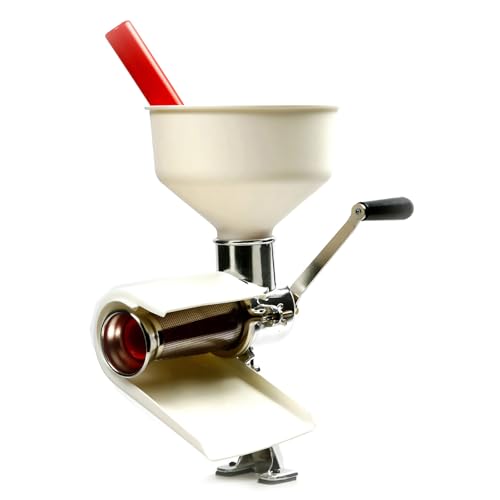
- 3-quart/95-ounce capacity
- Fine mesh screen and spiral included
- Separates juice and pulp in one operation
Best For: Traditional multi-use sauce straining
Large-Batch Stainless Press
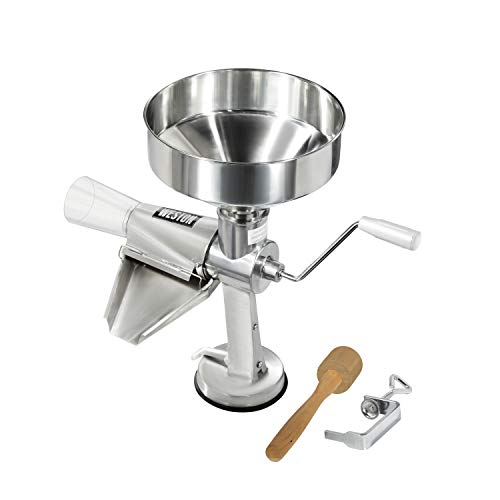
- One-gallon hopper for larger batches
- Suction-cup and C-clamp mounting
- Includes 1.5mm screen and stomper
Best For: Garden harvests and high-volume processing
Tomato Prep Alternative

- Cores, slices, wedges, and de-seeds
- Serrated stainless steel blade
- Dishwasher safe
Best For: Individual tomato cutting and preparation
Best for Large Batches
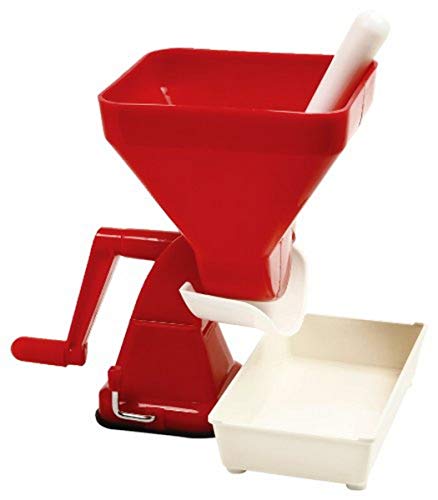
- 2.25-quart hopper for larger batches
- Stainless mesh separates skins and seeds
- Suction base and included receiving tray
Best For: Sauces, purées, and applesauce in larger quantities
Best Compact Option
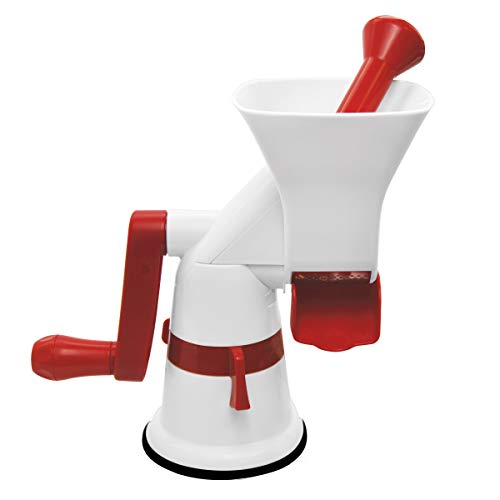
- Three-cup capacity for small batches
- 2 mm stainless steel screen
- Auger helps reduce jamming and leaking
Best For: Occasional sauces, jams, juices, and baby food
Best for Simple Tomato Prep
Tomato Strainer with Suction Mount

- No peeling, deseeding, or coring required
- Suction-cup base adds stability
- Includes stainless steel pusher
Best For: Fresh salsa, pasta sauce, juice, and purée
Versatile Stainless Steel Pick

- Stainless steel body with stable dual hooks
- Three discs for sauces, purees, and potatoes
- Dishwasher-safe with useful accessories
Best For: Multi-purpose kitchen prep and canning
High-Capacity Tomato Press

- Stainless steel filter separates skins and seeds
- Large feed inlet for fruit and vegetables
- Simple, machine-washable design
Best For: Straightforward tomato sauce and juice prep
Best Countertop Stability

- Tabletop clamp helps prevent wobbling
- Hand crank with filter for smooth pulp
- Works for sauces, jams, juices, and fillings
Best For: Stable countertop tomato processing
Versatile Clamp Press – Johnny Apple Sauce Maker
For shoppers comparing manual tomato presses, the Johnny Apple Sauce Maker is a versatile clamp-mounted strainer designed to separate tomato skins and seeds while producing sauces, purees, juices, and other preparations. It includes a 1.3mm apple/tomato screen and a hand crank, with an optional electric motor available separately.
Best For: Home cooks who want one manual press for tomato sauce, fruit purees, jams, and similar recipes.
Pros:
- Includes an apple/tomato screen, standard spiral, and instructions.
- Clamp mounts to countertops from 3/4 to 2-1/8 inches thick.
- Supports optional screens and a separately sold electric motor.
- Cast aluminum body and stainless steel screens; plastic components are BPA free.
Cons:
- Optional motor and specialty screens cost extra.
- Clamp mounting requires a suitable countertop edge.
This is a practical, expandable choice for small-batch preserving, especially if you value a secure countertop mount and broader kitchen versatility.
Classic Sauce Strainer – Norpro 1951 Sauce Master
The Norpro 1951 is a straightforward option among manual tomato presses, using a hand-operated mechanism to force produce through a chrome-plated steel screen while separating juice and pulp. Its 3-quart capacity suits routine batches of sauces, purees, fruits, and vegetables.
Best For: Cooks seeking a traditional, multi-use strainer with a relatively generous 3-quart capacity.
Pros:
- 3-quart, or 95-ounce, stated capacity.
- Automatically separates juice and pulp in one operation.
- Includes a fine mesh screen, standard spiral, recipe, and instructions.
- Additional berry, pumpkin, and salsa screens are available separately.
Cons:
- Extra screens are sold separately.
- The supplied notes do not specify a mounting system or included clamps.
The Sauce Master is a sensible all-around pick when capacity and basic straining functionality matter more than included specialty accessories.
Large-Batch Stainless Press – Weston Metal Tomato Strainer
For larger batches, the Weston Metal Tomato Strainer stands out among manual tomato presses with a 1-gallon hopper, stainless steel construction, and a 1.5mm multipurpose screen. Its smooth-turning handle removes skins and seeds without requiring peeling or coring first.
Best For: Garden harvests and cooks processing larger quantities of tomatoes, soft fruits, sauces, or purees.
Pros:
- One-gallon hopper helps accommodate larger batches.
- Dual mounting uses either a suction-cup base or C-clamp.
- Includes a stomper and 1.5mm multipurpose screen.
- Splash guard and directed chute help reduce mess during processing.
Cons:
- Additional screens require the separately sold 07-0858 accessory kit.
- Its larger hopper may be more than needed for occasional small batches.
This is the strongest fit here for high-volume tomato processing, particularly if you need flexible mounting and a setup aimed at keeping puree directed into a container.
Tomato Prep Alternative – Prepworks 3-in-1 Tomato Tool
The Prepworks by Progressive 3-in-1 Tomato Tool is not a sauce-making press, but it can complement manual tomato presses by handling individual tomatoes at the cutting board. It cores, slices, wedges, and de-seeds tomatoes, while its serrated blade and fork tip support cutting and serving.
Best For: Everyday tomato preparation when you need portioned slices or wedges rather than batch sauce straining.
Pros:
- Combines coring, slicing, wedging, and de-seeding functions.
- Serrated stainless steel blade cuts through ripe tomatoes.
- Fork tip helps serve and transfer individual slices.
- Dishwasher safe, according to the supplied notes.
Cons:
- It does not separate skins and seeds from large batches or make sauce.
- Designed for individual tomato preparation rather than pressing.
Choose this compact tool only if your needs are cutting-board prep and de-seeding; for sauce production, pair it with—or choose instead of it—a dedicated manual tomato press.
Best for Large Batches – Norpro Jumbo Tomato Strainer
For shoppers comparing manual tomato presses, the Norpro Jumbo Tomato Strainer is built for processing larger batches of tomatoes or cooked apples. Its stainless steel mesh separates skins, seeds, and stems while a suction base helps keep the press steady during cranking.
Best For: Home cooks preparing marinara, salsa, juice, purée, paste, or applesauce in larger quantities.
Pros:
- Large 2.25-quart hopper supports bigger batches.
- Stainless steel mesh automatically separates seeds, skins, and stems.
- Suction base mounts to smooth countertops for added stability.
- Includes a receiving tray, pestle, instructions, and starter recipes.
Cons:
- Its larger footprint may require more storage space.
- The suction base is intended for smooth surfaces.
Choose this model if capacity and a complete canning-prep setup matter more than compact storage. The included tray and large hopper make it particularly practical for seasonal processing.
Best Compact Option – Weston Fruit & Tomato Press
Among manual tomato presses, the Weston Fruit & Tomato Press is a compact choice for smaller cooking projects. Turn the handle to separate seeds and skins from pulp, while its auger is designed to help reduce jamming and leaking.
Best For: Small batches of sauces, juices, jams, and baby food.
Pros:
- Three-cup capacity suits small-batch preparation.
- Stainless steel screen uses 2 mm holes.
- Auger helps prevent jamming and leaking.
- Includes a stomper for guiding produce.
Cons:
- Its 3-cup capacity is less suitable for large harvests.
- The supplied notes do not specify a mounting base.
This Weston press makes sense when counter space and batch size are priorities. It offers focused functionality for occasional sauces, jams, and juices without the capacity of a larger mill.
Best for Simple Tomato Prep – Tomato Strainer with Suction Mount
For straightforward manual tomato pressing, this tomato strainer is designed to juice and purée tomatoes without peeling, deseeding, or coring first. Its suction mount helps secure the mill, while the side outlet ejects skins and seeds as juice collects in the tray.
Best For: Fresh salsa, homemade pasta sauce, tomato juice, and purées.
Pros:
- Processes tomatoes without pre-peeling, deseeding, or coring.
- Suction-cup base helps stabilize the press.
- Includes a stainless steel pusher.
- Designed for straining, juicing, and puréeing.
Cons:
- The plastic construction may be less substantial than stainless-steel models.
- No capacity specification is provided in the supplied details.
This is a practical pick for gardeners and home cooks who want uncomplicated tomato preparation. Its built-in separation and included pusher keep the process simple for everyday recipes.
Versatile Stainless Steel Pick – 3-Disc Food Mill
For shoppers comparing manual tomato presses, this stainless steel food mill offers a versatile way to prepare tomato sauce, mashed potatoes, jams, and other purees. Its three interchangeable milling discs and stable dual-hook design make it a practical option for varied kitchen tasks.
Best For: Cooks who want one manual mill for tomato sauce, purees, potatoes, fruit, and canning.
Pros:
- Stainless steel construction with a mirror-polished finish.
- Three milling discs support different textures and ingredients.
- Dual hooks and a silicone-covered crank help keep the mill steady.
- Dishwasher-safe parts and included spoon, funnel, and measuring spoon add convenience.
Cons:
- Its multifunction design may be more than needed for shoppers seeking only a tomato press.
- At 1.29 kg, it is less lightweight than some simpler manual options.
This is a strong all-purpose choice when flexibility matters. The durable steel body, multiple discs, and included accessories make it especially useful for cooks who process more than tomatoes.
High-Capacity Tomato Press – Manual Sauce Maker
Among manual tomato presses, this tomato juicer focuses on separating skins and seeds from pulp with a stainless steel filter. Its large feed inlet is designed to accept more fruit or vegetables at once, making it a practical tool for sauce and juice preparation.
Best For: Home cooks who want a straightforward tomato and fruit strainer with a large feed opening.
Pros:
- Stainless steel filter separates tomato peel and seeds from the pulp.
- Large-capacity feed inlet supports steady ingredient loading.
- Simple structure is designed for convenient cleaning and energy-saving use.
- Wear-resistant PP shell is described as durable and hard to damage.
Cons:
- The supplied details do not specify a clamp or other countertop mounting feature.
- Only one filter is listed, offering less texture flexibility than multi-disc mills.
This model suits buyers prioritizing basic tomato straining and a roomy inlet over broader milling versatility. Its peel-and-seed separation is the main advantage for homemade sauces and juices.
Best Countertop Stability – Clamp-On Tomato Grinder
This manual tomato press uses a tabletop clamp to stay attached to the counter while you turn the hand crank. The funnel-shaped opening supports steady feeding, while the filter blocks skins and directs smooth pulp toward sauces, soups, jams, or fillings.
Best For: Home canners and cooks who value countertop stability during repeated tomato processing.
Pros:
- Tabletop clamp is designed to reduce wobbling during use.
- Hand crank provides a straightforward manual juicing process.
- Filter blocks tomato skins while smooth pulp flows into a bowl.
- Wide-use design handles sauces, cream soups, jams, juices, and pie fillings.
Cons:
- Its ABS and stainless steel construction may not feel as substantial as an all-metal mill.
- The supplied details mention a filter but do not list interchangeable screens.
The clamp-on format is the standout feature here, making this a sensible choice for users who want a steadier manual press without a large appliance. It also offers useful versatility beyond tomato sauce.
How We Picked the Best Manual Tomato Presses
We focused on the features that matter during real sauce-making sessions: how efficiently each press separates skins and seeds, how much produce it can handle, how securely it stays in place, and how easy it is to assemble and clean. We also considered construction materials, crank design, hopper size, included screens or milling discs, and whether a model is best suited to occasional batches or larger harvests.
Because the selection includes tomato strainers, sauce makers, and food mills, we noted the differences in their intended use. Some are designed primarily for cooked tomatoes and soft fruit, while others are more versatile tools for potatoes, jams, purées, and baby food.
Quick Comparison
| What to Compare | Best For |
|---|---|
| Clamp-mounted strainer | Stable countertop use and repeat batches |
| Large hopper or high-capacity body | Garden harvests and big sauce batches |
| Compact hand press | Small kitchens and occasional use |
| Food mill with multiple discs | Tomatoes plus potatoes, jams, and purées |
| Stainless steel construction | Frequent use and long-term durability |
Key Buying Factors for Manual Tomato Presses
Capacity and Batch Size
A larger hopper reduces refilling when processing garden tomatoes, but it also requires more storage space. Compact presses are easier to keep in a cabinet and work well for a few jars at a time.
Materials and Stability
Stainless steel components generally offer strong durability and resist staining. Plastic or ABS models can be lighter and more affordable. A reliable clamp, suction base, or sturdy stand is important because pressing requires steady hand pressure.
Separation and Adjustability
Look for a screen that removes skins and seeds effectively without wasting excessive pulp. Some models include interchangeable screens or discs, giving you more control over texture and expanding the tool’s uses.
Cleaning and Assembly
Fewer parts usually mean faster cleanup. Before buying, check whether the screen, auger, hopper, and chute detach easily and whether the manufacturer provides clear cleaning instructions. Avoid leaving tomato residue to dry in fine mesh openings.
Who Should Buy Which Manual Tomato Presses?
Choose a clamp-based sauce maker if you want countertop stability and plan to process repeated batches. A high-capacity metal strainer is the better fit for gardeners handling large harvests. Pick a compact press if you make sauce only occasionally or have limited storage.
A food mill with multiple discs makes more sense if you want one tool for tomatoes, mashed potatoes, fruit purées, and jams. For frequent use, prioritize stainless steel parts and a robust mounting system. For basic, low-volume preparation, a simpler manual tomato press can provide the essential skin-and-seed separation without the extra bulk or cost.