Choosing a stand mixer for sourdough is mostly about power, bowl size, and how well the mixer handles stiff, sticky dough. The right model can save time, reduce strain, and improve consistency batch after batch.
Below, we focus on mixers that can knead bread dough reliably, with picks that suit occasional bakers, frequent loaf makers, and larger-family baking projects.
Best 10 Stand Mixer for Sourdough Picks for 2026
Professional Spiral Mixing

- Spiral mixing tech for stronger gluten development
- 58 speed settings for precise control
- 7.3-quart bowl with four included attachments
Best For: serious home bakers who want bakery-style dough mixing
Ferment & Knead Helper

- Mix mode simulates hand-kneading
- Winter and summer fermentation modes
- Large 9.5-quart bowl for bigger batches
Best For: home bakers who want mixing and fermentation in one unit
Classic Tilt-Head Value
KitchenAid Classic Series 4.5 Quart Mixer
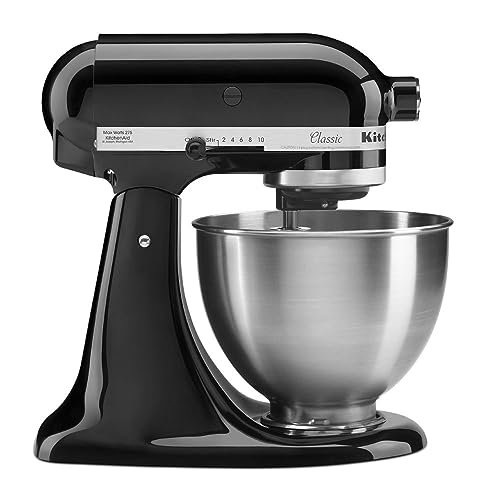
- Durable metal build with 59 touchpoints
- 10 speeds and tilt-head access
- Includes dough hook and stainless steel bowl
Best For: bakers who want a dependable everyday mixer for smaller batches
Smart Proofing Mixer
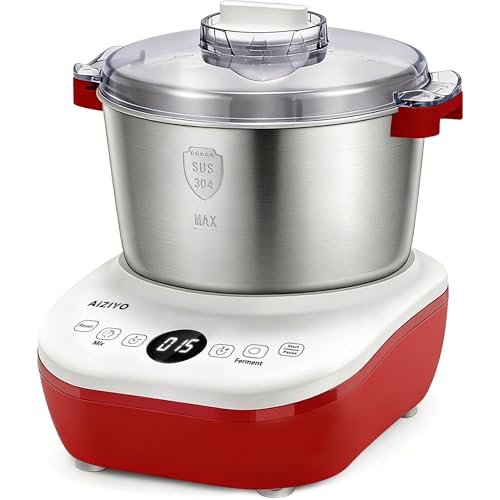
- Mix and ferment in one compact machine
- Mix-pause-mix program imitates hand kneading
- Constant-temperature proofing support
Best For: beginners who want simple dough mixing with proofing support
Heavy-Duty Dough Pick
Bosch Universal Plus 6.5-Qt Mixer
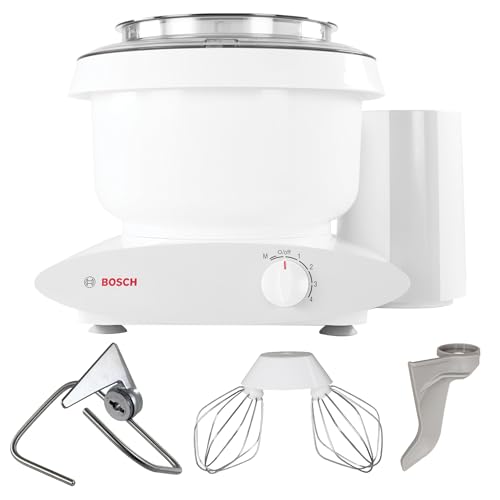
- 500W belt-driven motor for strong dough kneading
- 6.5-quart bowl for large bread batches
- Bottom-drive design and easy-clean removable shaft
Best For: Large sourdough batches and dense whole-grain dough
Most Versatile Control
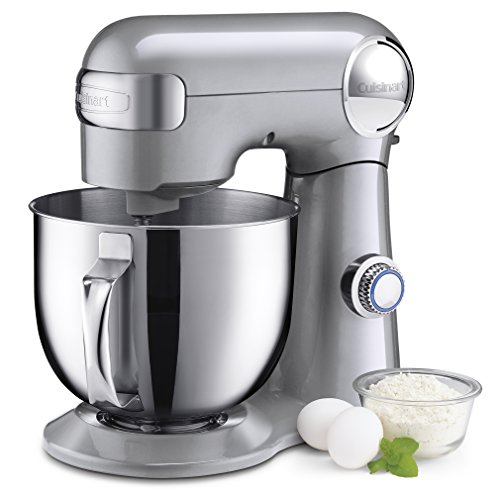
- 12 speeds for finer mixing control
- 500W motor with dough hook and splash guard
- 5.5-quart stainless steel bowl for home use
Best For: Home bakers who want flexible speed control for sourdough
Most Stable Countertop Pick
NutriMill Artiste 6.5-Qt Mixer

- 500W motor with bottom-drive power delivery
- Suction cup feet help reduce walking
- 6.5-quart bowl handles dough batches up to 8 lbs
Best For: Medium-to-large sourdough batches on a steady counter
Commercial Heavy-Duty Pick

- 8.4-quart bowl handles large sourdough batches
- 800W motor with 11 speed settings
- Quiet operation and digital timer display
Best For: Large-batch sourdough bakers and bulk prep
Family-Friendly Value Pick
FOHERE 5.8QT Stainless Steel Mixer

- 5.8-quart bowl suits family-size baking
- Spiral dough hook helps knead yeast dough
- Metal body with suction-cup stability
Best For: Small families and everyday sourdough baking
Professional Spiral Mixing – Ooni Halo Pro Spiral Mixer
If you want a stand mixer for sourdough that focuses on dough development, the Ooni Halo Pro brings spiral-mixing tech normally seen in bakeries and pizzerias. Its rotating bowl, spiral dough hook, and removable breaker bar are designed to build stronger gluten networks, while 58 speed settings give you fine control for bread and other dough-heavy bakes.
Best For: Bakers who want pro-style dough mixing and precise speed control for sourdough, pizza, and enriched doughs.
Pros:
- Spiral mixing technology with rotating bowl and spiral dough hook for stronger dough
- 58 speed settings for very fine mixing control
- 7.3-quart capacity for larger dough batches
- Includes four attachments for mixing, whisking, beating, and dough work
Cons:
- More specialized and premium than a basic household mixer
- Bulky footprint compared with smaller tilt-head models
- May be more than needed if you only bake occasional small batches
This is a strong choice if your priority is dough quality over all-purpose simplicity. For serious home bakers, the spiral design and wide speed range make it stand out as a high-control option for sourdough prep.
Ferment & Knead Helper – Joydeem Electric Dough Maker
The Joydeem is a practical stand mixer for sourdough-style dough prep if you want mixing and fermentation in one machine. Its 300W motor uses intermittent kneading in Mix mode, and the built-in Winter and Summer fermentation options help you dial in proofing across seasons.
Best For: Bakers who want an all-in-one dough maker with fermentation support and a large bowl.
Pros:
- Mix mode mimics hand-kneading with intermittent operation
- Built-in winter and summer fermentation modes for year-round use
- Large 9.5-quart bowl handles substantial flour amounts
- Adjustable mixing and fermentation times for flexible dough prep
Cons:
- Designed more as a dough maker than a traditional stand mixer
- Single-purpose focus if you want lots of attachments
- Best results depend on setting mix and fermentation times carefully
If you want a machine that handles both kneading and proofing, this model is especially convenient. It suits home bakers who value simplicity, capacity, and seasonal fermentation control for bread and sourdough dough.
Classic Tilt-Head Value – KitchenAid Classic Series 4.5 Quart Mixer
The KitchenAid Classic Series is a familiar stand mixer for sourdough if you want a durable, straightforward option for everyday baking. Its metal construction, 10 speeds, and coated dough hook give you the essentials for mixing and kneading, while the tilt-head design makes it easier to add ingredients as you work.
Best For: Home bakers who want a reliable all-purpose mixer for smaller sourdough batches and regular kitchen use.
Pros:
- Durable metal construction with 59 touchpoints for thorough mixing
- 10 speeds for a wide range of recipes
- Tilt-head design makes bowl access and ingredient adding easy
- Includes a coated dough hook and stainless steel bowl
Cons:
- 4.5-quart bowl is smaller than some dough-focused alternatives
- Less specialized for bread dough than spiral or fermentation-focused machines
- Attachments beyond the basics are sold separately
This is the most classic do-it-all pick in the lineup. It makes sense if you want a proven household mixer that can handle sourdough and still cover cookies, cream, and other everyday tasks.
Smart Proofing Mixer – AIZIYO DoughChief 7.4Qt
The AIZIYO DoughChief is built for sourdough bakers who want mixing and proofing in one compact machine. Its mix-pause-mix program is meant to simulate hand kneading, and the built-in ferment mode keeps temperature steady for dough that rises more consistently.
Best For: Beginners or home bakers who want a simple dough mixer with built-in fermentation support.
Pros:
- Mix and ferment functions in one machine
- Mix-pause-mix program is designed to imitate hand kneading
- Constant-temperature ferment mode for more consistent proofing
- Wide top opening makes it easy to add ingredients while mixing
Cons:
- Only one speed setting
- Less versatile than full stand mixers with multiple attachments
- Ferment function requires yeast or fermentation powder, per the notes
This model is appealing if you want an easier path to dough prep without a lot of manual control. It is a practical option for bread and pizza dough when you care more about consistent proofing than attachment variety.
Heavy-Duty Dough Pick – Bosch Universal Plus 6.5-Qt Mixer
If you want a stand mixer for sourdough that prioritizes torque and batch capacity, the Bosch Universal Plus is built for serious dough work. Its 500-watt belt-driven system and 6.5-quart bowl are designed to handle large, dense mixes, including up to 14 loaves of whole grain bread dough.
Best For: Bakers who regularly make large batches of sourdough or other heavy doughs and want a mixer focused on kneading power.
Pros:
- Powerful belt-driven transmission provides strong torque for kneading dense dough.
- 6.5-quart bowl handles big batches, including up to 14 loaves of whole grain bread dough.
- Bottom-drive design makes it easier to add ingredients during mixing.
- Removable drive shaft and dishwasher-safe bowl simplify cleanup.
Cons:
- Plastic bowl construction may not appeal to buyers looking for metal bowls.
- Only 4 speed settings, so it is less granular than some mixers.
- Accessory versatility depends on optional add-ons sold separately.
For sourdough bakers who care more about capacity and kneading strength than fancy controls, this Bosch stands out as a practical workhorse. The included dough hook extender and optional attachment ecosystem add flexibility, but its biggest advantage is simply handling heavy dough reliably.
Most Versatile Control – Cuisinart 5.5-Qt Stand Mixer
The Cuisinart SM-50BC is a solid stand mixer for sourdough if you want a balanced mix of power, bowl size, and speed control. Its 500-watt motor, 5.5-quart stainless steel bowl, and 12 speeds give you more control for mixing starters, doughs, and other kitchen tasks.
Best For: Home bakers who want a versatile mixer with more speed options for sourdough and everyday prep.
Pros:
- 12 speeds allow more precise control than many basic stand mixers.
- 500-watt motor and dough hook are suitable for a variety of mixing tasks.
- 5.5-quart polished stainless steel bowl is a practical size for home use.
- Includes whisk, paddle, dough hook, and splash guard with pour spout.
Cons:
- Smaller bowl than 6.5-quart options, so it is less suited to very large batches.
- No claims here about handling especially heavy bread loads like larger dough-focused mixers.
- Optional attachments are extra, not included.
If you bake sourdough regularly but also want a mixer that can handle many other prep jobs, this Cuisinart offers a flexible middle ground. It is less specialized than a heavy-duty dough mixer, but the speed range makes it easy to work carefully through different mixing stages.
Most Stable Countertop Pick – NutriMill Artiste 6.5-Qt Mixer
The NutriMill Artiste is a practical stand mixer for sourdough when stability matters as much as mixing strength. Its 500-watt motor, bottom-drive design, and suction cup feet are aimed at keeping the mixer planted while handling dough batches up to 8 pounds.
Best For: Bakers who want a stable mixer for medium-to-large sourdough batches and everyday bread dough.
Pros:
- 6.5-quart bowl is sized for larger mixing jobs.
- Bottom-drive system is designed to move power directly and outperform tilt-head mixers.
- Suction cup feet help keep the mixer from walking on the counter.
- Includes an extended dough hook, wire whips, and recipe book.
Cons:
- Rated for dough batches up to 8 lbs, which is less than some larger-capacity competitors.
- Only 6 speeds, so there is less control than on 12-speed models.
- Plastic container material may be less premium-feeling to some buyers.
For sourdough bakers who hate countertop movement during kneading, this NutriMill focuses on stability and straightforward functionality. It is not the biggest-capacity option here, but it offers a sensible mix of size, power, and anti-walk design.
Commercial Heavy-Duty Pick – ZACME 8.4QT 800W NSF Mixer
If you want a stand mixer for sourdough that can handle bigger dough loads, this ZACME 8.4QT model is built for high-capacity kneading. Its 800W DC motor, 11 speed settings, and large stainless steel bowl make it a strong fit for frequent bread baking, especially when you need consistent mixing without stopping to split batches.
Best For: Large-batch sourdough bakers, bulk prep, and home users who want a commercial-style mixer with quiet operation.
Pros:
- 8.4-quart bowl and up to 3 kg of dough capacity support large sourdough batches.
- 800W motor, metal gears, and 11 speeds provide strong kneading control.
- Low-noise operation is rated at 48 dBA on first gear and up to 68 dBA at max.
- Includes dough hook, whisk, and flat beater, plus a digital timer display.
Cons:
- Larger footprint and 33-pound weight make it less compact than typical home mixers.
- Tilt-head design and commercial size may be more mixer than occasional bakers need.
Overall, this is the most capacity-focused option here, and it stands out if sourdough is a regular project rather than an occasional bake. The combination of size, power, and timer function makes it especially practical for bigger dough jobs.
Family-Friendly Value Pick – FOHERE 5.8QT Stainless Steel Mixer
For shoppers looking for a practical stand mixer for sourdough without jumping to a commercial-size machine, this FOHERE 5.8QT mixer covers the basics well. The 600W motor, spiral dough hook, and planetary mixing action are aimed at more thorough dough mixing, while the stainless steel body adds a more durable feel than many plastic-bodied models.
Best For: Small families, everyday baking, and sourdough starters who want a mid-size mixer with straightforward controls.
Pros:
- 5.8-quart bowl is sized for family baking and moderate dough batches.
- Spiral S-shaped dough hook is designed to knead yeast dough more efficiently.
- Planetary mixing helps ingredients move around the full bowl for better coverage.
- Metal body and suction-cup feet add durability and stability during use.
Cons:
- 600W power is solid for home use, but less robust than the largest heavy-duty mixers.
- Noise level is listed at 75 dB, which is louder than some alternatives.
This FOHERE model is a sensible middle-ground choice if you want reliable dough mixing in a more manageable size. It keeps the focus on practical bread-making features without moving into oversized commercial territory.
Quiet Precision Pick – 6.5QT 10-Speed Tilt-Head Mixer
If your priority in a stand mixer for sourdough is controlled kneading with less noise, this 6.5QT tilt-head model is a compelling option. It uses a pure copper motor, 10 speeds plus pulse, and 360-degree planetary mixing to help blend heavy bread and pizza dough evenly while staying under 55 dB.
Best For: Home bakers who want quieter operation, precise speed control, and a mid-size bowl for bread dough.
Pros:
- Pure copper motor is designed for high-torque kneading of heavy dough.
- Under-55 dB operation is notably quiet for long mixing sessions.
- 10 speeds plus pulse offer flexible control for different dough types.
- 6.5-quart stainless bowl and planetary mixing support family-sized baking.
Cons:
- 300W wattage is lower on paper than some competing mixers.
- Best suited to home baking rather than very large-volume batches.
This mixer is a strong fit if you want more finesse than brute size. The quiet operation and speed range make it especially appealing for bakers who value control during sourdough prep.
How We Picked the Best Stand Mixer for Sourdough
For this roundup, we looked for mixers that can handle sourdough’s high hydration, long kneading needs, and heavier dough loads without excessive wobble or strain. We prioritized motor strength, bowl capacity, dough hook design, speed control, build quality, and useful dough-focused features such as fermentation settings or planetary-style mixing.
Quick Comparison
The best Stand Mixer for Sourdough depends on how often you bake and how large your batches are. Spiral and dough-focused mixers are often better for frequent bread making, while traditional tilt-head and bowl-lift mixers offer more versatility for all-purpose kitchen use. Larger-capacity models are the better fit if you regularly make multiple loaves, while smaller machines work well for one or two loaves at a time.
Key Buying Factors for a Stand Mixer for Sourdough
Motor Power and Torque
Sourdough dough can be stiff, especially during initial mixing. Look for a mixer with enough torque to maintain steady kneading under load. Wattage helps, but design and gearing matter just as much.
Bowl Capacity
A 4.5-quart mixer may work for smaller batches, but most sourdough bakers will be happier with 5.5 quarts or more. If you bake multiple loaves or use high-hydration formulas, a larger bowl gives the dough more room to develop properly.
Mixing Style
Spiral mixers are excellent for bread dough because they tend to knead efficiently and gently. Traditional stand mixers can still do the job well, especially if they include a strong dough hook and stable base.
Speed Control
Fine control matters when combining flour and water before full kneading. Multiple speed settings help prevent splashing and overworking the dough early on.
Durability and Stability
Heavy dough can make lightweight mixers walk across the counter. Metal construction, non-slip feet, and a stable housing are all important for long-term reliability.
Who Should Buy Which Stand Mixer for Sourdough?
If you bake sourdough weekly or make larger batches, choose a high-capacity mixer with strong torque and a sturdy build. If you want a more versatile all-purpose appliance, a classic stand mixer with a reliable dough hook is a better fit. If your priority is bread performance above all else, a dough-focused or spiral-style machine is usually the smartest choice. For smaller kitchens or lighter baking schedules, a mid-size mixer can still be a practical and budget-friendly solution.