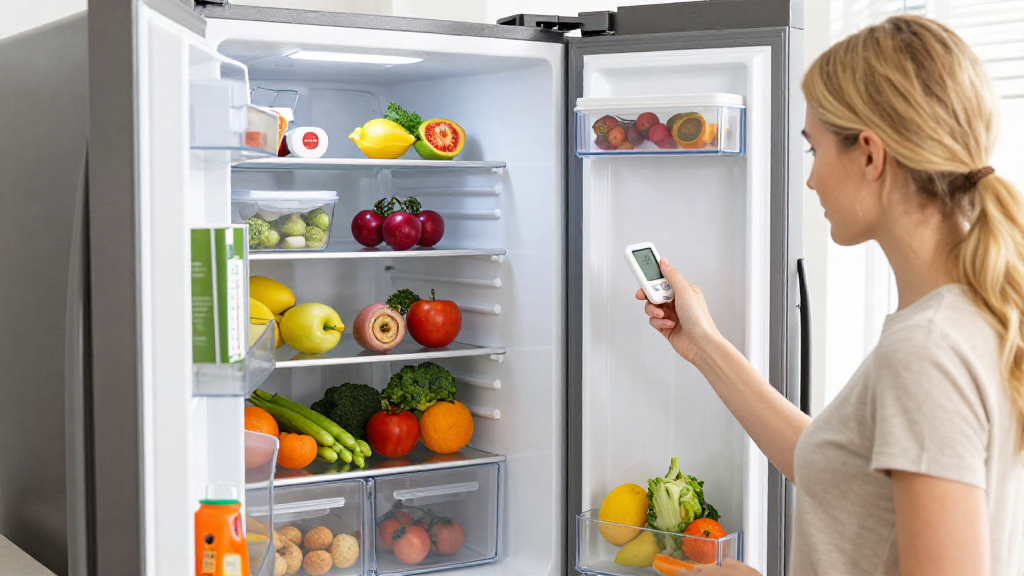
Understanding the correct food storage temperature is essential for food safety and optimal freshness.
Why Is Food Storage Temperature Important?
Food storage temperature plays a crucial role in the preservation of food quality and safety.
Incorrect temperature controls can lead to:
- Bacterial growth
- Food spoilage
- Nutritional losses
By referring to a food storage temperature chart, you can easily identify the ideal temperatures for various food types.
What Are the Recommended Food Storage Temperatures?
What Is the Ideal Refrigeration Temperature?
The ideal refrigeration temperature for perishable items is below 40°F (4°C).
This range inhibits the growth of harmful bacteria like Salmonella and E. coli.
Referencing a food storage temperature chart is helpful, as it provides a quick guide to the appropriate temperatures for specific items.
To ensure safe refrigeration:
- Set your refrigerator between 32°F (0°C) and 40°F (4°C).
- Regularly check the temperature with a thermometer.
- Avoid overcrowding to allow for proper air circulation.
What Temperature Should Freezing Be?
For items stored in the freezer, 0°F (-18°C) is the gold standard.
Storing food at this temperature will help maintain flavor, texture, and nutritional value.
Using a food storage temperature chart can guide you on how long specific items can remain frozen without sacrificing quality.
Best practices for freezing include:
- Use airtight containers or freezer bags to prevent freezer burn.
- Label items with dates for easy management.
- Don’t refreeze thawed food, as this can compromise safety.
What About Room Temperature Storage?
Room temperature generally falls between 68°F (20°C) and 72°F (22°C).
Some shelf-stable items can be stored safely at room temperature, while others must not.
Foods you can usually store at room temperature include:
- Canned goods
- Dry foods (pasta, rice)
- Unopened condiments
It’s vital to consult a food storage temperature chart for specifics regarding which items can tolerate room temperature and for how long.
Are There Special Considerations for Different Types of Food?
What Are the Guidelines for Meat and Poultry?
When it comes to meat and poultry, maintaining specific temperatures is vital to avoid the risk of foodborne illnesses.
In general:
- Fresh meat should be stored in the refrigerator at 32°F (0°C) to 40°F (4°C).
- Ground meat should be cooked or frozen within 1–2 days.
- Whole poultry can be stored in the refrigerator for 1–2 days before cooking.
How Should Dairy and Eggs Be Stored?
Dairy products and eggs are also sensitive to temperature.
Recommended guidelines include:
- Milk should be stored below 40°F (4°C)
- Eggs can be stored at 45°F (7°C) or lower.
Always consult a food storage temperature chart to ensure you’re following best practices for these sensitive items.
What About Fresh Produce?
Fresh fruits and vegetables typically do best in the refrigerator, although some can be stored at room temperature.
Guidelines include:
- Leafy greens and most vegetables should be stored at 32°F (0°C) to 40°F (4°C).
- Tomatoes and bananas fare best at room temperature.
Refer to a food storage temperature chart for a complete list of what can be stored where.
How Can You Effectively Monitor Food Storage Temperatures?
What Tools Can Help Monitor Temperatures?
Keeping track of temperature is easier with the right tools.
Consider using:
- Digital thermometers for accurate readings.
- Fridge/freezer thermometers that provide continuous monitoring.
- Smart kitchen devices that can send you alerts when temperatures rise above safe levels.
Implementing these tools can significantly enhance your food safety efforts!
How Often Should You Check Food Storage Temperatures?
Regularly check your refrigerator and freezer temperatures.
A good practice includes checking at least once a week.
If you notice a spike in temperature, take immediate action to rectify the situation.
Helpful tips:
- Keep an eye on the humidity levels as well; too much moisture can lead to spoilage.
- Monitor foods that are stored for long periods as they may require special attention.
What Are the Risks of Ignoring Food Storage Temperatures?
The consequences of ignoring established food storage temperatures can be severe.
These include:
- Increased risk of foodborne illness: Bacteria thrive in the danger zone of 40°F (4°C) to 140°F (60°C).
- Wasted resources: Spoiled food can lead to significant financial losses.
- Nutrient loss: Foods stored at the wrong temperatures can lose valuable nutrients.
Always refer to a food storage temperature chart to ensure you stay within safe ranges and to enhance your overall food management strategies.
Conclusion
Understanding the right food storage temperature is crucial for preserving food safety and quality.
By utilizing a food storage temperature chart, you can easily identify the appropriate temperature ranges for various food items, which helps in avoiding food spoilage and reducing the risk of illness.
Remember:
- Refrigeration should be below 40°F (4°C).
- Freezing should be at 0°F (-18°C).
- Check temperatures regularly and utilize tools to ensure your food remains safe and fresh.
Stay informed, stay safe, and make the most of your food storage efforts!